Britain may be watching the wrong quantum race
Britain should assess quantum sensing against real engineering problems. American deployment targets and British development projects justify investigation, but funding and deadlines cannot substitute for proven field performance.

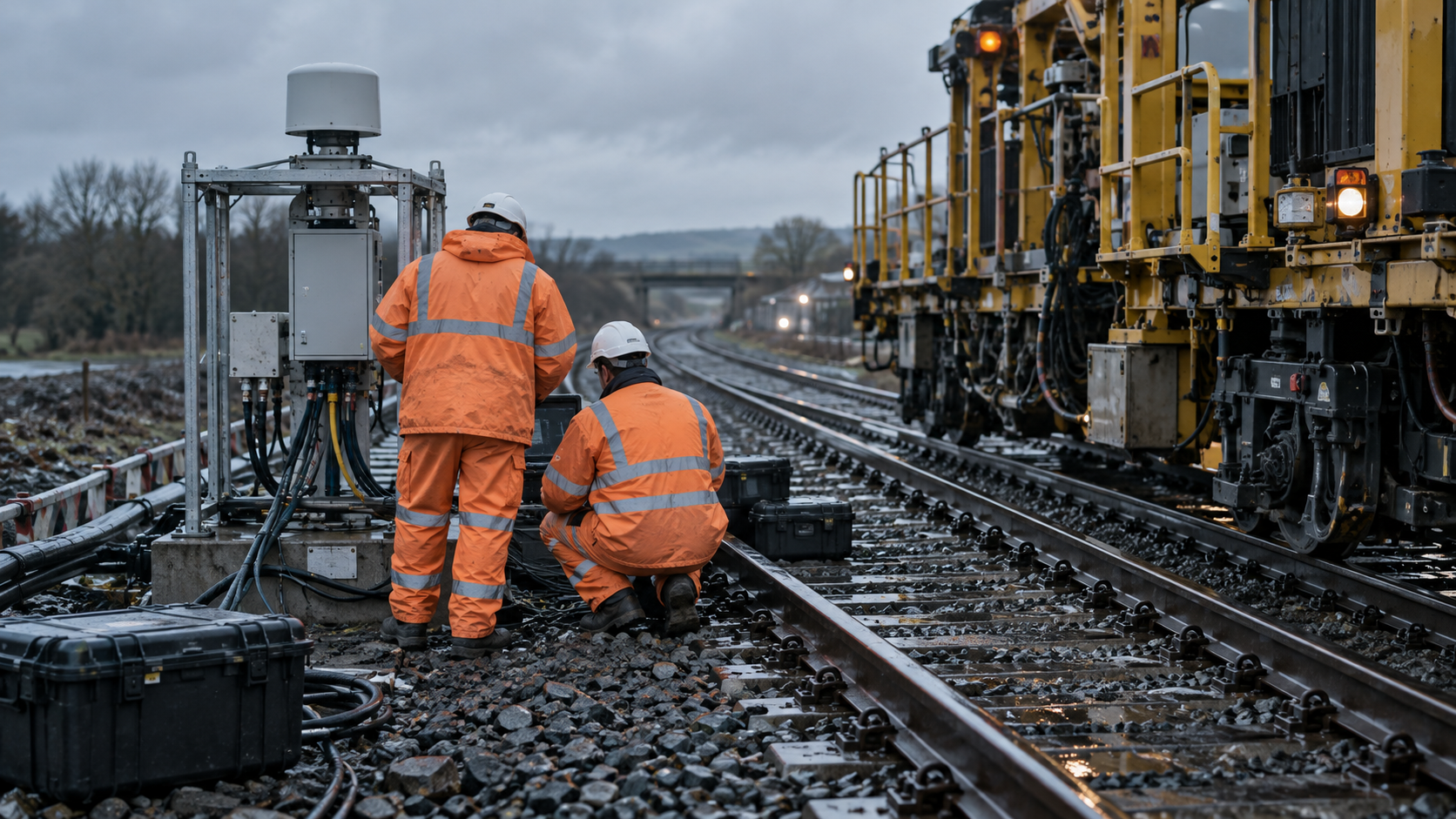
Britain should give quantum sensing a larger place in its near-term technology plans. The US has ordered the selection of at least three sensor projects for fielding by 30 September 2028, creating a concrete deployment target. For British infrastructure, navigation and engineering businesses, the sensible response is to investigate bounded operational trials, while requiring evidence that each device improves on existing equipment at an acceptable total cost.
Key pointers
- Put a measurement problem, such as locating buried structures, at the centre of any quantum sensing proposal.
- Treat the US September 2028 fielding target as a reason to investigate suppliers, not proof that products are ready.
- Ask suppliers to distinguish laboratory results, field trials and supported commercial deployments.
- Compare proposed sensors with the equipment and methods your engineers already use.
- Budget for integration, calibration, staff training and fallback arrangements alongside hardware.
- Make repeatable performance under your operating conditions the condition for further spending.
America has set a fielding target
The significant feature of the American order is its demand for deployment. Section 5 requires the selection of at least three next-generation quantum sensor projects, with the aim of fielding their sensors by 30 September 2028. It also requires plans covering commercial readiness, manufacturing and civilian applications. Those are instructions to pursue delivery, rather than evidence that delivery has happened.
For British technology leaders, that distinction suggests a useful question. Which operational problem could justify testing a sensor before the organisation has a compelling application for quantum computing?
A surveying business could investigate whether a new instrument changes the cost of understanding a difficult site. A transport operator could examine navigation resilience. An infrastructure owner could ask whether better measurements would change a maintenance decision. These are proposed buying questions, with answers that engineers and finance teams can test.
Britain already has relevant development work
Britain does not need to copy the American programme to find a starting point. Its 2023 quantum missions already distinguished navigation and infrastructure sensing ambitions for 2030 from the larger computing ambition for 2035. Those dates express policy objectives, not a reliable timetable for individual products.
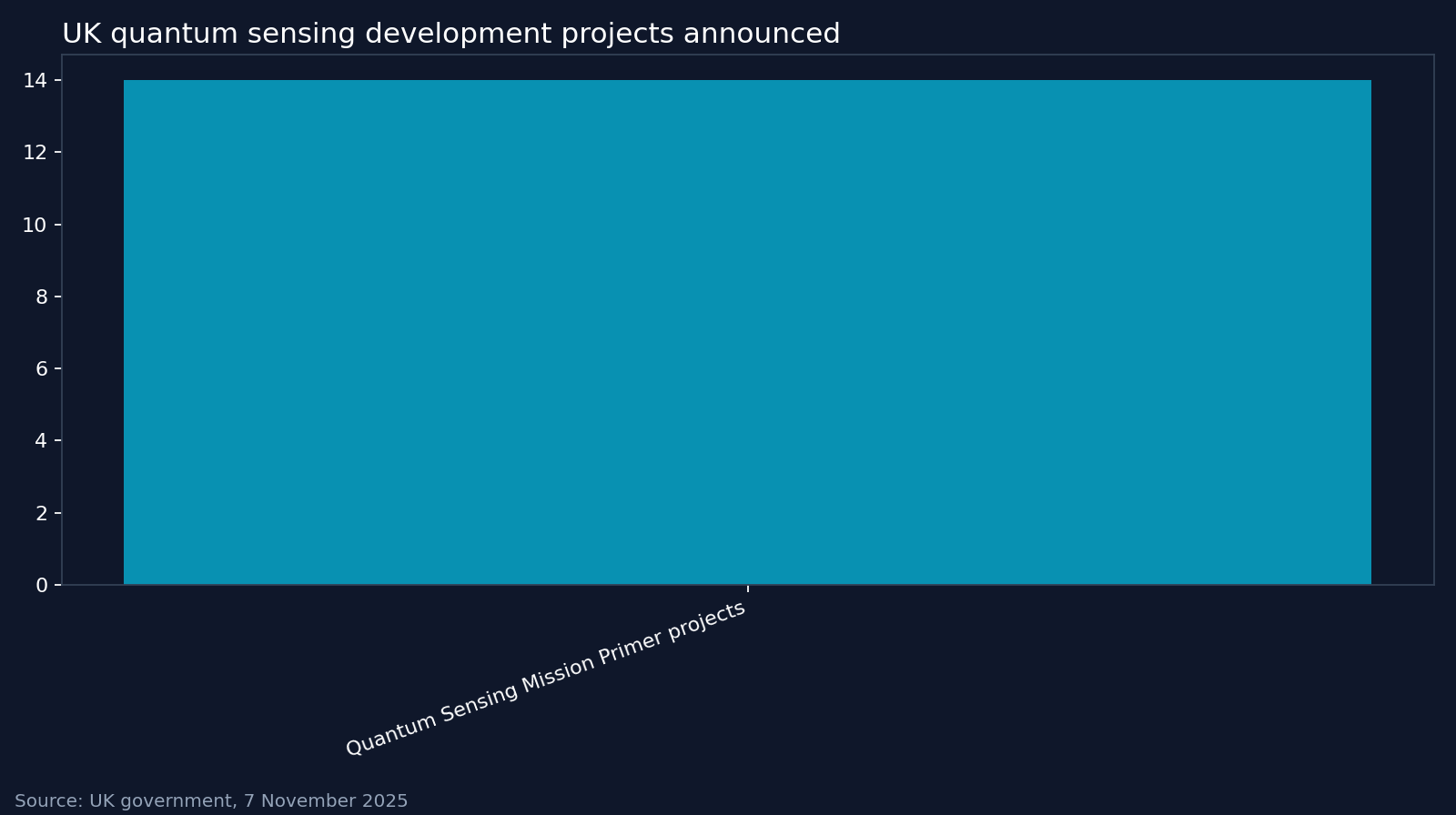
More concrete leads appear in the November 2025 sensing awards. The announcement identifies 14 projects sharing £14 million, including work on underground mapping, timing and railway navigation.
The following comparison concerns their stated development purposes. These organisations are addressing different problems, so they should not be ranked as interchangeable suppliers.
| Organisation named in the awards | Development purpose | Relevant buyer | Question for an initial discussion |
| --- | --- | --- | --- |
| Delta G Limited | Gravity sensing to detect underground objects and tunnels | Surveying and civil engineering firms | What can the instrument reliably distinguish at our site? |
| Xairos UK Limited | A quantum timing unit | Operators dependent on reliable timing | What performance persists when satellite timing is unavailable? |
| Monirail Ltd | Quantum navigation for the London Underground and potentially wider rail use | Rail operators and engineering contractors | What installation and validation would our rolling stock require? |
| Nascent Semiconductor Limited | A compact quantum clock offering an alternative to satellite timing | Critical infrastructure operators | What equipment, maintenance and support does the proposed system require? |
The project descriptions come from the government’s award details. They establish funded areas of work, without establishing current availability, comparative performance or delivery terms.
The sensor still needs an operating model
Quantum sensing uses quantum behaviour to make measurements. The National Physical Laboratory’s sensor research, for example, includes superconducting devices designed to detect physical signals and particles. That is a different task from running a business calculation on a quantum computer.
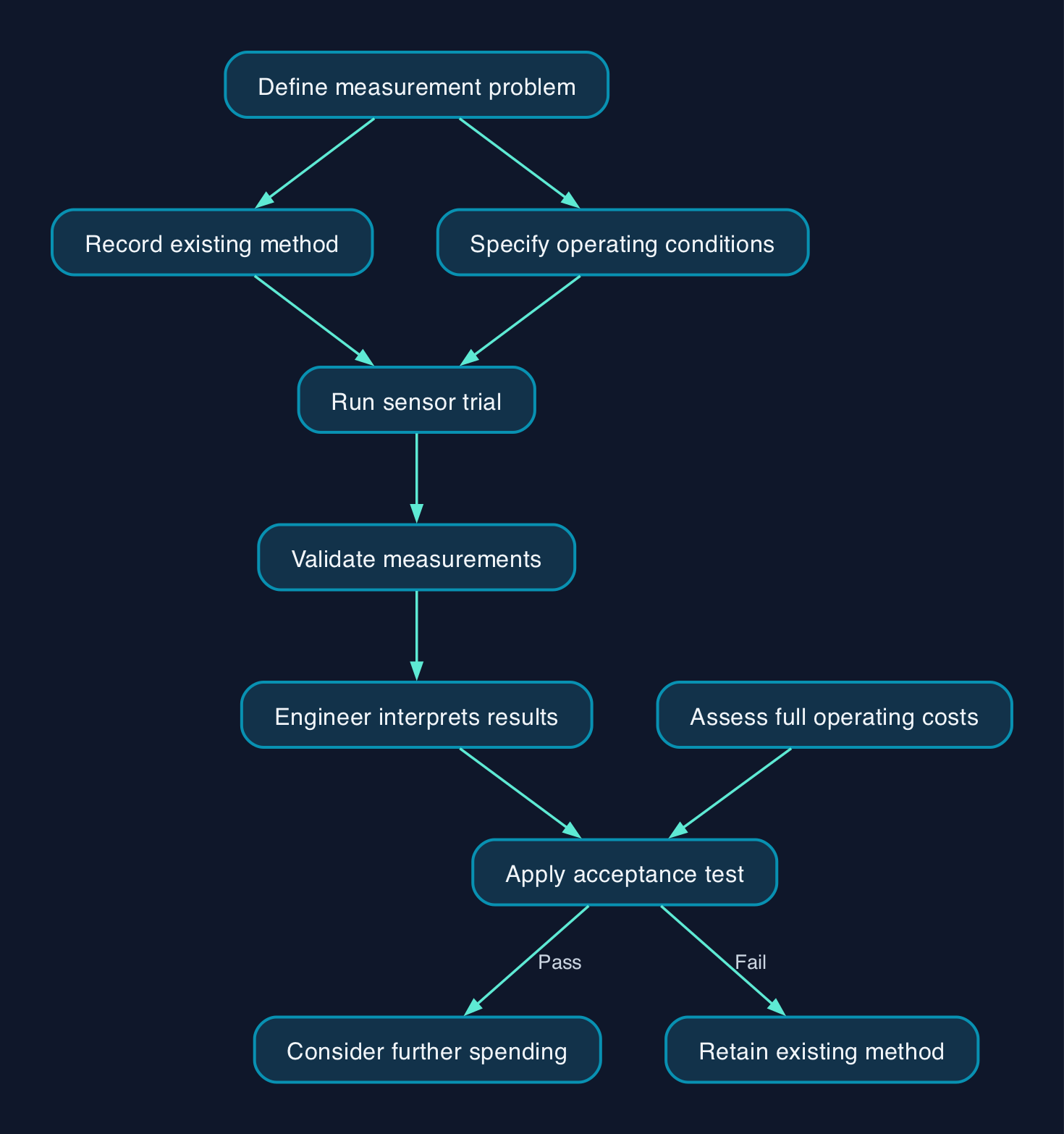
For a buyer, the proposed operating model should connect the instrument to a decision. A sensor produces measurements; someone must validate and interpret them; an engineer or operator then decides whether to act. Specify ownership at each step.
Consider an illustrative underground survey trial. The buyer would define the feature it needs to detect, record the existing survey method, test the proposed instrument and check its findings against independently established site information. Acceptance should depend on the quality and usefulness of the result, including missed features and false alarms.
For a small engineering business, my preference would be a bounded trial delivered with specialist support before purchasing unfamiliar equipment. The commercial question is whether the resulting information improves a job the business already knows how to price.
Price the whole measurement service
The available evidence does not establish commercial sensor prices or comparable supplier quotations. The £14 million programme allocation is development funding, not a price guide for buyers.
Indeed, the competition terms explicitly distinguish research and development from subsequent adoption. They state that purchasing a solution would require a separate procurement exercise.
A useful quotation should therefore identify the instrument or service charge, installation, calibration, data interpretation, training, maintenance and support. Ask separately about trial costs, access to measurement data and the work needed to return to the existing method.
For a survey, compare cost per accepted result and the consequences of an incorrect finding. For navigation or timing, specify the required performance during loss of the normal signal. A technically impressive demonstration has limited buying value until those acceptance conditions are written down.
The strongest objection is that sensors may disappoint too
The strongest counterargument is that sensing can attract the same premature expectations as computing. A government deadline does not establish reliability, affordability or commercial demand.
The evidence gives that objection substance. The UK primer funded maturity studies, and its terms made any second phase conditional on results and budget availability. Separately, the government’s quantum roadmaps procurement described the need to develop navigation systems sufficiently small and robust for aircraft and other moving platforms. Engineering work remained part of the objective.
Nor should Britain abandon computing research. The same US order establishes a scientific quantum computing effort alongside its sensor programme. The two can proceed together.
My argument is narrower. Businesses with expensive measurement or navigation problems should evaluate sensing on its own merits. They should not make that evaluation depend on a prediction about when quantum computing becomes commercially useful.
Editorial analysis
Britain’s opportunity is to become a demanding customer for quantum sensing. That means supplying realistic operating conditions, credible baseline measurements and an owner who can reject an unsuccessful trial.
A construction business should ask whether a sensor improves a survey decision. An energy operator should ask whether its output changes an inspection or maintenance action. A technology leader should require the supplier to explain who supports the equipment after the demonstration team leaves.
For the next budget discussion, bring one operational problem and a proposed acceptance test. That is a defensible first investment in quantum sensing readiness.
FAQ
Will quantum sensors become useful before quantum computers?
For some applications, that is a reasonable possibility, but the evidence does not establish a universal sequence. The UK missions set earlier ambitions for several sensing and navigation applications than for their large-scale computing objective. Buyers should assess individual systems and workloads.
Does the American order prove deployment is happening?
It establishes a requirement to select projects and pursue fielding by 30 September 2028. The order itself does not show which projects were selected or whether they have passed operational acceptance tests.
Where should a smaller British company start?
Choose a measurement problem with a known cost, an existing method and someone qualified to judge the result. Ask a relevant developer about a limited trial and how performance will be independently evaluated. The National Physical Laboratory describes testing and evaluation support, although the appropriate scope and commercial terms would need checking.
Does public funding mean a supplier is ready to deliver?
No. The Quantum Sensors and PNT Missions Primer funded development and maturity work rather than the purchase of solutions. Require separate evidence of delivery capability, support arrangements and performance under your conditions.
Sources
- The White House, Ushering in the Next Frontier of Quantum Innovation, order dated 22 June 2026
- Department for Science, Innovation and Technology, National Quantum Strategy Missions, updated 14 December 2023
- UK government, Government support to get quantum to work faster, published 7 November 2025
- Innovate UK, Contracts for Innovation Quantum Sensors and PNT Missions Primer, closed competition terms
- National Physical Laboratory, Quantum sensors, research and evaluation services
- Find a Tender, Quantum Technology Missions Roadmaps, published 8 November 2024