Britain should not buy industrial sites on an SMR promise
British businesses should keep site commitments conditional when growth depends on an unbuilt SMR. Darlington’s licensing stages and shared infrastructure costs make the case for staged investment, while its refurbishment record challenges blanket scepticism.

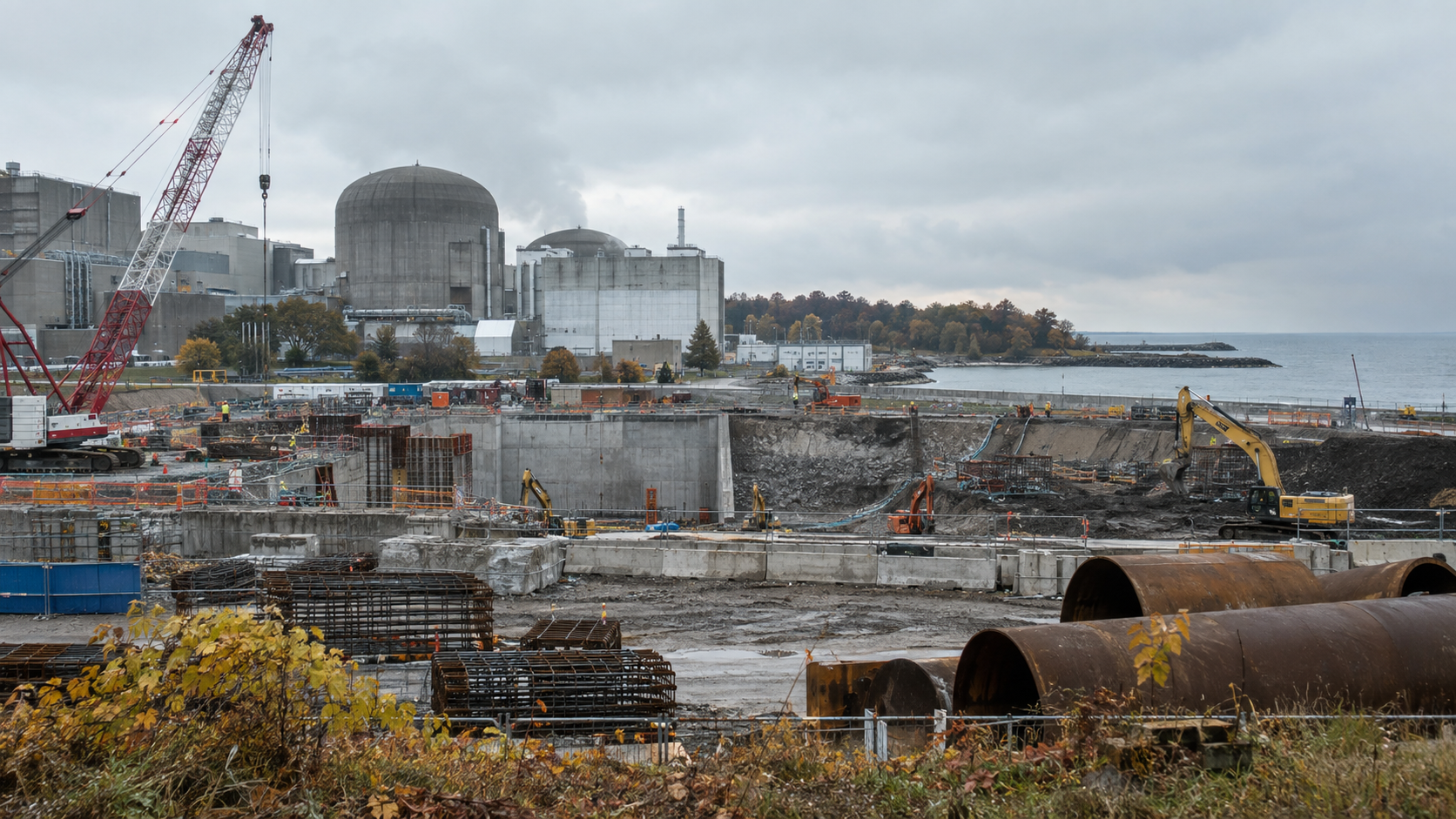
British businesses should refuse unconditional site commitments when an expansion depends on an unbuilt small modular reactor (SMR). I would back early development only where spending follows verified delivery milestones and the buyer can afford a delay. Darlington makes that distinction concrete: its regulator records one reactor under construction and a separate application to operate it. Britain can support new nuclear without asking a factory or data centre to treat future generation as secured supply.
Key pointers
- Make the electricity delivery offer a condition of committing to a power-intensive site.
- Require capacity allocated to your premises, rather than accepting the proposed generator’s total output.
- Release spending against documented progress, with an agreed response to missed dates.
- Ask who funds shared infrastructure and who carries its cost if later customers never arrive.
- Compare a proposed move with expanding the existing site or buying hosted computing capacity.
- Accept early development risk only when the business can fund the consequences of delay.
Darlington makes the case for staged commitment
My objection to an SMR-led industrial cluster begins when a tenant is asked to make an irreversible investment against somebody else’s unfinished power project.
Darlington shows how carefully those commitments need to be separated. Canada’s construction decision established three hold points covering the reactor building foundation, reactor pressure vessel installation and fuel-out commissioning. It also expressly withheld permission to operate the reactor. Those are Canadian project requirements, not a template for British licensing.
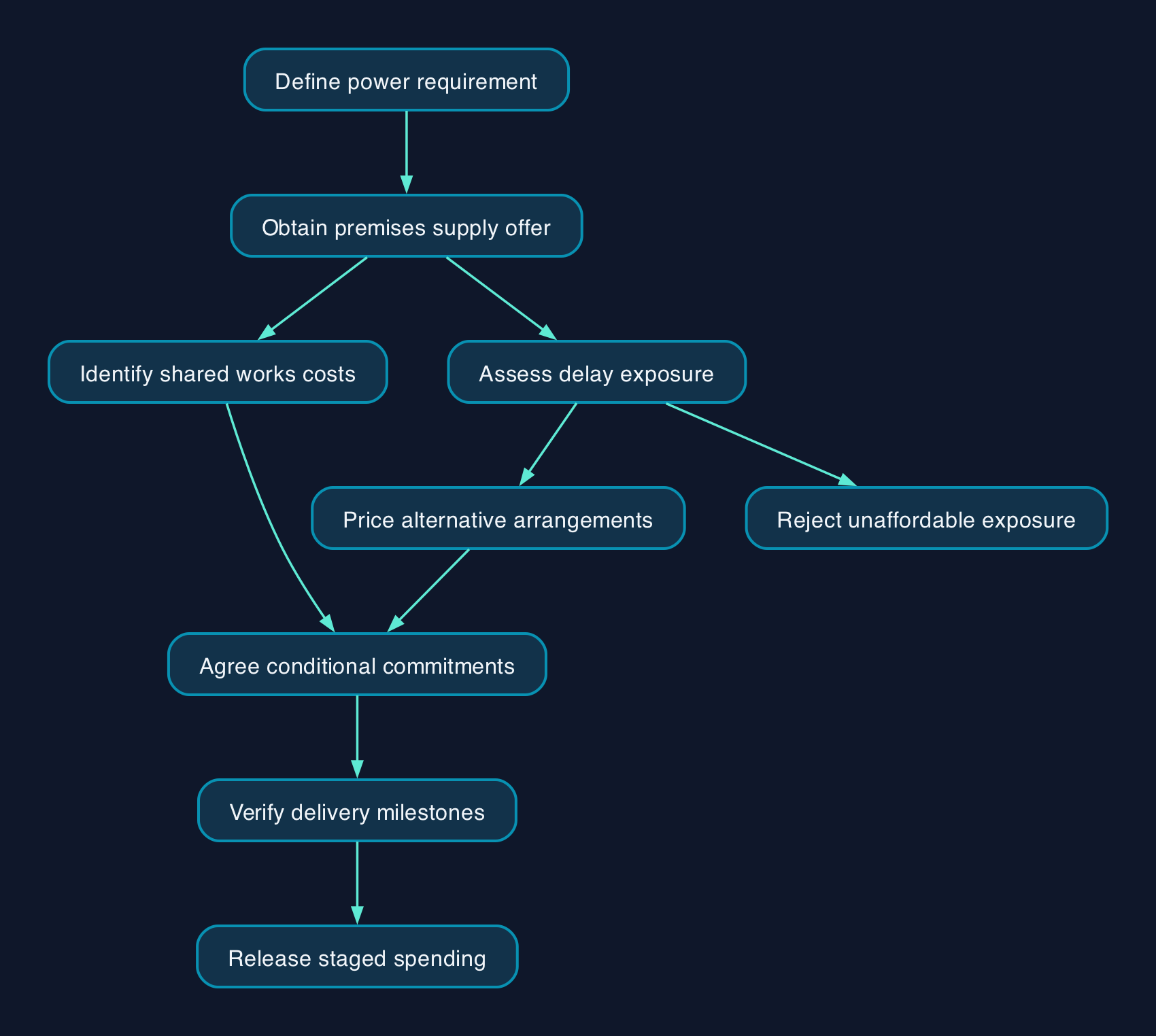
For a British business evaluating a proposed power-led development, the commercial lesson is to make its own commitments equally specific. I would authorise site assessment before authorising a building, and demand a documented power delivery offer before approving equipment whose business case depends on that supply. Each spending decision needs evidence appropriate to the money being put at risk.
A developer may reasonably ask an early customer to share uncertainty. My condition would be that the uncertainty is priced and the exposure capped. If the business cannot survive the proposed delay scenario, the board should reject that commitment, even if the reactor programme itself deserves investment.
Shared infrastructure belongs in the investment argument
Darlington’s budget exposes a weakness in discussing industrial clusters through reactor output alone.
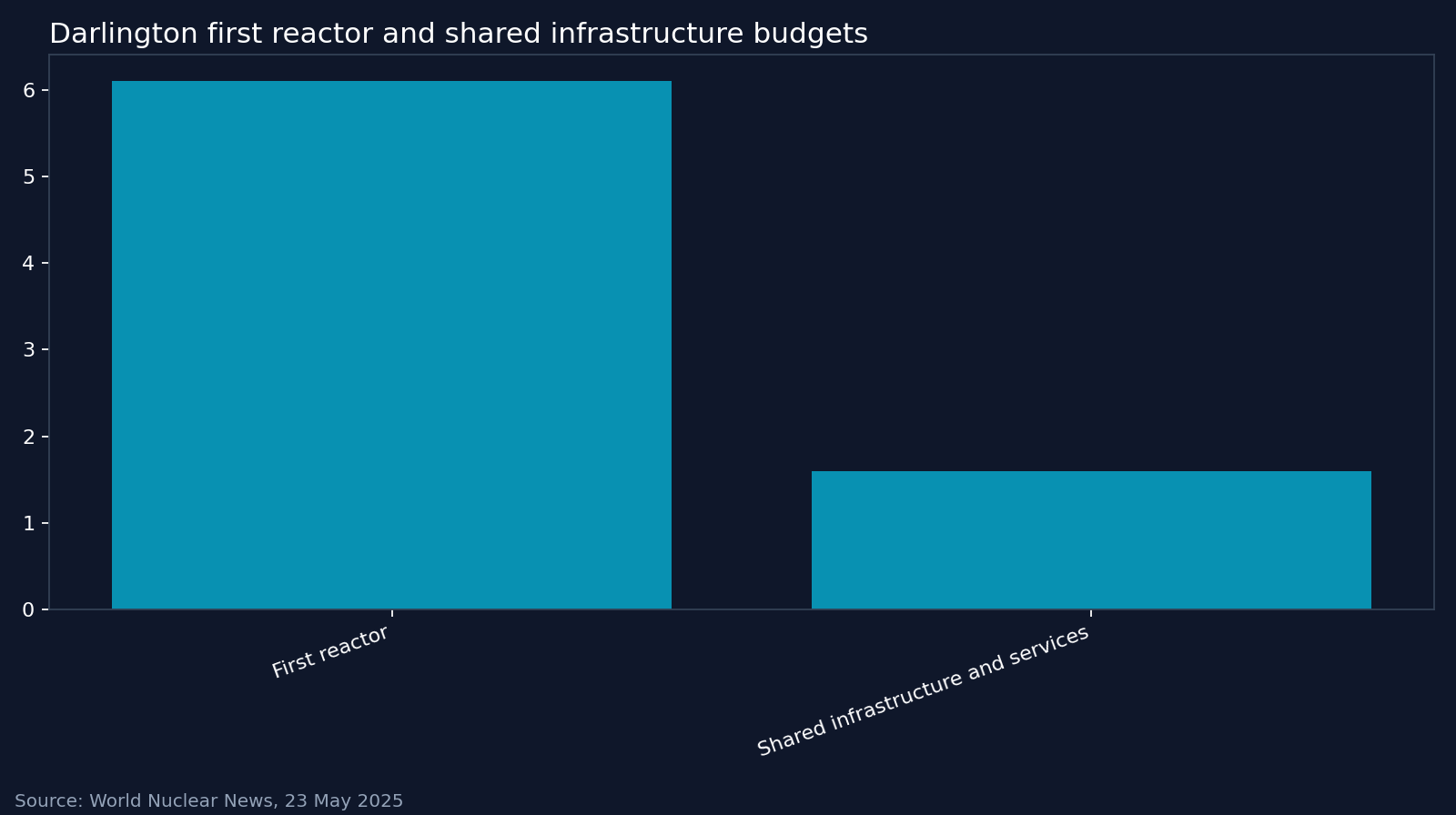
The May 2025 breakdown reported by World Nuclear News put the first reactor at CAD6.1 billion, with another CAD1.6 billion for infrastructure and services shared across the planned units. The projected four-reactor programme total was CAD20.9 billion, including interest, contingency and escalation. Shared works included roads, sewers, buildings and cooling-water tunnels. Estimates for the later reactors were less developed than the first unit’s estimate. These are historical Canadian project estimates, not completed costs or a British electricity quotation.
That CAD1.6 billion allocation is central to my position. Building a cluster around future generation requires decisions about enabling works before every intended beneficiary is using them. I would want a proposed British development to explain which costs the anchor customer carries and which depend on subsequent tenants signing.
An offer that looks attractive only after the estate fills deserves a separate downside calculation. Ask what the business pays if it becomes the sole early occupant, whether unfinished common works prevent its opening, and who funds the interim arrangement.
For a data centre or manufacturer, I would compare the complete location commitment over the same period. Electricity sits alongside connection works, cooling, backup provision and the cost of delayed production. A business case with those costs left blank has not earned approval.
The strongest objection is that waiting prevents anything being built
Early customers cannot demand a completed power station before making every commitment. A developer needs enough confidence in future demand to justify construction, while a business reserving capacity early may have reasons to accept delivery risk. My rule could become self-defeating if “credible” quietly comes to mean “already operating”.
Darlington provides a serious reason to resist blanket scepticism. In February 2026, the American Nuclear Society reported that OPG had completed construction work on the existing station’s refurbishment. OPG forecast delivery four months ahead of schedule and CAD150 million below its CAD12.8 billion budget, with final testing of Unit 4 still under way. That refurbishment construction record deserves weight when judging the organisation’s ability to deliver.
It does not establish the completed cost or performance of the new BWRX-300. Refurbishing existing reactors and delivering this first unit remain different projects.
I would still approve spending before generation begins. The dividing line is whether the customer has deliberately accepted a bounded development risk. Conditional commitments, staged expenditure and an affordable alternative during delay are my proposed terms for doing that.
This costs something. A developer may offer less attractive terms to a customer that limits its exposure. A business insisting on flexibility may lose its preferred site. I would accept that trade-off where a missed electricity date could strand the company’s investment; an organisation able to absorb the delay could rationally decide otherwise.
Britain needs customers with negotiating terms
A British industrial strategy built around new power needs businesses willing to commit. My argument is that their willingness should be earned through delivery terms, rather than assumed from a reactor announcement.
For a factory, the comparison starts with retaining its existing location and establishing whether an expansion there is feasible. For computing, hosted capacity belongs alongside building a facility. A proposed SMR-linked site then has to explain what advantage compensates for its construction dependencies. The supplied Canadian evidence cannot rank British providers or establish which route will be cheaper.
I would require the same answers from every bidder. What capacity reaches these premises? When can the customer use it? What remains outside the supplier’s control? What happens to the customer’s money if delivery slips?
Workforce access and transport still matter after those answers arrive. A site with adequate electricity can remain the wrong place to operate. Equally, excellent premises cannot rescue an expansion that depends on power unavailable when production must start.
The proposed cluster earns my support when its first customers can explain why they accepted the risk and how they will keep trading if the schedule moves. Until then, I would keep the property commitment conditional.
FAQ
Does Darlington already demonstrate operating SMR capacity?
The regulator’s supplied record identifies one unit under construction and an operating-licence application awaiting a decision following a public hearing. It does not establish commercial generation from that unit. See the Darlington project record.
Should British businesses wait until a reactor is operating?
My position allows investment before operation where spending is staged and the consequences of delay are affordable. A business whose survival depends on an unconfirmed opening date needs stronger terms or another location.
Does proximity to a reactor justify choosing a site?
I would give proximity no automatic advantage in a location decision. Require an offer covering the electricity available to the premises, its delivery conditions and the full cost, then assess workforce and transport requirements.
What should a small business considering a proposed cluster do first?
Define which activities depend on the promised supply and how long the business could afford to wait. Ask the developer to explain the customer’s obligations if power arrives late, before committing to premises or equipment.
Sources
- Canadian Nuclear Safety Commission – Darlington New Nuclear Project
- Canadian Nuclear Safety Commission – Darlington construction decision backgrounder, 4 April 2025
- World Nuclear News – Canada’s first SMR project budget breakdown, 23 May 2025
- American Nuclear Society – OPG completes Darlington refurbishment construction, 3 February 2026