Nuclear software should outlive its supplier
British technology firms should pursue nuclear support work by proving their services can survive a change of supplier. Darlington makes the opportunity concrete, but reactor lifetimes are not software contract terms.


British technology firms should pursue nuclear support work by selling continuity, including the ability to replace them. Canada’s Darlington programme makes that opportunity tangible, but a reactor’s long life does not establish an equally long software contract. OPG’s December 2025 filing describes construction of the first unit in a planned four-unit programme. The commercial opportunity is maintaining usable records, accountable services and transferable knowledge through successive generations of technology.
Key pointers
- Sell a defined maintenance or information-management service before pitching a platform for an entire nuclear programme.
- Separate the asset’s expected service life from the duration and renewal terms of your contract.
- Ask who owns the records, approves changes and accepts a replacement supplier.
- Price documentation, staff succession and handover alongside development and support.
- Demonstrate that another team can operate your service before asking a buyer to depend on it.
- Check the latest procurement status before treating a published framework as a sales opportunity.
Canada makes the opportunity concrete
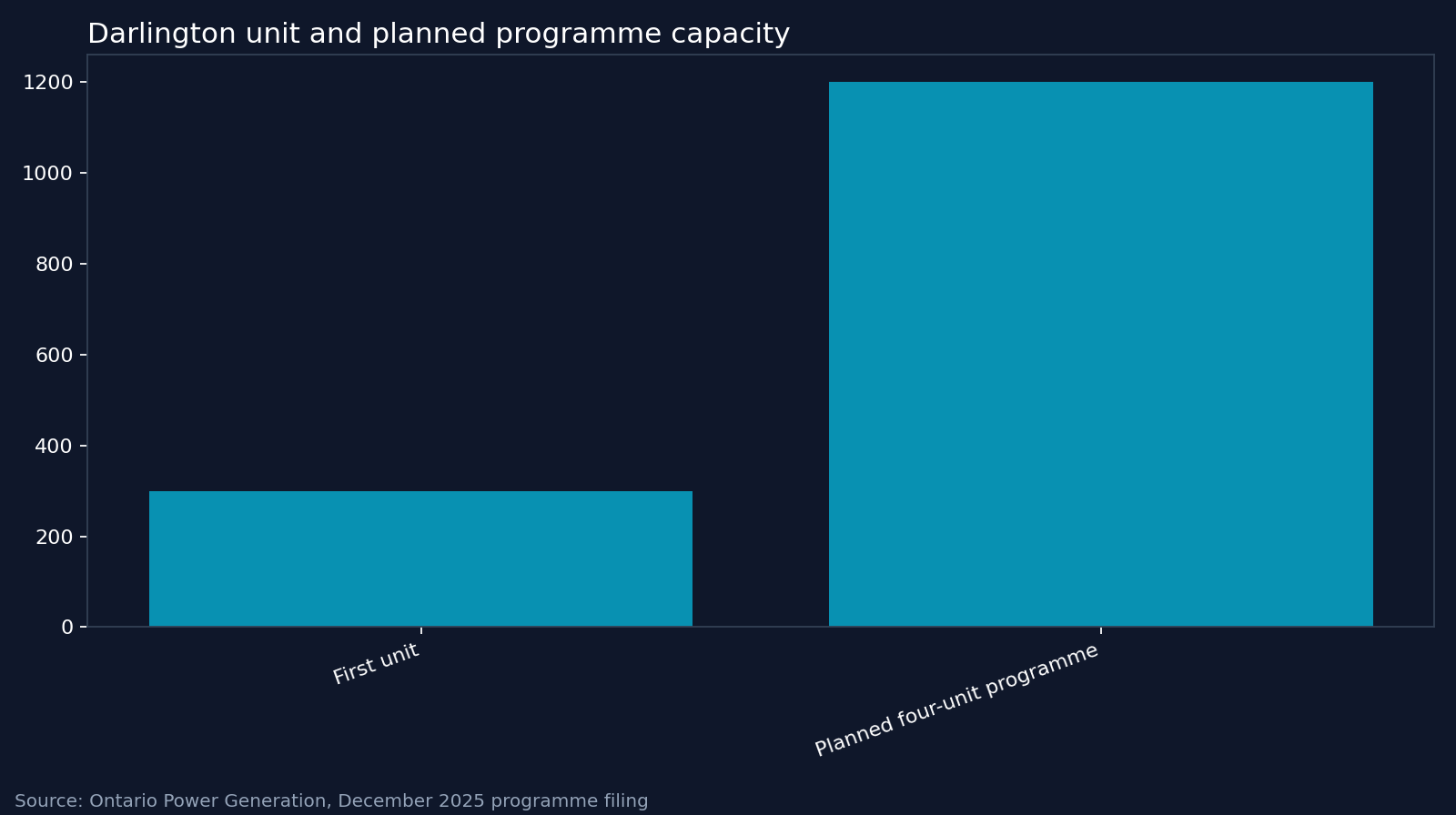
Darlington is a useful starting point because the evidence describes an actual construction programme. OPG’s filing covers design, licensing, procurement, installation, testing, commissioning and turnover. Its integrated project agreement also includes training and supporting infrastructure. Those responsibilities extend well beyond delivering a reactor design. The programme overview sets out that scope.
The scale needs careful handling. The 300 MW first unit sits within the approximately 1200 MW planned programme; the larger number includes the smaller one. Neither figure measures software spending, and neither establishes an addressable market for British suppliers.
The tempting headline is that the software contract around a reactor could outlive most technology companies. The evidence supplied does not establish either the contract duration or the company-survival comparison. The stronger commercial argument is that a buyer should expect to replace technologies and suppliers while preserving the information needed to run its asset.
That distinction changes what a British firm should sell. A promise to remain indispensable creates a dependency. A demonstrated ability to maintain a service and hand it over creates a reason to trust the supplier.
British firms should sell the handover from the start
My position is that UK technology businesses should look first at bounded supporting services, such as maintenance information, engineering-document workflows and records of approved changes. These are proposed areas to investigate, not verified Darlington vacancies or claims that a general software firm is qualified to work on reactor protection systems.
A practical opening offer would solve one information problem. For example, a hypothetical supplier could help a project team connect an approved equipment change to the relevant documents, maintenance instructions and acceptance record. The buyer would define the boundary and decide whether the proposed service belonged within its assurance arrangements.
The acceptance test should include a change of personnel. Can an engineer who did not implement the system identify the approved version, explain the change history and recover the supporting records? If the answer depends on contacting the original developer, the service has failed its continuity test.
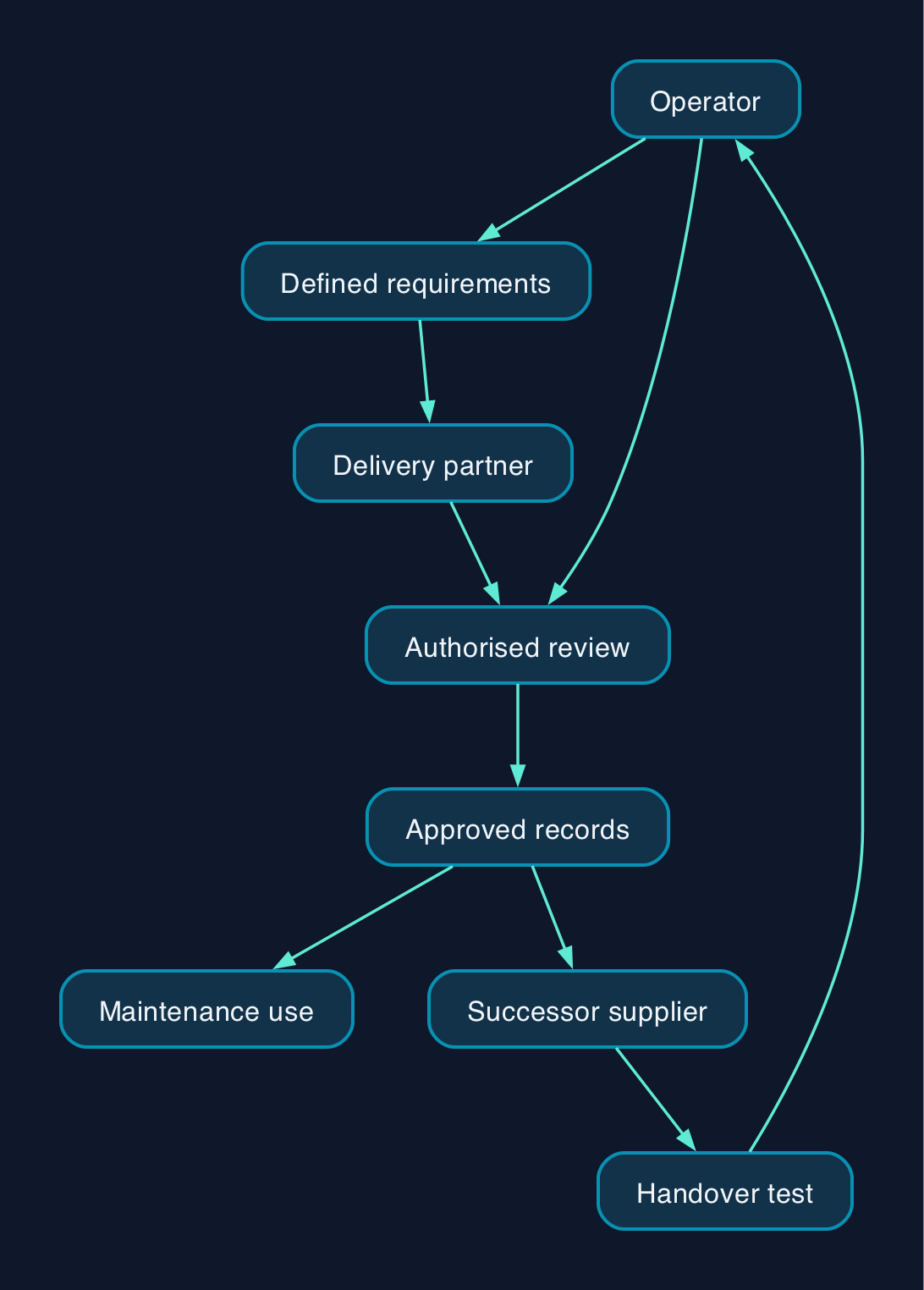
I would propose a simple responsibility chain. The operator defines the requirement; a delivery partner implements it; an authorised reviewer accepts the change; approved records pass into maintenance use. A successor supplier then demonstrates that it can retrieve and interpret those records. This is a proposed procurement model, not a description of Darlington’s internal architecture.
For a small British business, that bounded scope also makes staffing more credible. It can identify the expertise needed for one service and the backup arrangements for named staff, rather than promise support for an entire programme.
Price the work that survives the launch
The available evidence does not provide a Darlington software price, a published support rate or an awarded digital-service contract term. A revenue forecast based on reactor capacity would therefore be speculation.
A useful quotation should separate implementation from continuing obligations. Buyers should request prices for discovery, data preparation, integration, acceptance evidence, training, routine support, controlled changes and eventual exit. They should also ask which activities require separate approval and payment.
For recurring work, the commercial question is what the fee actually buys. Does it cover maintaining documentation after a change? Replacing a departing specialist? Rebuilding the service from retained materials? Supporting a transfer to another provider? A low support price says little if each of those activities becomes an unbudgeted project.
The Digital & Legacy Application Services agreement offers a relevant UK reference. Its published scope includes application and integration run services, knowledge transfer and escrow where required; its document list includes exit management and service-level schedules. That establishes that these are recognised procurement subjects. It does not establish that the agreement is a route into Darlington.
For British suppliers, the discipline is to price continuity as deliverable work. Treating documentation and succession as overhead to absorb later would undermine the proposition being sold.
Compare delivery roles before comparing brands
The evidence describes several businesses with different responsibilities, not interchangeable software products. OPG’s programme filing identifies GE-Hitachi as the selected reactor technology supplier and names AtkinsRéalis, Aecon and Kiewit within the delivery arrangements. Their participation does not establish an open opportunity for an unrelated software bidder.
A specialist offers a different model. OPG’s profile of Nuclear Promise X describes digital innovation and project-management support within its supply chain. It supports the proposition that specialist digital work exists around nuclear operations; it does not prove that the company secured the SMR work it hoped to pursue.
For a UK entrant, I would compare three routes.
| Route | When I would consider it | What the buyer or supplier should establish |
| --- | --- | --- |
| Work through an established delivery partner | The service depends closely on engineering decisions owned elsewhere | Subcontract scope, access, acceptance authority and responsibility for changes |
| Supply a bounded specialist service | The deliverable can be defined and tested separately | Required qualifications, integration boundaries, support coverage and handover evidence |
| Support an operator’s retained team | The buyer wants to keep ownership of information and service decisions | Internal staffing, supplier escalation and responsibility when components fail |
These are commercial approaches to assess, not a verified shortlist of qualified bidders. The right route depends on who controls the requirement and accepts the work.
The strongest objection is that continuity may not pay
The strongest counterargument is commercial. A British software business could spend heavily learning a buyer’s processes, preparing evidence and developing relationships without winning enough work to recover that investment. A long-lived asset does not guarantee accessible contracts, attractive margins or regular renewals.
Even an official procurement record needs scrutiny. The supplied UK National Nuclear Laboratory framework record contains a proposed multiyear arrangement but also lists a procurement termination notice published on 18 August 2026. The extract does not explain the termination’s scope. It cannot responsibly be presented as a confirmed open route to market.
That objection should narrow the investment, not end the investigation. I would require a named prospective buyer, a defined work package and a credible acceptance process before building a nuclear-specific product. A paid discovery engagement would provide stronger evidence of demand than a forecast derived from the number of planned reactors.
The exit test belongs in the business model too. If the supplier can only earn an acceptable return by making replacement prohibitively difficult, its incentives conflict with the continuity it promises.
Editorial analysis
Britain’s opportunity is to export demonstrable maintenance and handover capability. The useful proposition is specific: records remain interpretable, approved changes remain traceable and another qualified team can assume responsibility.
The buyer should test that proposition before renewal. Give a replacement team the agreed documentation and recovery materials, then ask it to complete a defined task without informal help from the incumbent.
A supplier that passes has earned a stronger argument for staying. That is the position UK technology leaders should take into this market: build a service worth renewing, with an exit that actually works.
FAQ
Does Darlington establish a decades-long software contract?
No. The supplied programme filing establishes a reactor programme and extensive delivery responsibilities, but not such a software contract. Long-term digital-service demand is the editorial inference, not a disclosed award.
Where should a small British technology firm start?
Start with one proposed supporting service whose ownership, inputs and acceptance test can be written down. Before investing in a product, establish the buyer’s qualification requirements and whether access would come directly or through a delivery partner. Do not assume ordinary business-software experience qualifies the firm for safety-critical work.
Should buyers prefer a large supplier or a specialist?
I would compare responsibility and replaceability before company size. Ask each bidder to demonstrate staff succession, documentation quality, recovery and handover using the same bounded task. The supplied evidence does not support a general claim that either large providers or specialists perform better.
Is source-code escrow enough to protect continuity?
I would treat it as one element of the proposal. The UK application-services agreement includes escrow where required, but buyers should also test whether a successor can use the retained materials, dependencies, documentation and permissions. Possession of code should not substitute for an operational handover test.
Sources
- Ontario Power Generation — Darlington New Nuclear Program overview, filed 12 December 2025
- Ontario Power Generation — Darlington SMR project and construction licence milestone
- Ontario Power Generation — Nuclear Promise X supplier profile
- Government Commercial Agency — Digital & Legacy Application Services
- Find a Tender — Open Framework for Nuclear Technical Services procurement record