Britain should manage water meters as connected infrastructure
Smart water meters should become operational infrastructure for British businesses. The opportunity lies in connecting readings to maintenance, with dependable data and someone accountable for acting.

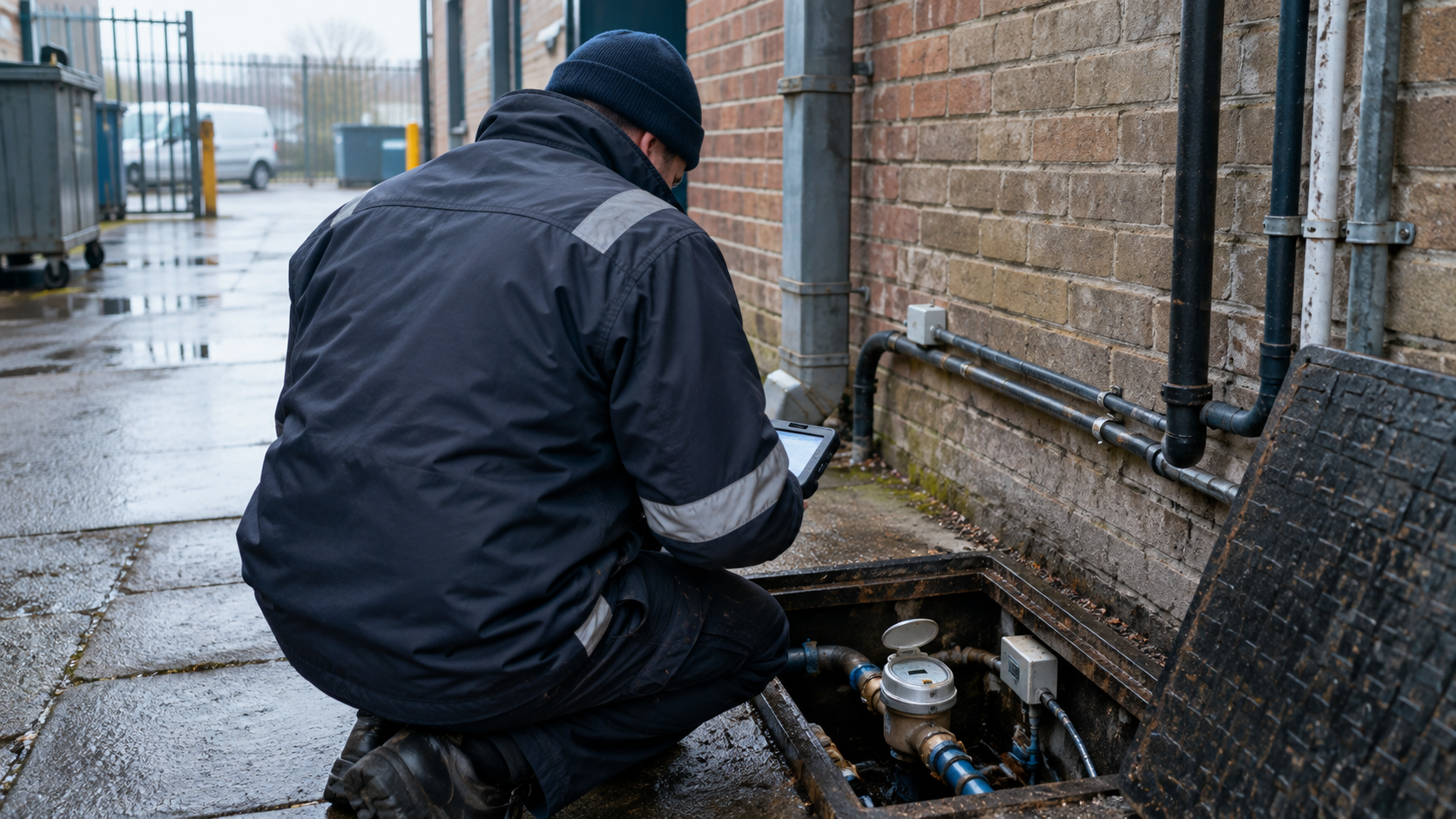
Britain should manage smart water meters as IoT endpoints because readings only become useful operational evidence when someone is responsible for acting on them. Singapore already places them within its Smart Nation approach to consumption and demand management. The opportunity for Britain is to connect water data to maintenance and operating decisions. That requires reliable access, clear responsibilities and evidence of savings before adding automated controls or another software subscription.
Key pointers
- Ask when your meter will transmit usable data, not just when it will be installed.
- Specify separately how often water use is measured, transmitted and available to your team.
- Give leak alerts a named owner with authority to arrange an inspection.
- Check existing data loggers before approving their removal during a meter exchange.
- Demand an export route and a clear support boundary before buying additional analytics.
- Treat automated demand control as a separate engineering decision requiring safeguards and approval.
Singapore makes the case for a wider purpose
Singapore’s useful example is the purpose it assigns to the meter. Its Smart City solutions overview places water consumption tracking alongside environmental modelling and an open digital platform for monitoring and managing resources.
That supports a direction of travel, rather than proof of a complete autonomous water system. The overview does not establish that meters control valves, trigger dynamic tariffs or feed the district platform directly. British buyers should preserve that distinction when a supplier presents a smart-city vision.
My position is that the water meter belongs in the same operational conversation as other connected building equipment. An internet of things, or IoT, endpoint needs a known location, a dependable data path and a response when something stops working. For a commercial landlord, the useful outcome is an investigated leak or a changed maintenance schedule.
The meter should remain a trusted billing instrument while becoming a source of operational evidence. Giving it that second job means assigning responsibility beyond the finance team.
Britain already has a rollout to work with
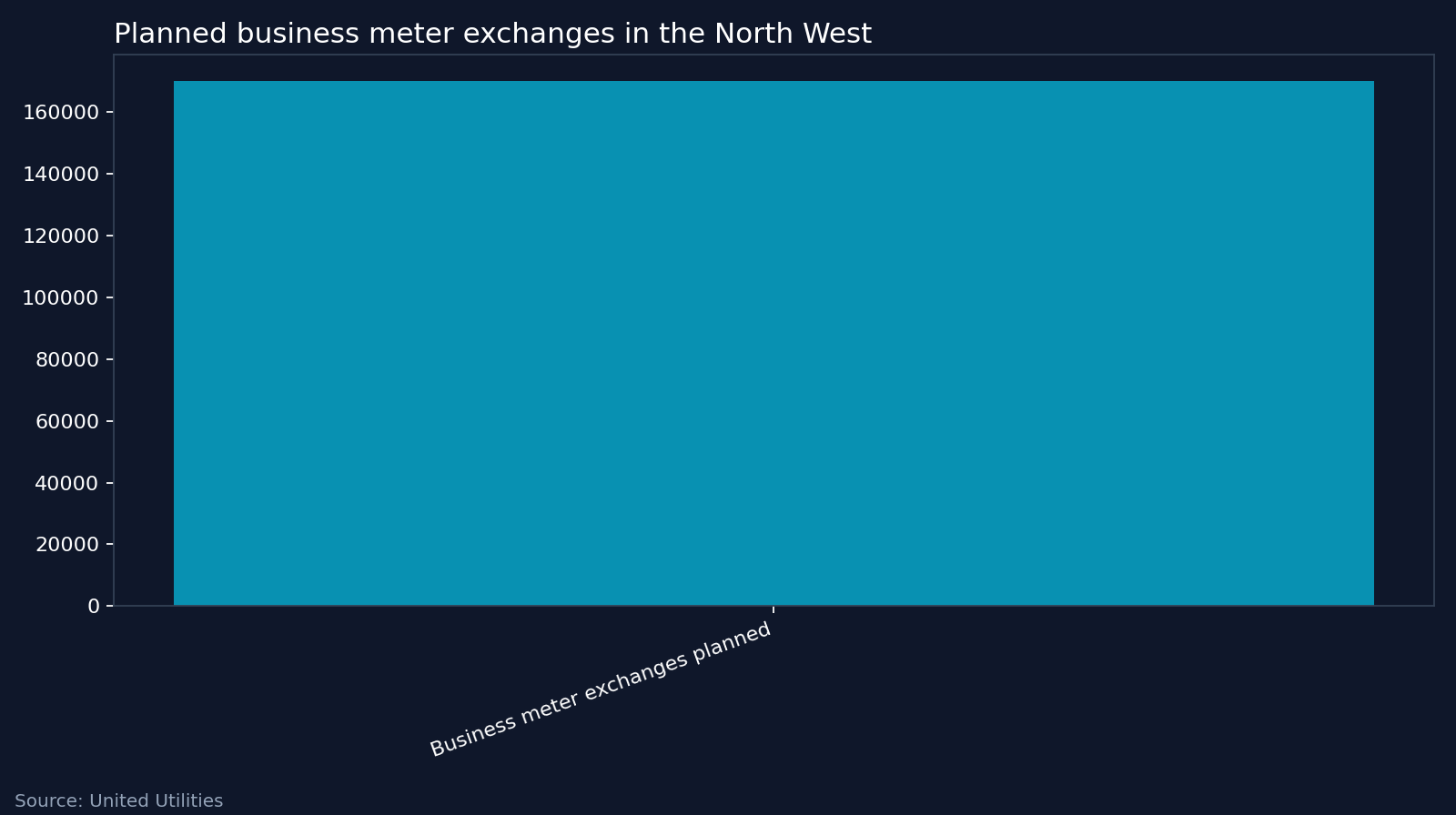
This is not solely an imported future. United Utilities’ business programme describes a substantial meter exchange and explicitly identifies opportunities for service and tariff innovation. That is a stated opportunity, not confirmation that a particular new tariff is available.
The practical obstacle is the gap between installation and usefulness. CCW’s business guidance explains that a meter can be installed while awaiting network activation. More detailed consumption information and leak-related features can arrive later, depending on the retailer.
Northumbrian Water provides an especially useful distinction. Its business meters record hourly readings but transmit daily. An hourly measurement history is therefore not a promise that a facilities manager will receive an alert within the hour.
For a British hotel, that difference should determine the response design. A daily review might identify persistent overnight consumption worth investigating. It should not be presented as immediate protection against a burst pipe.
A portfolio spanning several water supply areas should consequently have a site-by-site data register. Record activation status, reading interval, delivery delay, access method and the person responsible for acting. Do not assume one national deadline or one uniform service across the UK.
Manage the response as carefully as the meter
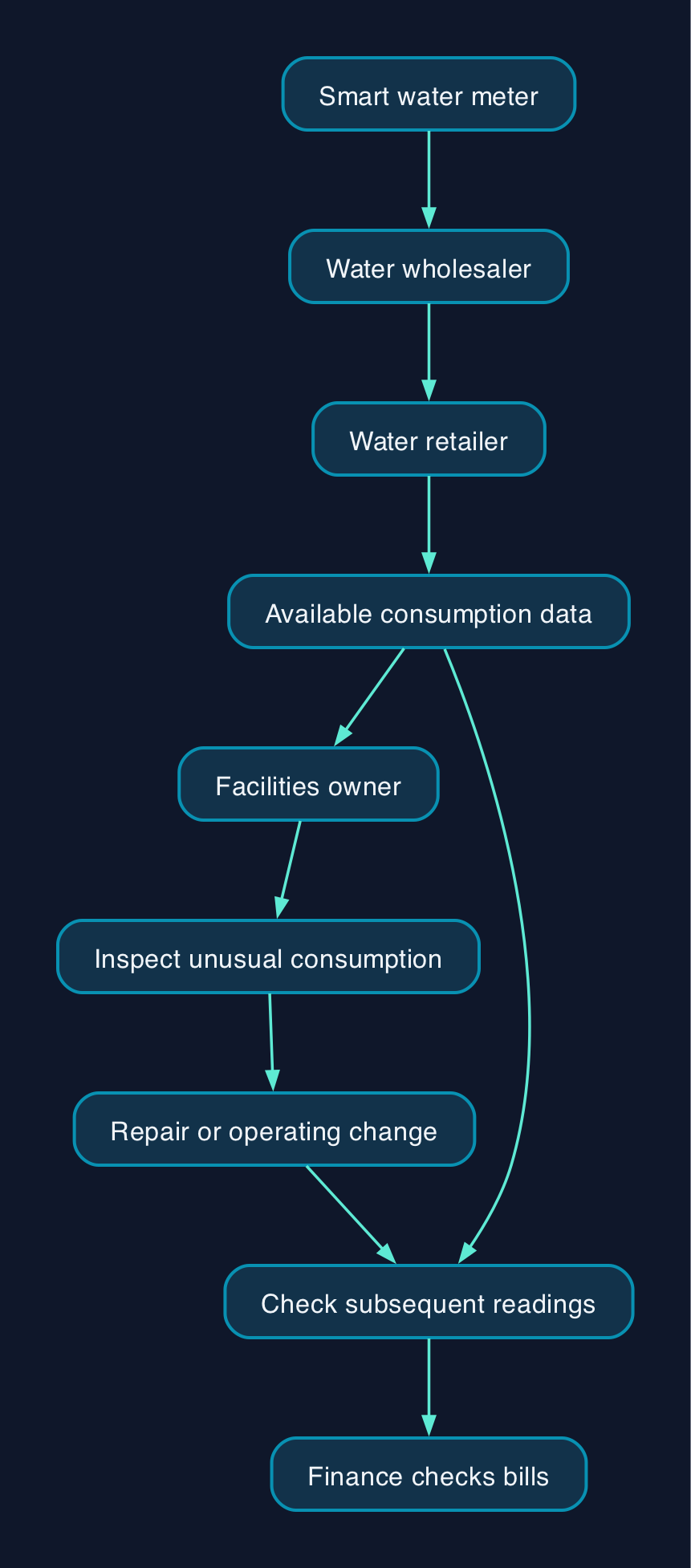
The basic non-household chain is already described by CCW. The meter sends information to the wholesaler, which shares it with the retailer.
My proposed operating model adds an explicit customer response after that chain. Available data reaches a facilities owner, unusual consumption prompts an inspection, and subsequent readings help establish whether a repair or operating change worked. This is a recommended workflow, not a claim that every retailer supplies the necessary integration.
Technology teams should agree the access and support arrangements. Facilities teams should own investigation and intervention. Finance should check the resulting bill and any claimed savings. At a leased property, landlord and tenant should settle who receives alerts, grants access and authorises work.
A missing reading also needs an owner. Ask the provider how it distinguishes zero consumption from missing data, how delayed readings are recovered and who investigates a communications failure. These are acceptance questions, not assumptions about existing functionality.
For utility operators procuring the infrastructure itself, the scope is broader. Require documented responsibilities for device identity, software updates, access control, communications support and replacement. For business customers using a retailer’s portal, the priority is dependable access and escalation rather than direct control of the utility’s meter.
Free installation does not price the operating service
The no-cost installation described by CCW does not provide a complete budget for a landlord’s monitoring operation.
Before approving an additional service, request separate costs for data access, integration, alert configuration, staff training, support and exit. Add the people who will inspect suspected leaks and arrange repairs. For private submetering, also ask about equipment, fitting, communications and ongoing maintenance.
There are distinct commercial routes, and they should not be treated as interchangeable products.
| Route | What the supplied evidence establishes | What the buyer should establish |
| --- | --- | --- |
| Business Stream retailer service | Its [smart-meter information](https://www.business-stream.co.uk/smart-meters/) says consumption data will be made available through My Business Stream as it receives that data. | When each site becomes visible, what alerts and exports are available, and whether additional services carry charges. |
| SUEZ utility infrastructure service | Its [UK service description](https://www.suez.com/en/uk/water-network-management/smart-metering-services-for-the-water-industry) covers metering infrastructure, installation and data services, with ON’Connect supporting remote reading and billing-system integration. | Contractual coverage, delivery performance, security responsibilities and long-term support for the particular deployment. |
| Meters UK private metering route | Its [supplier catalogue and service description](https://metersuk.co.uk/) offer water meters and SmartlinkMR remote reading, with compatibility dependent on meter outputs and communications. | Whether the proposed equipment supports the site’s water meters, what installation includes and how the customer retrieves its data. |
The first route serves a business through its water retailer. The second addresses utility infrastructure procurement. The third concerns privately specified property metering. The available evidence does not support a like-for-like price or performance ranking.
For a small business, start by establishing what the existing retailer can deliver. Buy an additional monitoring layer only when its benefit is specific, such as filling a documented gap in data access or response.
The strongest objection is another system nobody maintains
The strongest counterargument is that a managed endpoint creates work before it creates savings. A business with modest consumption may have little to gain from a separate dashboard, recurring subscription and stream of alerts. Calling the meter “IoT” does not strengthen that business case.
That objection is right when the proposed service has no response owner or measurable purpose. A consumption graph cannot repair a pipe. An alert reviewed after the next bill arrives has little operational value.
The answer is a bounded pilot at a site with a clear reason to investigate, such as unexplained overnight usage. Agree the baseline, who reviews the readings, what triggers inspection and how an intervention will be evaluated. Account for changes in occupancy or operating hours before attributing lower consumption to the technology.
Retaining existing equipment may also be sensible. Business Stream says data loggers can remain useful, particularly across multiple wholesale regions where smart-meter capability varies. Replacement should follow evidence that the new service meets the existing need.
Editorial analysis
The most credible near-term future is water data becoming part of ordinary maintenance work. British technology providers should build services around data quality, exception handling and accountable response before promising autonomous demand management.
Automation could follow, but measurement and control are different capabilities. A proposed change to irrigation or another discretionary process would need a suitable control system, operating limits and human override. The sources here do not establish a ready-made connection from utility meters to those controls.
Pricing deserves the same discipline. United Utilities identifies tariff innovation as a potential benefit, but that is insufficient grounds for a business to budget for a particular demand-based tariff.
The procurement question should therefore be concrete. Who receives the reading, how late can it arrive, who acts on an exception, and what evidence closes the job? Answer those questions and the meter becomes useful infrastructure.
FAQ
Will a smart water meter reduce my business’s bill?
Not necessarily. CCW says bills may change when actual readings replace estimates. Treat reduced consumption as an outcome to demonstrate through investigation and action, rather than an automatic installation benefit.
Can we connect the meter directly to our building software?
Do not assume that connection is available. CCW describes data moving through the wholesaler and retailer, while additional features vary by retailer. Ask for documented export or integration options, permissions and delivery intervals before commissioning software work.
Should we remove our existing water data logger?
Check its role before agreeing to removal. Business Stream advises customers with existing loggers that the wholesaler should consult on the exchange. Compare continuity, detail and access before deciding whether the replacement service is sufficient.
Can smart water meters automatically restrict demand?
The supplied evidence supports measurement, consumption analysis and leak-related services, but does not establish automatic demand restriction as a standard business feature. Treat any proposed control scheme as a separate project requiring engineering assessment, explicit authority and a safe manual override.
Sources
- Smart Nation Singapore — Smart City solutions, updated 18 August 2026.
- CCW — Smart water meters for non-household customers.
- Northumbrian Water — Smart water meters for businesses.
- United Utilities — Smart meters for businesses.
- Wessex Water — Smart metering for non-household customers.
- Business Stream — Smart meters.
- SUEZ — Smart metering services for the water industry.
- Meters UK — Metering products and remote-reading services.