UK farms should make usable records a condition of automation
British farms should require usable records when automation promises better decisions or measurable performance. Keep the requirement proportionate, test the handover and exclude unproven data value from the purchase case.

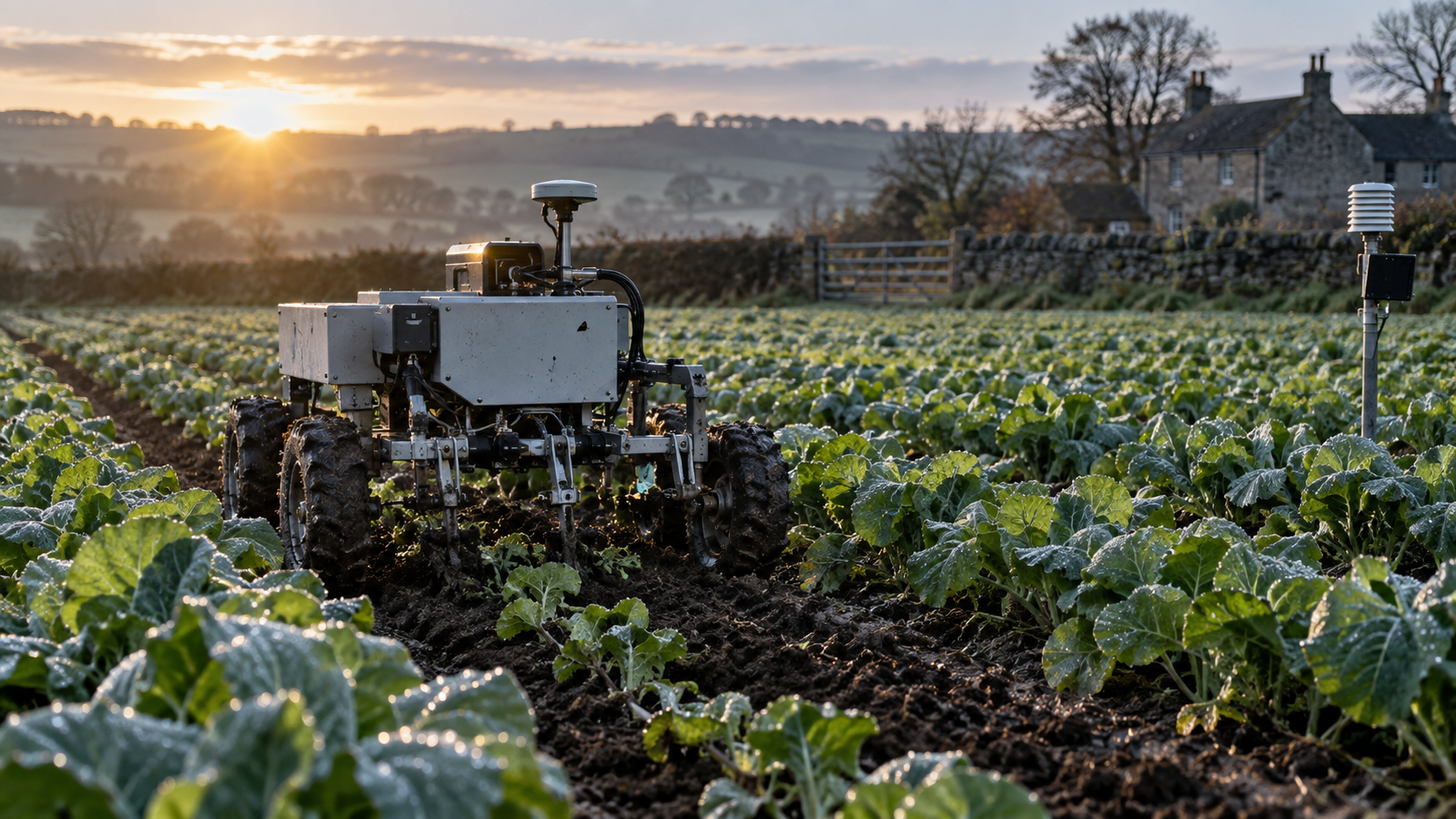
British farms should require usable records whenever an automation purchase depends on claims about better decisions or measurable performance. They should pay extra for analysis only when it answers a defined farming question. South Korea’s agricultural AI programme explicitly connects computing support with dataset construction and sharing. That is a useful procurement principle, although it does not prove profitability. The requirement must remain proportionate to the job and the cost of checking it.
Key pointers
- Make suppliers demonstrate the records needed to substantiate their performance claims.
- Specify the farming decision before commissioning additional data collection.
- Test a sample export with the person who will actually use it.
- Compare automation with keeping or improving the existing equipment.
- Include training, interpretation, support and exit costs in the purchase assessment.
- Reject speculative data income as a justification for an otherwise weak investment.
A promise of better decisions needs a deliverable
Compare the Cloud’s position is that a supplier claiming value from farm data should make that value testable before the buyer commits. The quotation should identify the observations supplied, the decision they support and the work required to interpret them. A promise of future insight is insufficient grounds for paying more.
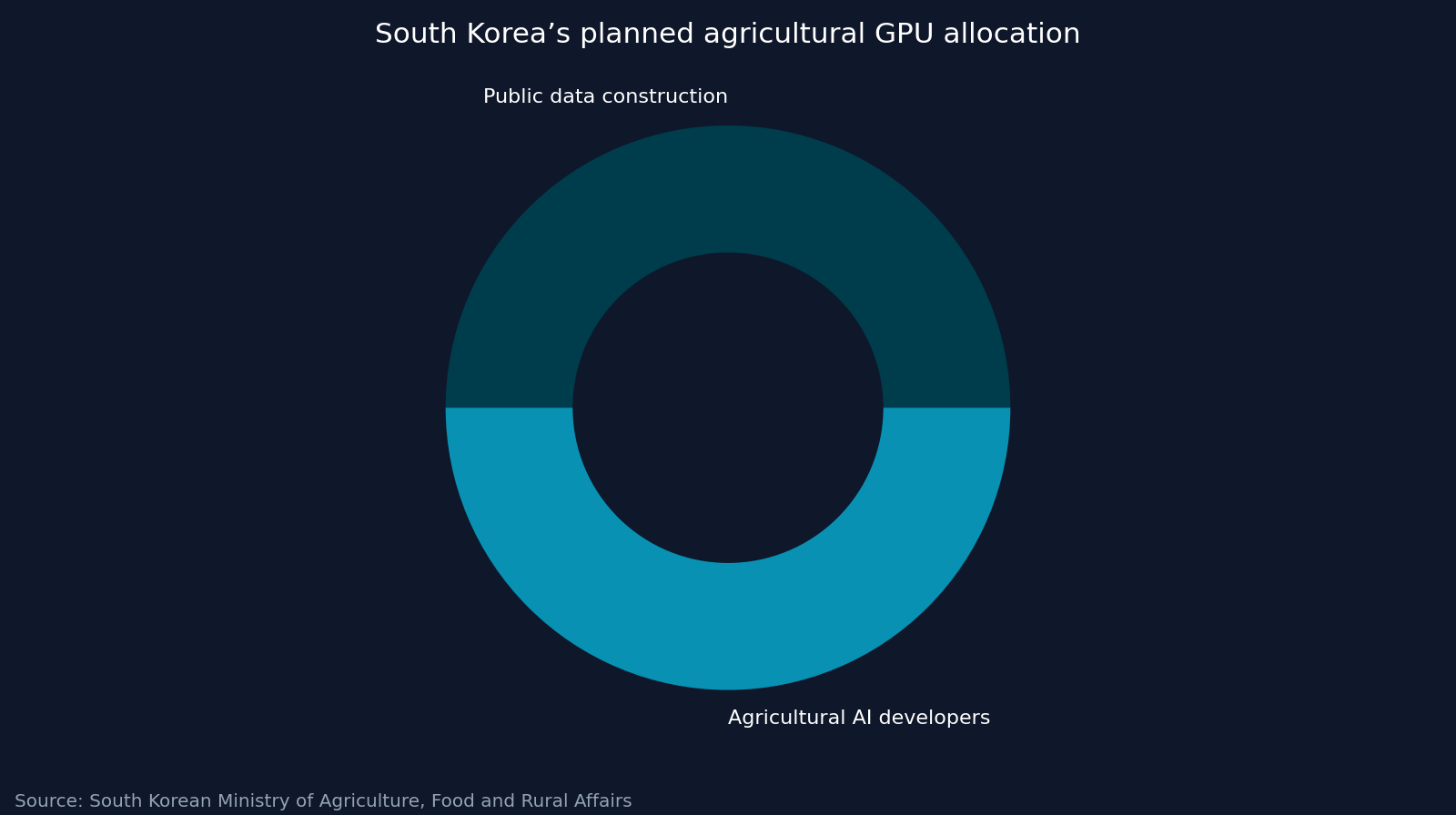
South Korea’s programme offers a specific example of defining the work. The ministry planned to turn crop photographs and video into training data. Agricultural AI developers would receive computing support to combine government smart-farm data with field observations and construct datasets for sharing. Those are announced activities with expected benefits, rather than demonstrated improvements in farm margins.
The separate agricultural AI platform proposal also allocates responsibility. Local authorities would provide land, technology companies would develop AI farming models and machinery services, and an agricultural operator would grow crops and validate models in the planned greenhouse.
British buyers should borrow that specificity. A machinery contract can state who produces the records, who checks them and what the farm receives. The evidence supports using these announcements as examples of defined responsibilities. It does not support importing their expected benefits into a British farm’s financial forecast.
Judge suppliers by the operation they improve
The British projects in the evidence show why a generic requirement for “more data” would be poor procurement.
Outfield Technologies leads VISTA with partners including Antobot. Its vineyard mapping work is intended to support harvest planning and variable-rate applications. The Agaricus Robotics-led harvesting project instead scans mushroom beds before picking, then measures and trims stalks. These are different operations described in Defra’s project account, at different stages of development.
They are not competing quotations for the same farming job. Neither description establishes that a buyer receives a complete, transferable record of farm operations.
Our recommendation is to make the acceptance test reflect the purchased task. A mapping supplier should demonstrate how its output supports the intended planning decision. A harvesting supplier should demonstrate the work performed and the evidence needed to check it. An open-source description alone should not settle either purchasing decision.
Retaining existing equipment belongs in the comparison. Parliament’s 2015 briefing described vehicle-mounted crop and yield sensors. That historical example supports asking whether existing machinery could supply the required observations, while leaving present-day compatibility to be demonstrated.
The strongest objection is that farmers need work done
The strongest objection is commercial. A machine may perform a valuable job even if its records are limited. Adding export, checking and interpretation requirements could increase cost and workload enough to undermine the reason for buying it.
That objection should change the scope of the requirement. We would not reject an otherwise suitable machine because it cannot supply measurements that the farm has no use for.
We would, however, challenge a premium justified by claims the buyer cannot examine. If the purchase case depends on improved decisions, reduced repeat work or measurable performance, the supplier should demonstrate the relevant evidence. Otherwise, assess the machine on the operation it can demonstrably perform and leave the additional claimed value out of the calculation.
For an illustrative robotic weeding pilot, the question could be whether missed patches require another pass. Request only the location, date, completed work, exceptions and operator corrections needed to investigate it. This is a proposed acceptance test, not a capability attributed to any named product.
Count the time spent checking those records. If the analysis adds no useful answer at an acceptable cost, stop commissioning it. That is a reason to narrow the data requirement, rather than abandon scrutiny of the supplier’s promise.
Make the handover an acceptance test
We propose making a usable sample job record part of acceptance wherever records are material to the purchase case.
Ask the provider to explain the units, field identifiers, corrections and missing periods. Then have the intended recipient read the export and use it to answer the agreed question. The test should demonstrate a working handover.
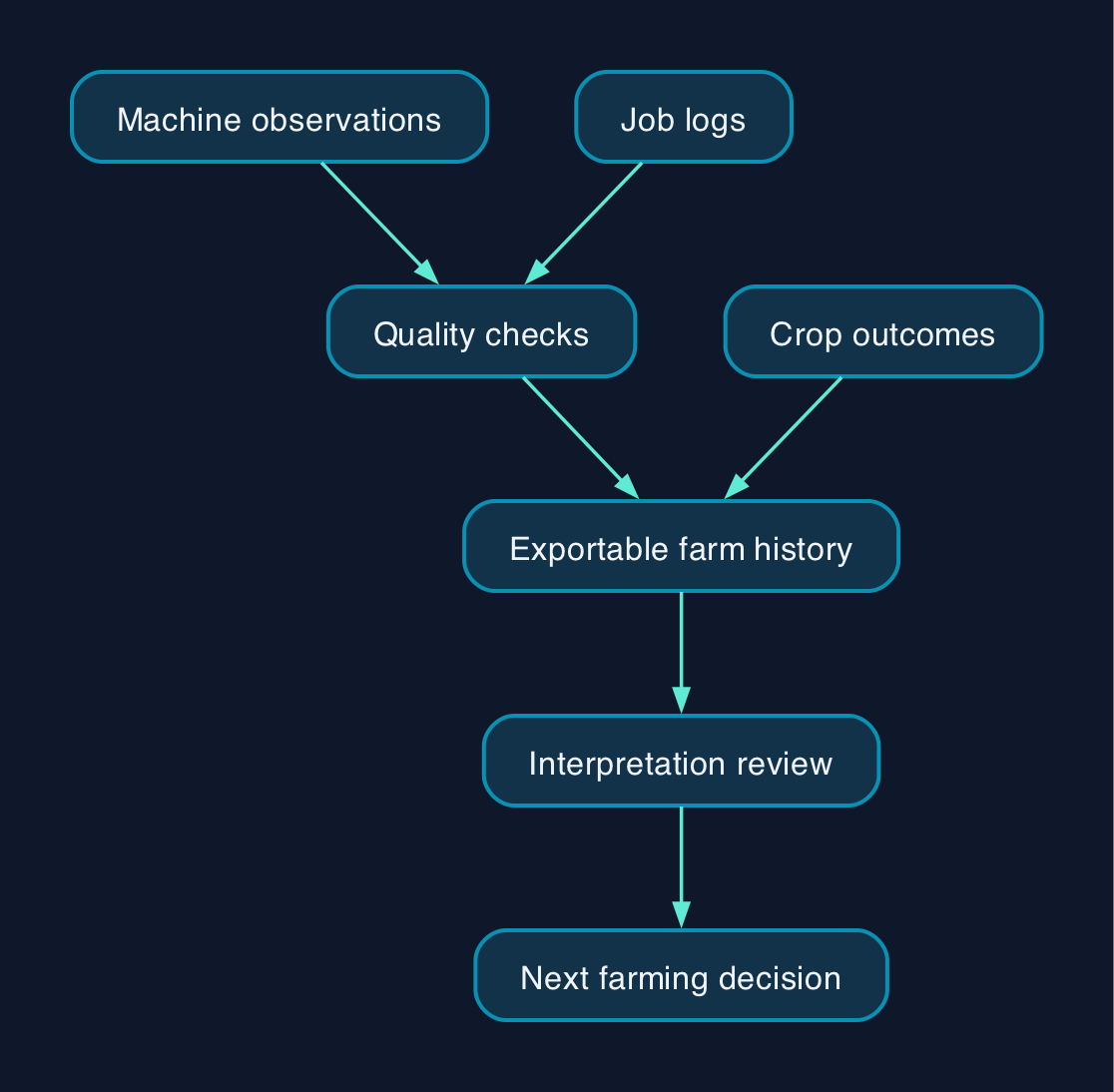
For records intended to support later crop decisions, our proposed workflow is to combine machine observations and job logs, check their quality, connect them with crop outcomes and retain an exportable history. A named person should review the interpretation before it informs the next farming decision. A result following an intervention should not, by itself, be treated as proof that the intervention caused it.
The contract should also address historical access, storage, export charges, support and responsibility for maintaining records when the service ends. These are proposed purchasing conditions. The evidence here does not establish them as existing legal rights.
Make the farming operation carry the purchase case
Request a cost assessment covering setup, connections between systems, connectivity, storage, calibration, training, interpretation, support and eventual export. Include the farm’s own staff time and identify services already bundled into the offer.
The evidence provides no comparable UK commercial quotations, so it cannot support a supplier price ranking. Buyers should obtain offers covering the same period and require each provider to identify who maintains and hands over the records.
Prospective insurance discounts, cheaper borrowing and data resale should remain outside the base calculation. No offer in this evidence establishes those benefits for the buyer.
Our recommendation is therefore conditional but firm. Buy automation when the farming operation justifies it. Where the supplier also sells the value of its records, require a usable handover and a testable purpose before paying for that value.
FAQ
Should a farm reject machinery that cannot export records?
Only where those records are necessary to check a material performance claim or support the intended workflow. A useful machine should not fail procurement because it cannot provide information the farm does not need.
What should happen before the contract is signed?
Ask the supplier to demonstrate a complete sample job record and explain its units, locations, dates and corrections. Have the intended recipient use it to answer the agreed operational question, then confirm the costs and terms of continuing access.
Does the evidence favour one machinery supplier?
No comparable supplier assessment is available here. Defra’s descriptions of VISTA and the mushroom harvesting project concern different farming tasks and do not establish a universal winner.
Does South Korea’s programme prove that farm datasets are profitable?
No. The April 2026 announcement describes planned computing use, dataset construction and expected benefits. It provides a useful example of explicit deliverables, without establishing returns a British buyer could put into a purchase calculation.
How should a small farm test the recommendation?
Choose one operational question and request only the records needed to answer it. Compare the proposed process with the existing one, including staff time and interpretation costs, and stop additional analysis if it does not justify its expense.
Can data income or finance discounts justify paying more?
The evidence here establishes no such offer. Require written terms from the intended buyer, insurer or lender before including that income or saving in the business case.
Sources
- 농림축산식품부, ‘스마트농업 데이터 AX활용’ 본격 추진, 22 April 2026
- 농림축산식품부, 초혁신·모두의 AI농업 실현을 위한 ‘국가 농업AX플랫폼’ 우선협상대상자 선정, 28 April 2026
- Defra, Apply now for automation and robotics funding, 3 August 2026
- Parliamentary Office of Science and Technology, Precision Farming, September 2015