Britain’s SMR opportunity is in repeatable delivery
Canada’s Darlington project turns the SMR debate towards construction. British engineering and software firms should compete on repeatable, documented delivery, without treating a planned fleet as guaranteed orders.


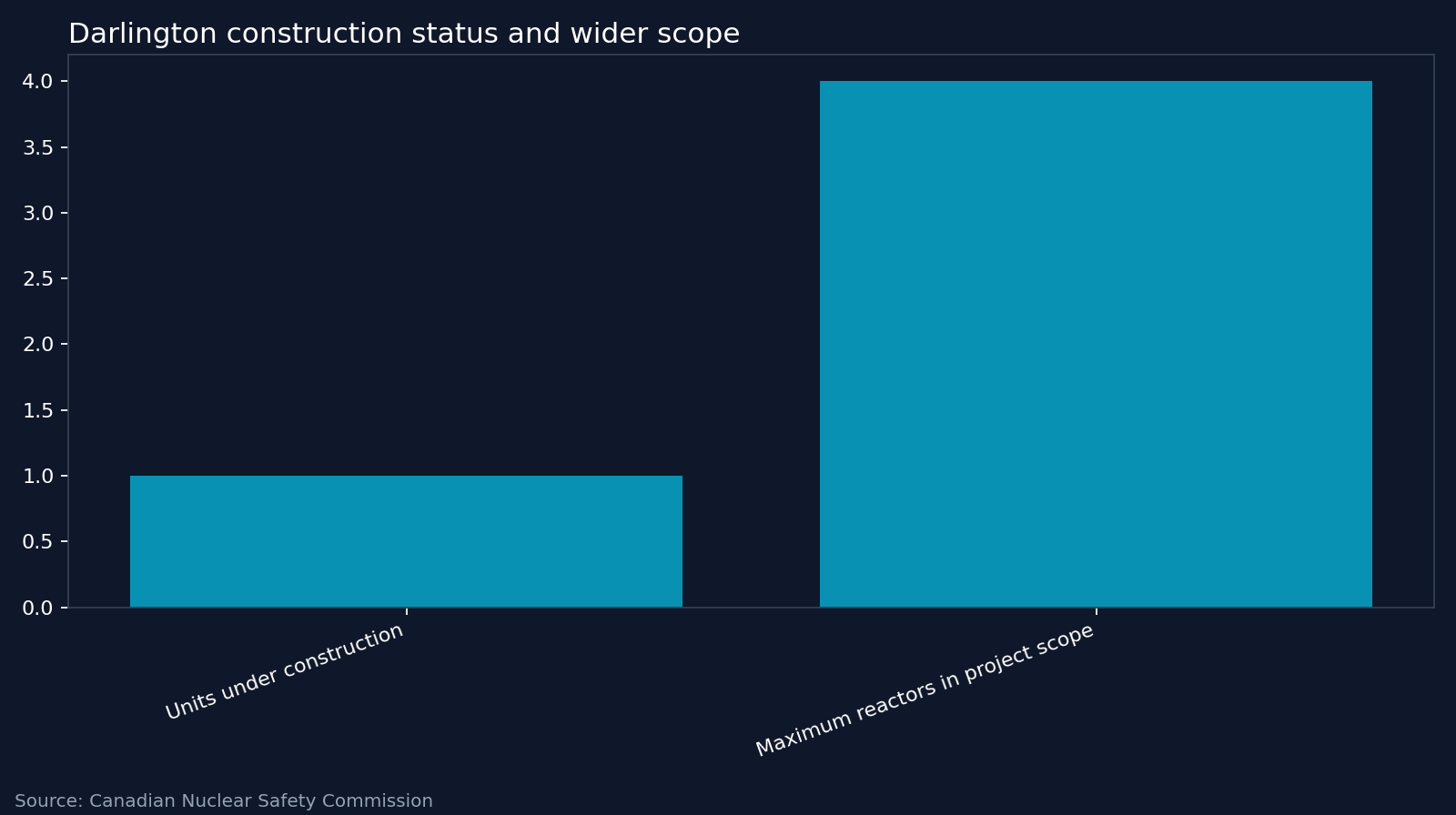
British companies should judge small modular reactor opportunities by their ability to deliver repeatable, documented work, rather than by reactor announcements alone. Canada’s Darlington project makes that commercial test concrete, with 1 reactor under construction within a project covering up to 4. The opportunity for UK engineering and software suppliers is to make each subsequent build easier to execute and verify, while recognising that repeatability remains an ambition to prove.
Key pointers
- Ask which funded work package your business could deliver before investing in an SMR proposition.
- Separate the reactor designer, construction partners, project manager and regulator when identifying your buyer.
- Make document acceptance and engineering change control part of the offer.
- Price the first deployment separately from any proposed repeat order.
- Treat later reactors as conditional opportunities until the relevant approvals and contracts exist.
- Require evidence of reduced rework or shorter delivery times before accepting claims of repeat-build savings.
Darlington makes delivery a testable proposition
The significant development in Canada is the move into construction. A reactor being built creates opportunities to examine procurement, engineering changes and handovers against an actual project schedule.
OPG’s programme overview describes a first phase combining the initial reactor with facilities intended to serve the wider development. These include cooling-water intake and discharge structures, alongside administration, fabrication and security buildings. The same filing says preparations for the remaining reactors continue, with their construction subject to further approvals. These are different stages of commitment within one programme.
That distinction matters to a British supplier deciding whether to recruit engineers or reserve manufacturing capacity. A planned fleet is a reason to investigate demand. It should not be entered into a sales forecast as contracted repeat business.
My position is that UK companies should compete to make a defined part of that delivery process reproducible. A supplier that can show how it will preserve an approved design, manage changes and deliver an accepted evidence package has a proposition buyers can assess.
The supply chain includes who accepts the work
Darlington also shows why “the reactor supplier” is too broad a description of the commercial opportunity.
OPG’s filing identifies the original parties to its Integrated Project Agreement as OPG, GE-Hitachi, Candu Energy, an AtkinsRéalis subsidiary, and Aecon. It records Kiewit joining in May 2025 to assist construction. The agreement’s scope extends across design, engineering, licensing support, procurement, installation, testing, commissioning, training and turnover of the facility. These organisations participate in a delivery arrangement with defined responsibilities; they are not interchangeable bidders for the same task.
For a UK entrant, the useful comparison is between routes into that work. Supplying a component, providing engineering services and supporting project information systems involve different buyers, acceptance conditions and liabilities. Choose the route where the business can demonstrate competence and identify who signs off its deliverable.
The historical licensing process illustrates the importance of information ownership. The August 2024 OPG–CNSC protocol required formal communications to carry record numbers and be captured in action tracking where appropriate. It also identified incomplete information and significant design changes among circumstances that could extend review.
That protocol concerned the construction-licence application and ended with the licensing decision. Its relevance here is the recorded mechanism linking the quality of submissions to review progress, rather than a claim that its administrative arrangements remain current.
Where British technology firms should focus
For a software business, I would start with a narrow handover problem. Can the customer retrieve the approved document revision, connect it to the relevant component and identify an unresolved change without reconstructing the history manually?
That is a proposed commercial test, not evidence that Darlington has a particular software deficiency. The supplied sources establish the importance of controlled information; they do not identify an open software tender or a preferred technology platform.
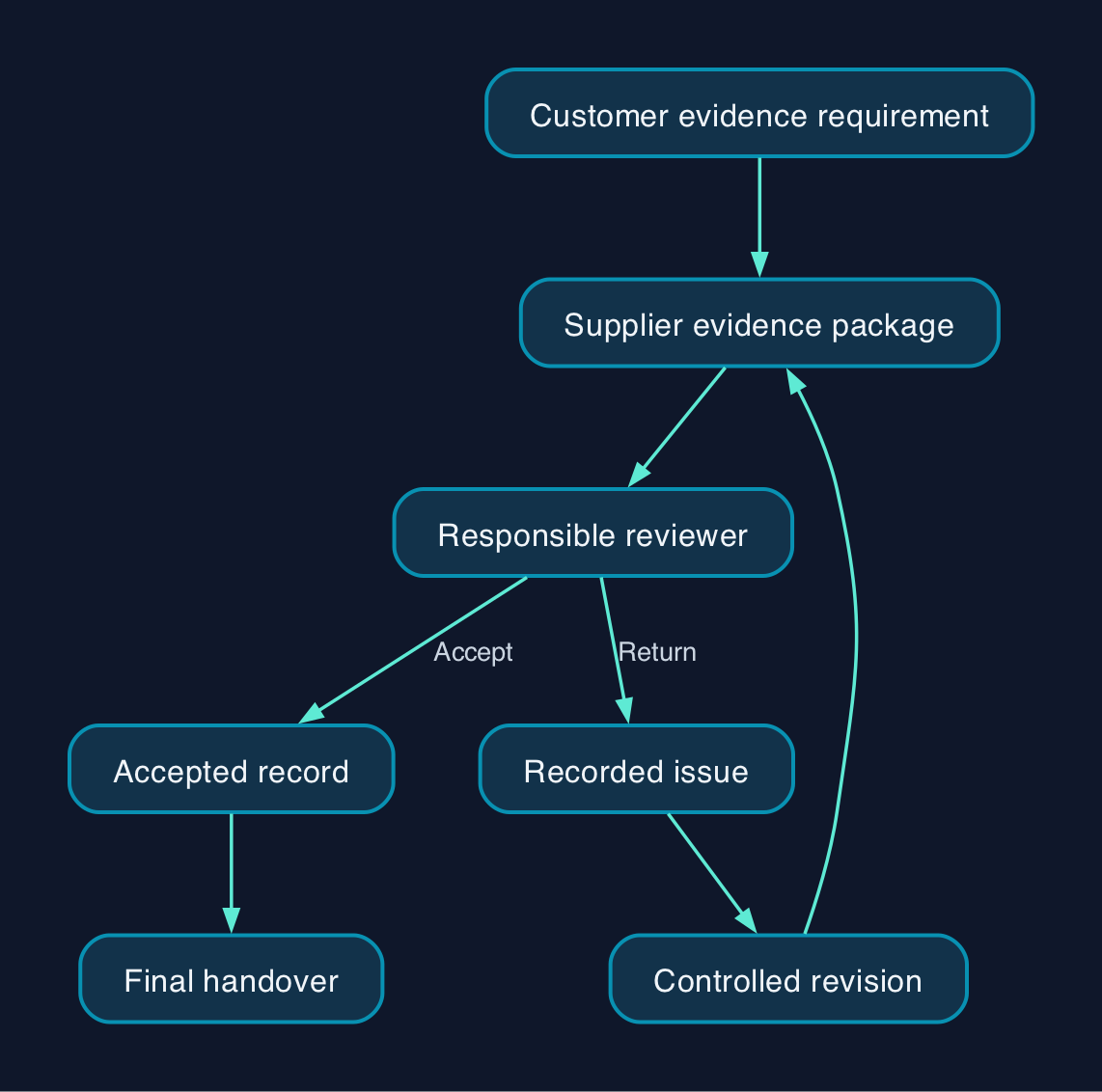
A credible pilot would follow one agreed sequence. The customer defines an evidence requirement. The supplier submits the package. The responsible reviewer accepts it or returns a recorded issue. Any revision retains its connection to the earlier submission. The final handover contains the accepted record.
For a smaller UK firm, that scope offers a clearer investment decision than promising a platform for an entire nuclear programme. Before development starts, agree the permitted data, access controls, export format, review owner and acceptance test. Keep commercial project software distinct from safety-related reactor systems, and establish the intended classification and assurance requirements with the customer.
Engineering suppliers should apply the same discipline to physical work. Ask which drawings govern manufacture, who approves a deviation and what records must accompany delivery. Those questions turn an attractive sector into a specific contract opportunity.
Price the first build without assuming the next
The available evidence does not establish a comparable reactor price, UK supplier margin or measured saving from repeated construction. It therefore cannot support a financial claim that modularity has already made this programme cheaper.
For a prospective supplier, I would separate bid preparation, qualification, tooling or configuration, production, inspection, documentation, support and change requests. Identify which costs are incurred once and which recur on every unit. Then ask what happens to the unrecovered first-build investment if later orders do not arrive.
The historical OPG–CNSC protocol explicitly stated that procurement of long-lead items remained at OPG’s business risk and that staff reviews could not bind Commission decisions. That is a concrete example of commercial commitment preceding final regulatory certainty.
For British business owners, the corresponding negotiating issue is who pays for reserved capacity, redesign and cancellation. A proposed repeat-order discount should identify the order commitment that makes it affordable.
The strongest objection is that the design still matters
The strongest counterargument is straightforward. A well-organised supply chain cannot rescue a reactor design that fails its safety, engineering or economic tests. Standardising manufacture too early could reproduce an unresolved problem.
Darlington’s construction controls support that objection. Its regulatory hold points concern structures, systems and components important to safety. The pressure-vessel and fuel-out commissioning checkpoints cover distinct permissions for installation and testing, as the CNSC’s explanation makes clear.
The answer is to define repeatability around approved work and controlled changes. It should mean knowing what can be repeated, what requires reassessment and who has authority to decide.
Nor does the first reactor establish the economics of a fleet. The project record supports a narrower conclusion: construction provides a setting in which delivery claims can be tested. Evidence of falling rework, reliable component deliveries and reusable documentation would strengthen the commercial argument. The supplied material does not yet demonstrate those outcomes.
Editorial analysis
Britain’s practical opportunity is to build capabilities that a customer can buy, inspect and use again. That could be a manufactured item, an engineering package or a reliable process for handing over accepted information.
The next step for a UK supplier should be a conversation about a defined package, its acceptance criteria and the cost of preparing to deliver it. Commit further capital when the customer, contract and responsibilities become clear.
Darlington deserves attention because it puts those questions into a construction programme. British companies should use that evidence to sharpen their offers, while making repeat orders something to earn and verify.
FAQ
Has Darlington proved that SMRs can be built repeatedly?
No. The CNSC project record identifies one reactor under construction within a scope of up to four. That establishes construction progress, but does not demonstrate completed repeat builds or their economics.
What could a British software company contribute?
A sensible proposition would address a specific customer need in document control, engineering change tracking or evidence handover. The historical licensing protocol demonstrates the importance of recorded, retrievable communications. It does not establish that a software procurement opportunity is currently available.
Should UK suppliers invest ahead of later reactor orders?
Only against a business case that remains affordable if those orders are delayed or never placed. OPG’s programme overview distinguishes construction of the first unit from preparations for later units requiring approvals. Seek explicit terms for development costs, capacity reservations and cancellation.
Does construction approval mean the reactor can operate?
The CNSC project record distinguishes the granted construction licence from OPG’s March 2026 application for an operating licence. It states that the operating application is subject to a Commission decision following a public hearing. Construction progress should therefore not be described as permission to operate.
Sources
- Canadian Nuclear Safety Commission — Darlington New Nuclear Project
- Canadian Nuclear Safety Commission — Regulatory hold points for new reactor facilities, modified 31 March 2026
- Canadian Nuclear Safety Commission — OPG–CNSC staff protocol for the construction-licence application, August 2024
- Ontario Power Generation — Darlington New Nuclear Program overview, filed 12 December 2025