Britain should plan data centres around useful heat
Britain should assess heat reuse before choosing data-centre sites. The investment case needs identified customers, full delivery costs and clear responsibilities, with projected benefits kept separate from measured results.

Britain should require a credible heat-reuse assessment before investors settle on a data-centre site. The test should be whether nearby customers can receive useful heat at an acceptable cost, with clear responsibility when supply fails. For British developers and technology buyers, the practical priority is to bring the prospective heat-network operator into the location decision and make any claimed benefit conditional on a funded delivery plan.
Key pointers
- Identify prospective heat customers before including heat reuse in an investment case.
- Distinguish an operating heating plant from a working connection that recovers server heat.
- Ask for expected monthly heat deliveries alongside maximum equipment capacity.
- Include connection works, electricity, maintenance and alternative heating in the cost assessment.
- Agree who pays when either the data centre or the heat network cannot deliver.
- Assess competing sites and suppliers against the same delivery requirements.
An operating heat plant is only one milestone
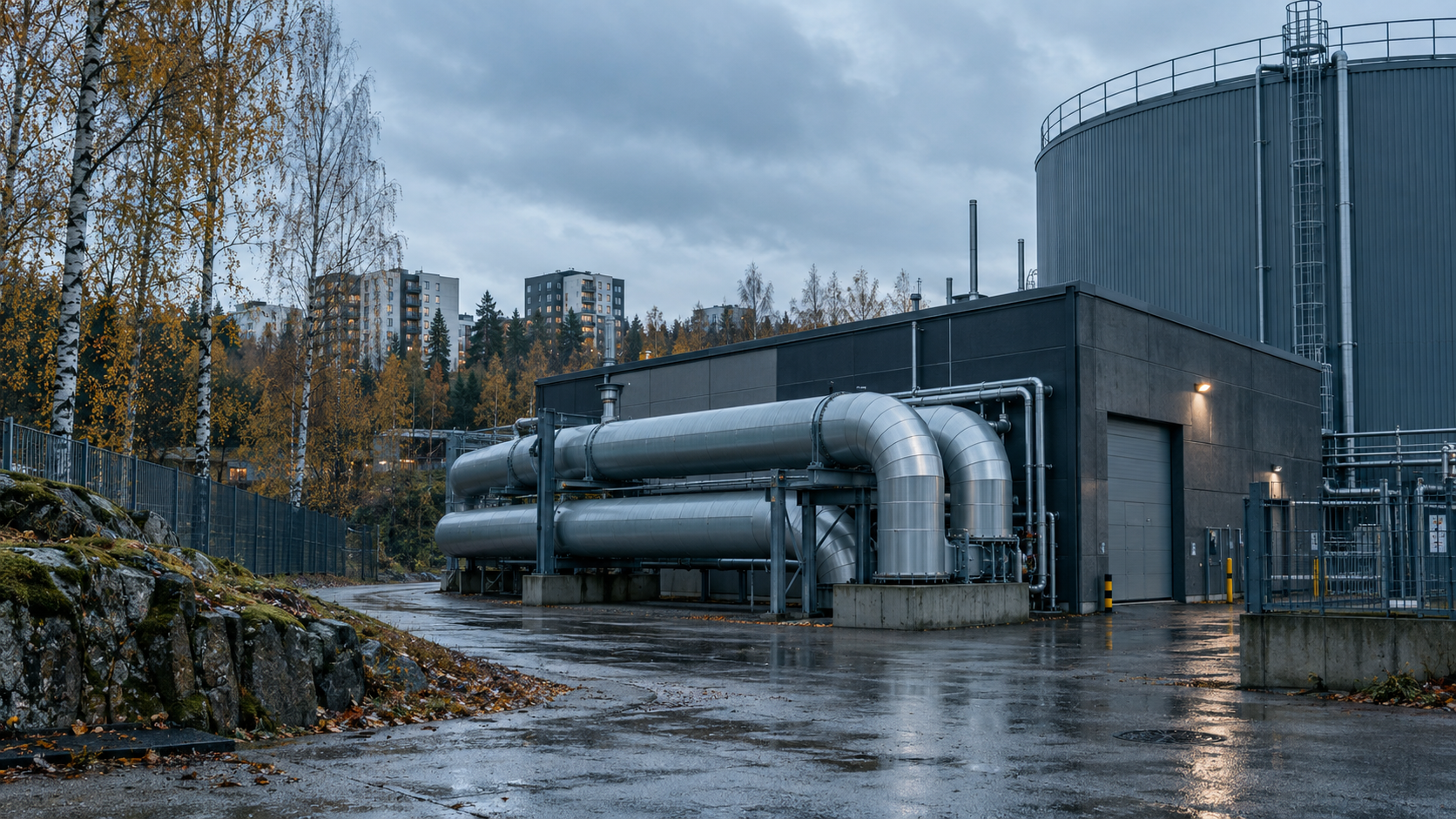
Finland offers a useful example because the heating infrastructure and the computing facilities have distinct commissioning schedules.
Microsoft’s April 2026 construction announcement expected first-phase construction to finish around the turn of 2026–2027. Preparations for commissioning would follow, with the opening announced separately.
Read alongside the May heating update, that timetable supports a precise conclusion. Heat production had started, while the planned contribution from servers remained dependent on the data centres’ construction and commissioning.
British procurement teams should insist on that distinction in their own assessments. A supplier proposing heat recovery should identify the operating equipment, the unfinished connections and the customers expected to receive heat. Each stage deserves its own acceptance test.
The Finnish plants’ ability to produce heat independently also raises a useful commercial question. Who provides heating while the computing facility is being commissioned, and who carries the cost if that process takes longer than expected?
The connection determines whether heat becomes useful
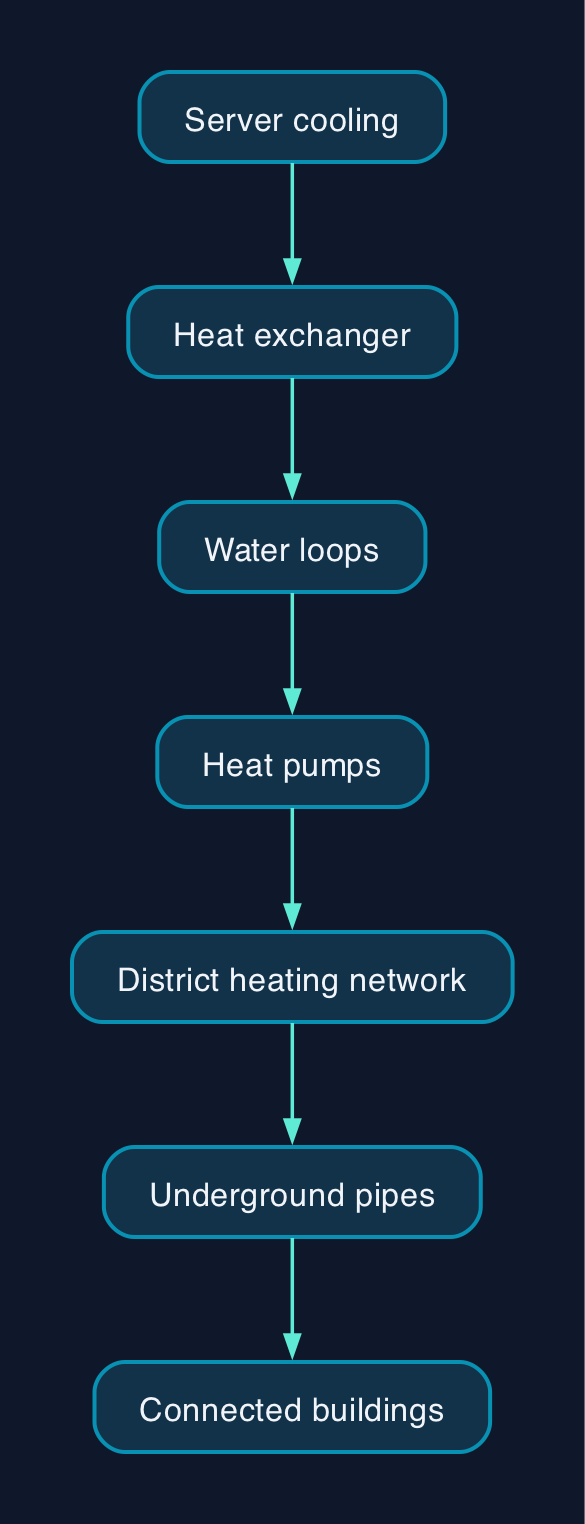
The physical route is straightforward to describe. An air-to-water heat exchanger captures heat from server cooling and transfers it into water loops. Heat pumps raise the temperature for the district heating network, which distributes heat through underground pipes to connected buildings. The supplier’s heat-reuse technical overview describes this chain.
For a British developer, I would turn each connection in that chain into a named responsibility. The data-centre operator should specify the heat it expects to make available. The heating operator should explain the equipment and network needed to deliver it. Prospective customers should establish when they can connect and what service they need.
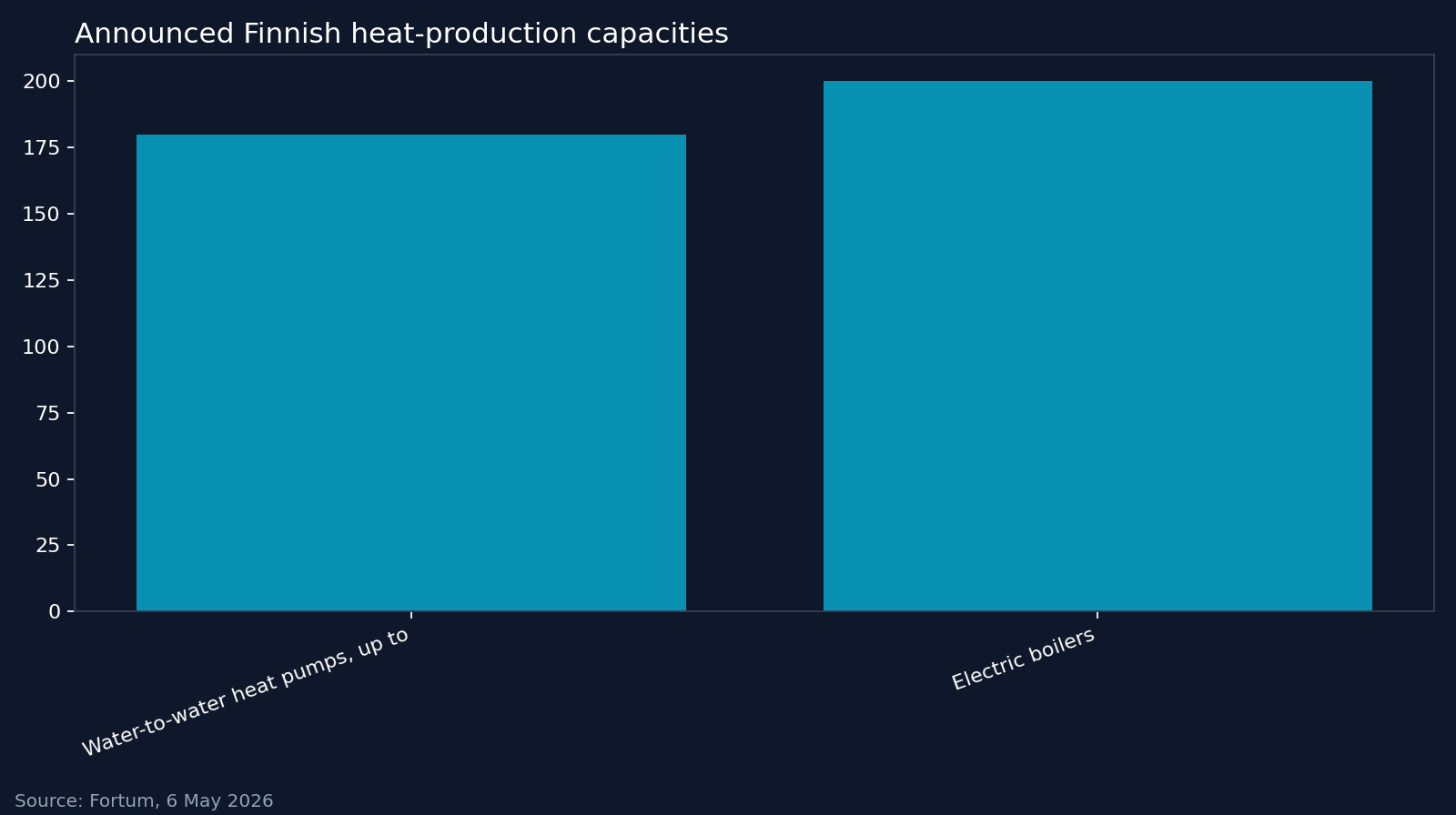
Thermal storage and alternative heat production also belong in the discussion. The Finnish equipment figures describe different functions within a heating system. Megawatts measure production capacity; megawatt-hours measure stored energy. Neither figure establishes how much recovered server heat customers have received.
An investment committee should ask for expected deliveries over time, supported by customer demand and commissioning milestones. Maximum plant output alone cannot answer that question.
Put a delivered heat price in front of the customer
The disclosed Finnish investment is a project figure in euros. It provides no defensible British tariff, payback period or cost per connected business.
A UK feasibility study should obtain quotations against a defined service. These are the questions I would require before approving the heat-reuse element of a development.
| Cost or responsibility | Question to resolve |
| --- | --- |
| Heat capture and temperature increase | Who funds the equipment, electricity and maintenance needed to deliver the agreed temperature? |
| Connection works | Who pays for the pipe route, excavation and building connections? |
| Storage and alternative supply | What service continues during an interruption, and who funds it? |
| Commercial operation | How are deliveries measured, prices changed and shortfalls handled? |
| Contract exit | Who owns the assets and pays for disconnection or replacement supply? |
For a small business considering connected premises, the immediate decision is more modest. Ask the landlord or heat supplier for the delivered price, service commitments and any cost of changing the building’s heating arrangements.
A claim about recovered heat should not substitute for those terms.
Compare the commercial arrangements
The Finnish project combines a utility’s heating infrastructure with planned heat recovery from a cloud operator. Other arrangements deserve examination against the same questions.
A case study of the Hamina scheme reports that Google would provide surplus heat without charge to Haminan Energia. This is secondary reporting of a planned arrangement, rather than evidence of the final price paid by connected customers.
A separate Danish project description assigns temperature-boosting heat pumps to the heating provider VEKS and identifies HTF as another district-heating partner. It describes an air-to-liquid heat exchanger within the data centre, followed by a connection to the local network.
These examples suggest useful procurement questions without establishing a supplier ranking. Is the source heat charged for? Who installs the heat pumps? Which organisation takes responsibility for delivery to the building?
British operators should face those same questions. A proposal offering heat without charge still needs a funded delivery system. A proposal backed by utility investment still needs acceptable customer terms.
The strongest objection is that the customers may be too far away
Heat reuse can be a poor investment at an unsuitable site. The technical overview explicitly acknowledges that many data centres are too far from communities for recovery to have a positive impact.
That is the strongest argument against requiring a connection at every facility. It is also the reason to assess the opportunity before choosing the site.
My position is that investors should require a credible assessment and accept a documented rejection. Where demand is too distant, uncertain or expensive to serve, the heat-reuse case should fail. Where a workable connection exists, the project should establish who will buy the heat and under what conditions.
This approach gives developers a decision they can defend. It also prevents an uncosted possibility from becoming a promised community benefit.
Editorial analysis
British technology leaders should give property and energy colleagues a defined role in data-centre selection whenever heat reuse forms part of the investment case.
For a council or developer, the next commission should compare candidate sites with potential heat customers. For an operator, it should establish the expected heat supply and delivery conditions. For a hosting buyer, the immediate question is whether the claimed benefit represents measured exports, a funded project or an aspiration.
I would give those three states different weight in procurement. A proposal should earn credit as its commitments become deliverable and its results become measurable.
FAQ
Are the announced Finnish heat benefits already being delivered?
The evidence distinguishes operating heating plants from planned recovery of server heat. Construction completion and commissioning are separate stages in the April project timetable, so buyers should request delivery records before treating projected benefits as achieved.
Does free source heat mean free heating?
No such conclusion follows from the reported Hamina arrangement. A buyer should ask who pays for temperature increases, distribution and continuing service before assessing the price charged to a building.
What should a small British business ask its landlord?
Request the delivered heat price, service commitments and any charges for connecting or changing equipment. Ask who handles faults and what happens to the building’s heating if the proposed source is unavailable.
Should every UK data centre have a heat-network connection?
My recommendation is to assess suitability before committing to one. The technical overview’s proximity constraint supports rejecting a connection where the customers are too far away for a useful scheme.
Does heat recovery prove a data centre is carbon neutral?
Heat recovery alone does not establish that conclusion. Buyers should request separate evidence for the facility’s electricity supply, useful heat deliveries and the heating those deliveries replace.
What evidence should an investment committee require first?
Ask for identified customers, a costed connection and clear operating responsibilities. Require the proposal to distinguish projected benefits from measured results, with acceptance conditions for each stage.
Sources
- Fortum, heat production starts at two Finnish data-centre sites, 6 May 2026.
- Microsoft, Finnish data-centre second-phase construction announcement, 28 April 2026, in Finnish.
- Microsoft, Modern datacenter heat energy reuse, technical infographic.
- Creating Sustainable Cities, Finnish data-centre heat-recovery case study, 1 December 2025.
- Microsoft Local, surplus data-centre heat planned for homes in Denmark.