British energy hardware needs an exit plan
British buyers should assess batteries and chargers on their exit arrangements as well as performance. Australia's interoperability policy points towards equipment that can outlast its original service relationship.


Australia’s endorsement of common energy-device requirements should push British buyers to demand a credible exit route before purchasing connected hardware. Our position is that the ability to change energy services should become a purchasing condition, alongside performance and warranty. Australia’s 18 initial minimum requirements signal that direction, but they do not establish that every battery, inverter or charger can already move freely between providers.
Key pointers
- Ask suppliers to demonstrate changing the control service while retaining the installed hardware.
- Separate electricity supply, device control and equipment warranties when reviewing a proposal.
- Require written confirmation of which functions survive cancellation of a subscription.
- Include migration, recommissioning and support charges in the purchase decision.
- Give integrated systems credit for simpler support, while testing their exit arrangements.
- Treat promised interoperability as something to verify on the proposed equipment.
Australia offers a direction rather than a finished template
Australia’s policy signal matters because it treats communication between energy devices and services as a shared concern. Its official listing describes interoperability as supporting communication, integration and operation across devices, systems, technologies and vendors. That is a more useful ambition for buyers than having every component accessible through the same app.
The evidence supports a narrower conclusion than universal compatibility, however. The available Australian policy extract records endorsement of the requirements, but does not establish their detailed coverage, implementation deadlines or switching procedures. British companies should study the direction without assuming the engineering and commercial problems have been solved.
The business IT analogy is a procurement test. If replacing a service means replacing otherwise useful equipment, the buyer has accepted a dependency that belongs in the investment decision. A working battery should not become an unattractive asset merely because its owner wants a different optimisation service.
For British manufacturers and software developers, the opportunity is to make that change practical. For buyers, the immediate task is to ask who controls the installed equipment after the original commercial relationship ends.
Britain has a reason to make switching practical
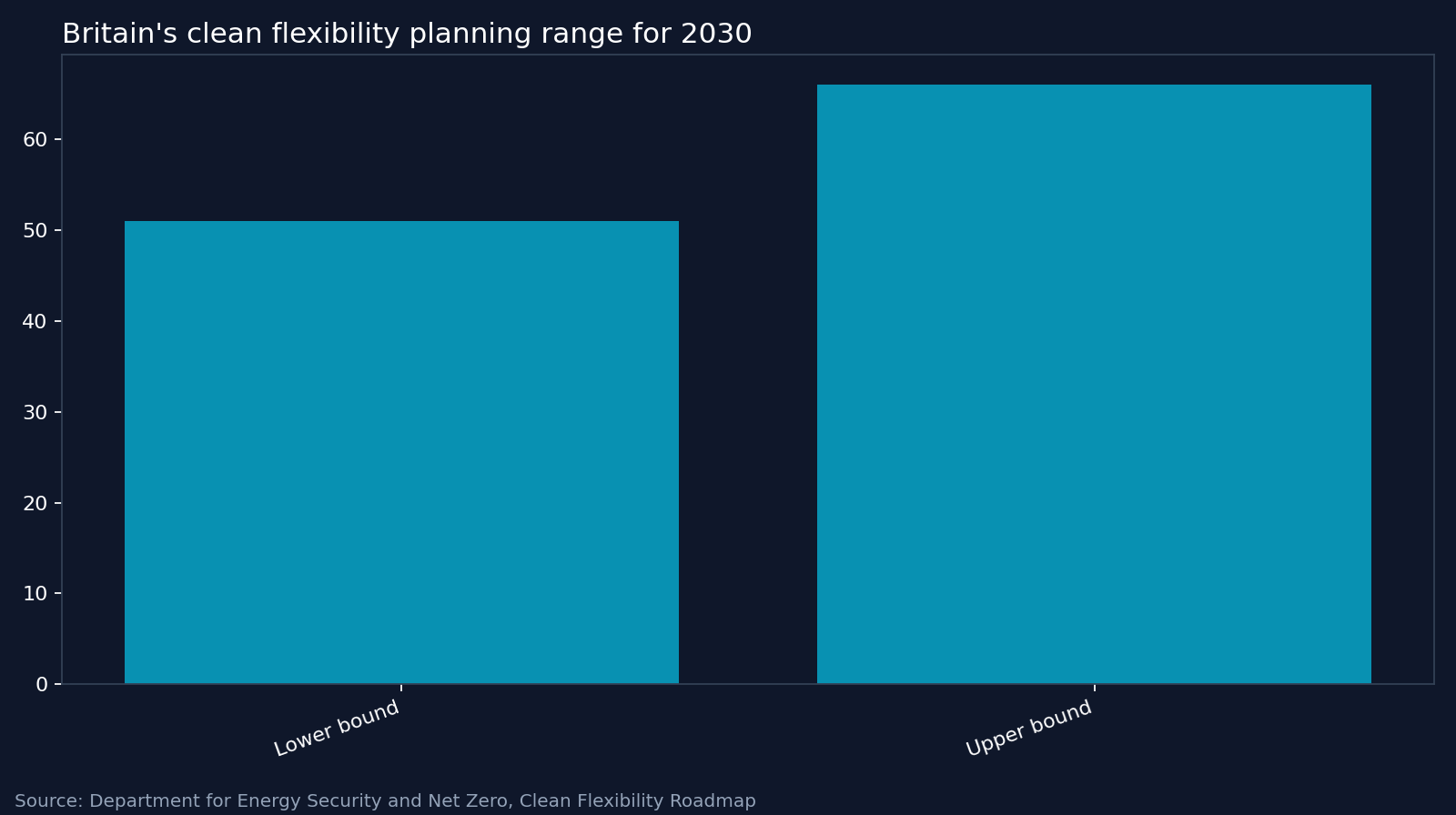
The Clean Flexibility Roadmap envisages 51 GW to 66 GW of clean flexibility capacity by 2030. Those figures are the lower and upper bounds of a planning range, not achieved capacity or a forecast of household battery sales.
The commercial implication is our judgement. If more value depends on when equipment consumes or exports electricity, the service controlling that timing becomes a more consequential purchasing choice. Buyers should preserve the ability to reconsider that choice.
Britain is already addressing the institutional side. Elexon’s programme description covers how energy smart appliances communicate and how load controllers and flexibility service providers manage household flexibility. It also describes technical and security governance groups.
That domestic-scale scope matters. A British business selling household chargers may encounter these developments directly; a company specifying a commercial depot should not assume identical requirements or eligibility. Neither programme ambition nor a governance announcement proves that a particular installation supports service switching today.
The connection that buyers need to test
A useful purchasing model separates the equipment, the service controlling it and the commercial arrangement rewarding its behaviour.
The equipment might be a battery or charger. A control service determines when it operates within agreed limits. An electricity tariff or flexibility arrangement determines how that behaviour affects the customer’s bill or payments. These roles should be identified in the proposal, even when the same supplier performs several of them.
Ofgem’s July 2024 flexibility announcement illustrates another dependency. It proposed a common registration system because flexibility providers otherwise had to register assets separately for different markets. That was a proposal at the time, not evidence that a universal registration service is now available.
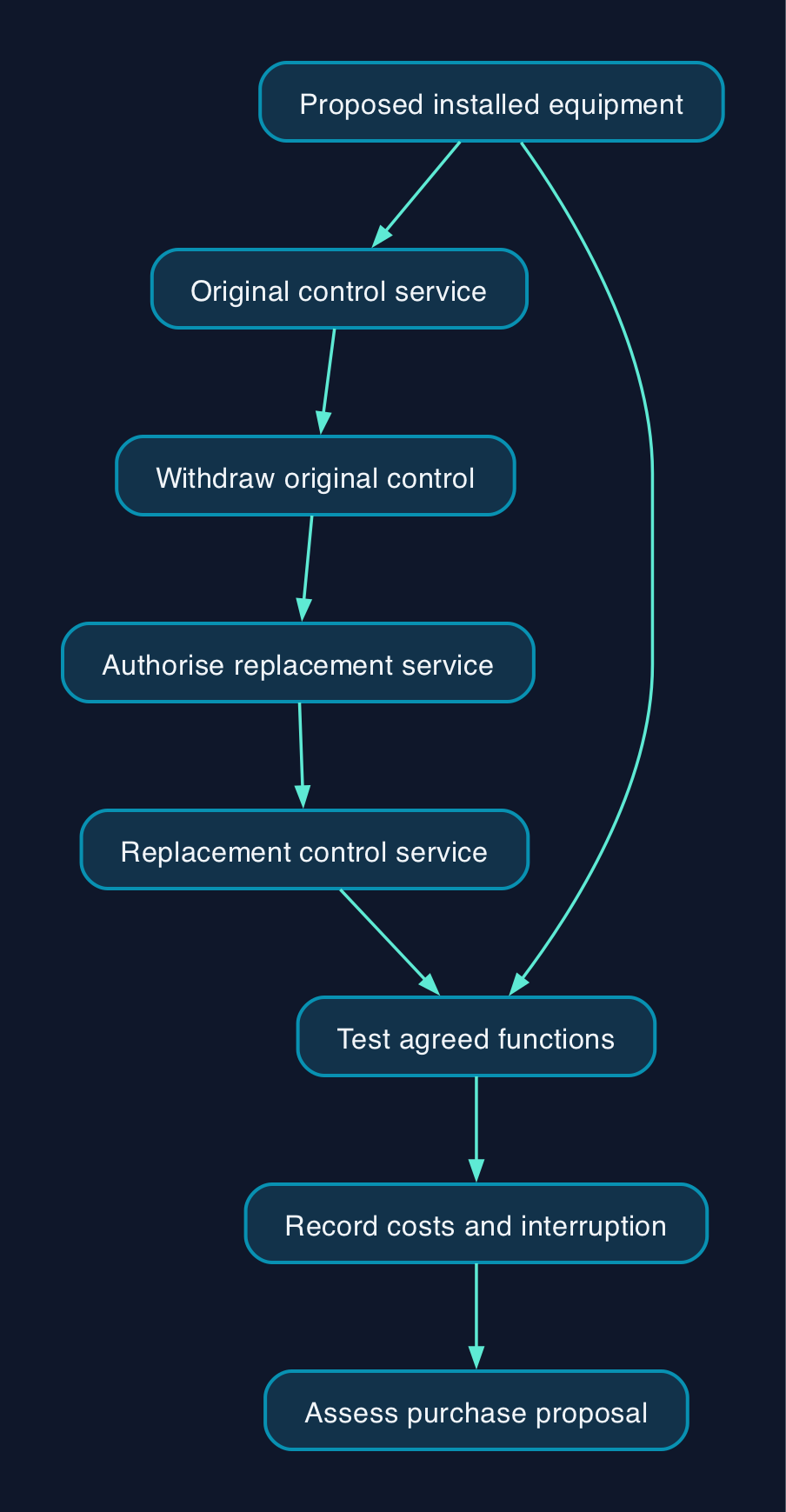
My proposed acceptance test is straightforward. On the exact equipment being purchased, demonstrate withdrawing the original provider’s control, authorising a replacement service and restoring the agreed functions. Record any installer visit, credential transfer, lost feature or interruption.
For a small business, the installer or service provider should own that demonstration. The owner should receive a written result and an escalation contact, rather than inherit an integration project.
Price the change of service before buying the equipment
The evidence does not provide comparable installed UK quotations or verified switching charges. A numerical product cost comparison would therefore be misleading.
Instead, request separate prices for equipment and installation, ongoing control services, connectivity, maintenance and exit work. Ask whether changing provider requires a gateway, a site visit, fresh configuration or renewed testing. Require the quotation to state its term, VAT treatment and exclusions.
Keep projected flexibility earnings separate from guaranteed charges. A supplier should identify the tariff, operating assumptions and equipment restrictions behind its forecast, and explain what happens if the customer leaves that service.
This makes the choice testable. A cheaper installation with an expensive exit may still be the right purchase, but the decision should acknowledge that cost. An unknown exit charge should remain an unresolved commercial question rather than silently count as zero.
Compare suppliers using the same exit test
Zaptec Go 2, Rolec EVO and NexBlue Point 2 appear in a UK charger comparison. They are candidates for further investigation here, not a verified ranking. The supplied evidence lacks the manufacturer documentation needed to establish their respective switching capabilities.
Apply identical questions to each proposal. Who can change the management service? Which functions remain available afterwards? Who supports a fault involving both the charger and its controller? What does the complete change cost?
Then compare delivery approaches on their practical merits:
- An integrated equipment-and-service package suits a buyer seeking a single support contact, provided its supported functions and exit terms are acceptable.
- Separately procured equipment and control services suit a buyer prioritising future choice, provided someone accepts responsibility for testing the complete installation.
- Retaining an existing system suits a buyer whose needs are already met, provided support, security maintenance and operating costs remain acceptable.
These are procurement judgements, not claims that one architecture always costs less. Replacing working equipment solely to obtain a more attractive interoperability label would defeat the purpose.
The strongest objection is that integration reduces complexity
A supplier accepting responsibility for the complete system has a credible argument. A buyer with no technical staff may reasonably prefer a supported package to a collection of components whose providers dispute responsibility when something fails.
Nor does common communication eliminate physical compatibility or warranty restrictions. The Australian government’s vehicle-to-everything guidance explicitly warns that not all vehicles and charging systems support the same capabilities. It advises checking manufacturer documentation and battery warranty coverage.
Standards can also create implementation costs and administrative confusion. In its 2022 consultation submission, the Clean Energy Council argued for clearer responsibility, governance and consideration of business costs. That was an industry position on an earlier Australian proposal, not a verdict on the later requirements.
The answer is to demand supported switching, with defined responsibilities. Buyers should accept reasonable compatibility limits and documented migration work. They should challenge a proposal that leaves them unable to establish what happens when the service ends.
Editorial analysis
British technology suppliers should compete on how well they operate energy equipment, including how reliably they hand it over.
That means designing a departure process alongside onboarding. Explain how control permissions are withdrawn, which settings can transfer, who maintains security updates and what the customer must pay. Test the process before describing the product as portable.
For buyers, the next useful step is a single addition to the tender or quotation request. Ask the supplier to show how the installed equipment can move to another supported service, with costs and retained functions documented.
Australia’s direction makes that question timely. A credible answer would give British buyers something more valuable than an assurance about openness: evidence that their next commercial decision remains theirs.
FAQ
Does Australia now guarantee that every energy device works with every provider?
No such guarantee is established by the supplied evidence. The official policy listing records endorsement of 18 initial minimum requirements, but the available extract does not demonstrate universal compatibility or completed implementation.
Does smart charging mean an electric vehicle can power a building?
No, those capabilities should be checked separately. Australia’s vehicle-to-everything guidance distinguishes supplying a building from other uses and warns that support depends on the vehicle and charging system.
Should a British business avoid an integrated energy package?
An integrated package can be a sensible choice when its support arrangements and overall costs meet the business’s needs. Our recommendation is to make the exit route part of the assessment, including retained functionality and responsibility for migration.
What should buyers request before signing?
Request a documented switching demonstration for the proposed equipment and services. The result should identify permissions, retained functions, warranty implications, interruption, support ownership and every quoted migration charge.
Sources
- Australian Government — Policy listing containing the December 2025 interoperability endorsement
- Australian Government — Vehicle-to-everything opportunities
- Department for Energy Security and Net Zero — Clean Flexibility Roadmap, updated 13 July 2026
- Elexon — About Smart Secure Electricity Systems
- Ofgem — Groundwork for consumer-friendly flexible energy use, 29 July 2024
- Best Chargers — UK OCPP-compatible charger comparison, updated 14 July 2026
- Clean Energy Council — Submission on the Energy Security Board Interoperability Policy, 2022