

The Convergence of Edge Computing and 5G in the UK
The United Kingdom stands at a pivotal moment in its digital transformation journey. As we progress through 2025, the convergence of edge computing and 5G infrastructure is fundamentally reshaping how British businesses operate, innovate, and compete on the global stage. This technological evolution is not merely an incremental improvement over previous generations of connectivity; it represents a paradigm shift in how data is processed, analysed, and acted upon in real-time.
Edge computing—the practice of processing data closer to where it is generated rather than in centralised cloud data centres—has found its perfect complement in 5G networks. Together, these technologies are enabling use cases that were previously impossible or economically unviable. From autonomous vehicle coordination in smart cities to predictive maintenance in manufacturing facilities, the implications for UK businesses are profound and far-reaching.
The strategic importance of this technological convergence has not been lost on UK policymakers. The Government's Digital Strategy and Ofcom's spectrum allocation decisions reflect a clear understanding that leadership in edge computing and 5G infrastructure is essential for the UK's economic competitiveness. However, successful deployment requires more than just government support—it demands strategic thinking from business leaders about how these technologies can transform their operations.
Understanding Edge Computing Architecture
Edge computing represents a fundamental rethinking of where computational resources should reside in modern networks. Traditional cloud computing architectures centralise processing power in large data centres, often located hundreds of miles from end users. Whilst this model offers economies of scale and simplified management, it introduces latency that is unacceptable for time-critical applications.
Edge computing distributes processing, storage, and networking resources closer to data sources—at cell towers, in local data centres, or even on devices themselves. This architectural shift dramatically reduces the distance data must travel, cutting latency from tens or hundreds of milliseconds to single-digit figures. For applications like autonomous vehicle coordination, industrial robotics, or augmented reality, this reduction in latency is transformative.
The edge computing architecture typically operates in three tiers. The device edge includes sensors, IoT devices, and smart equipment that generate data and may perform basic processing. The network edge encompasses local servers and micro data centres positioned at telecommunications infrastructure points. The cloud edge consists of regional data centres that provide additional processing capacity and long-term storage. This tiered approach allows data to be processed at the most appropriate location based on latency requirements, bandwidth constraints, and computational needs.
In the UK context, telecommunications providers are investing heavily in network edge infrastructure. BT, Virgin Media O2, Vodafone, and Three are deploying edge computing nodes at thousands of sites across the country. These edge nodes are strategically positioned to serve high-density urban areas, industrial clusters, and transport corridors—locations where the benefits of reduced latency and increased bandwidth are most significant.
Ofcom's Strategic Spectrum Allocation
The Office of Communications (Ofcom) plays a critical role in enabling the UK's 5G future through its spectrum allocation decisions. Spectrum—the radio frequencies used to transmit data wirelessly—is a finite and valuable resource that must be carefully managed to maximise economic and social benefits.
Ofcom has taken a multi-band approach to 5G spectrum allocation, recognising that different frequency bands offer distinct advantages. Low-band spectrum in the 700 MHz range provides wide-area coverage and building penetration, making it ideal for rural connectivity and basic 5G services. Mid-band spectrum in the 3.4-3.8 GHz range offers a balance of coverage and capacity, serving as the workhorse of urban 5G networks. High-band millimetre wave spectrum in the 26 GHz range delivers extremely high capacity and low latency but with limited range, making it suitable for dense urban areas and specific industrial applications.
In 2024, Ofcom completed a significant spectrum auction in the 26 GHz band, allocating 390 MHz of spectrum to mobile network operators and releasing additional spectrum for local licensing. This local licensing framework is particularly significant for UK businesses, as it allows organisations to deploy private 5G networks on dedicated spectrum. Manufacturing facilities, ports, airports, and university campuses have been early adopters of private 5G networks, which offer greater control, security, and customisation than public networks.
The regulatory approach Ofcom has adopted balances several competing objectives. It ensures spectrum is used efficiently whilst promoting competition amongst network operators. It supports both national network deployment and localised private networks. It encourages innovation whilst protecting existing spectrum users from interference. This nuanced regulatory framework has positioned the UK as a leader in 5G deployment compared to many European counterparts.
Manufacturing 4.0 and Industrial Edge Computing
The UK's manufacturing sector is undergoing a digital renaissance powered by edge computing and 5G connectivity. Manufacturing 4.0—also known as the Fourth Industrial Revolution or Industry 4.0—refers to the integration of digital technologies into manufacturing processes. Edge computing serves as the nervous system of these smart factories, enabling real-time data processing, analysis, and decision-making at the production floor level.
Consider a modern automotive manufacturing facility in the Midlands. Thousands of sensors monitor equipment performance, product quality, and environmental conditions. Machine vision systems inspect components with superhuman precision. Autonomous mobile robots transport materials between workstations. Collaborative robots (cobots) work alongside human operators on assembly tasks. All of these systems generate massive volumes of data—far too much to efficiently transmit to a centralised cloud for processing.
Edge computing infrastructure deployed within the facility processes this data locally, enabling millisecond-speed responses. Predictive maintenance algorithms analyse vibration patterns from machinery to identify failing components before they cause production disruptions. Quality control systems use computer vision to detect defects and automatically adjust manufacturing parameters. Digital twin simulations run on edge servers, allowing engineers to test process changes virtually before implementing them physically.
Private 5G networks provide the connectivity fabric that ties these edge computing systems together. Unlike Wi-Fi, which can suffer from interference and reliability issues in industrial environments, private 5G networks offer guaranteed bandwidth, low latency, and seamless mobility for connected devices. The wireless nature of 5G also dramatically reduces the cost and complexity of reconfiguring production lines—no longer are manufacturers constrained by the physical locations of Ethernet ports.
British manufacturers adopting these technologies report significant operational improvements. A major aerospace components manufacturer in the North West implemented edge computing and private 5G, reducing unplanned downtime by 35% through predictive maintenance whilst increasing overall equipment effectiveness by 22%. A food processing facility in East Anglia achieved a 40% reduction in quality-related waste through real-time monitoring and adjustment of processing parameters.
Smart Cities and Urban Edge Infrastructure
UK cities are leveraging edge computing and 5G to become more efficient, sustainable, and liveable. Smart city initiatives encompass a wide range of applications—from intelligent transport systems to environmental monitoring, public safety enhancements to energy management. Edge computing is essential to many of these applications, processing data from millions of sensors and IoT devices deployed throughout the urban environment.
Transport systems represent one of the most impactful smart city applications. London's transport authorities are deploying edge computing infrastructure to process data from traffic cameras, vehicle sensors, and passenger information systems. Machine learning algorithms running on edge servers analyse traffic patterns in real-time, optimising signal timings to reduce congestion and emissions. Predictive models forecast demand for buses and trains, allowing transport operators to allocate resources more efficiently. Incident detection systems automatically identify accidents or disabled vehicles, triggering rapid response protocols.
The 5G connectivity underpinning these systems offers the bandwidth to transmit high-resolution video feeds and the low latency required for real-time control applications. In Birmingham, a pilot programme is testing vehicle-to-infrastructure (V2I) communications over 5G, allowing connected vehicles to receive real-time information about road conditions, traffic signals, and potential hazards. This technology is laying the groundwork for the eventual deployment of autonomous vehicles on UK roads.
Environmental monitoring is another significant smart city application. Air quality sensors deployed across Manchester's urban core transmit data via 5G to edge computing infrastructure that processes measurements in real-time. When pollution levels exceed safe thresholds, the system can automatically trigger mitigation measures—adjusting traffic flow patterns, alerting health authorities, and informing the public through digital signage and mobile applications. This granular, real-time approach to environmental management would be impossible without edge computing and 5G connectivity.
Public safety applications are also benefiting from these technologies. Police forces are deploying body-worn cameras with 5G connectivity, allowing real-time video to be transmitted to edge servers for analysis. Facial recognition and object detection algorithms can assist officers in identifying suspects or locating missing persons. Whilst these applications raise important privacy and civil liberties questions that must be carefully addressed, the underlying technology demonstrates the potential of edge computing and 5G to enhance public safety.
Autonomous Vehicles and V2X Communications
The development of autonomous vehicles represents one of the most demanding applications for edge computing and 5G infrastructure. Fully autonomous vehicles must perceive their environment, make decisions, and execute actions in milliseconds—timescales that preclude reliance on distant cloud data centres. Vehicle-to-everything (V2X) communications, which enable vehicles to exchange data with other vehicles, infrastructure, and pedestrians, require the low latency and high reliability that only edge computing and 5G can provide.
UK automotive companies and technology firms are at the forefront of developing these systems. The Connected and Autonomous Vehicles (CAV) programme, supported by Innovate UK, is funding trials across the country. These trials are demonstrating how edge computing and 5G enable safer and more efficient autonomous vehicle operations.
Consider a scenario on a motorway near Milton Keynes, where autonomous vehicle trials are underway. Vehicles are equipped with multiple sensors—cameras, lidar, radar—that generate gigabytes of data per second. Whilst much of this data is processed by computers within the vehicle itself, V2X communications provide crucial additional information. An edge computing node at a nearby cell tower receives data from all vehicles in the area, creating a comprehensive picture of traffic conditions. This collective awareness is shared back to vehicles, allowing them to anticipate events beyond their immediate sensor range—a vehicle breaking hard two kilometres ahead, a lane closure due to an accident, or a pedestrian about to enter the roadway.
The ultra-low latency of 5G networks combined with edge computing makes these V2X applications feasible. Vehicles can exchange critical safety messages with latencies as low as 5 milliseconds, comparable to human reaction times but with perfect reliability. This capability is essential for coordinating manoeuvres between autonomous vehicles—lane changes, merging, platooning—that require precise timing and predictability.
Beyond safety, edge computing and 5G enable autonomous vehicles to access real-time mapping and localisation services. High-definition maps that provide centimetre-level accuracy are far too large to store entirely on vehicles. Instead, vehicles download relevant map sections on-demand from edge servers as they travel. Simultaneous localisation and mapping (SLAM) algorithms running on edge infrastructure combine data from multiple vehicles to continuously update these maps, ensuring they reflect current road conditions.
IoT Connectivity and Enterprise Applications
The Internet of Things is experiencing explosive growth in the UK, driven largely by the capabilities that 5G and edge computing provide. From agriculture to healthcare, retail to logistics, organisations are deploying IoT sensors and devices to monitor operations, optimise processes, and create new services. The combination of 5G's ability to connect millions of devices per square kilometre and edge computing's capacity to process their data is unlocking IoT's full potential.
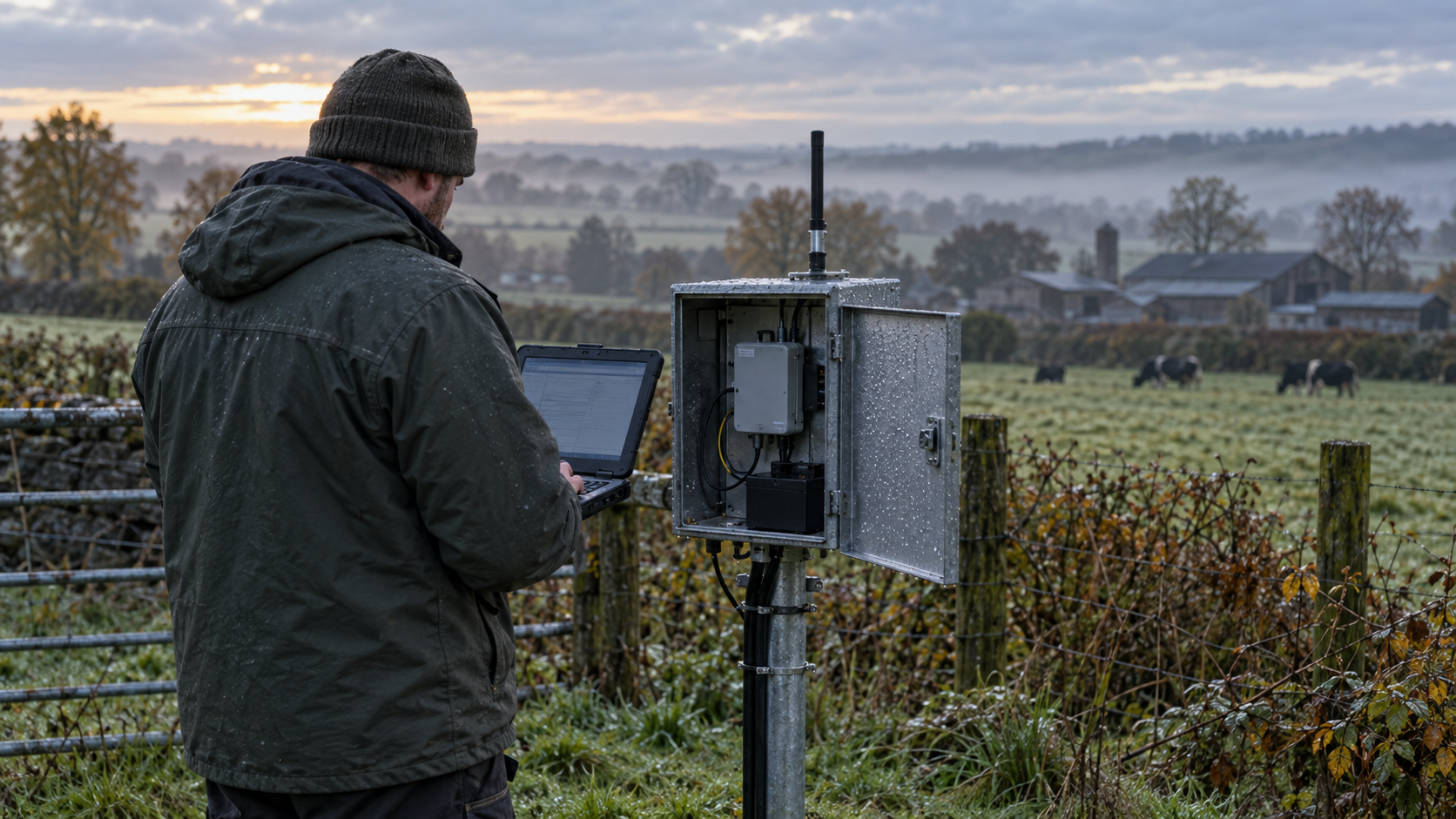
In agriculture, UK farms are deploying IoT sensors to monitor soil moisture, crop health, and livestock conditions. 5G connectivity enables these sensors to operate in rural areas previously underserved by mobile networks. Edge computing infrastructure processes sensor data locally, providing farmers with real-time insights and automated irrigation or feeding systems that respond to changing conditions. The Department for Environment, Food and Rural Affairs (DEFRA) estimates that precision agriculture enabled by IoT, 5G, and edge computing could increase UK agricultural productivity by 20-30% whilst reducing environmental impacts.
Healthcare applications are equally transformative. The NHS is piloting remote patient monitoring programmes that use IoT devices to track vital signs of patients with chronic conditions. Devices measuring blood pressure, glucose levels, heart rhythm, and other health indicators transmit data via 5G to edge computing infrastructure that analyses measurements in real-time. When abnormal patterns are detected, alerts are sent to healthcare providers, enabling early intervention that can prevent hospitalisations. Edge processing is essential for these applications, as it ensures that sensitive health data can be analysed locally without always traversing public internet connections, addressing both latency and privacy concerns.
Retail is another sector leveraging IoT, 5G, and edge computing to transform operations. Major UK retailers are deploying smart shelves with weight sensors and cameras that monitor inventory levels in real-time. When stock runs low, replenishment orders are automatically generated. Customer behaviour analytics, processed at the edge to protect privacy, provide insights into shopping patterns that inform store layouts and product placements. Augmented reality applications, running on customers' mobile devices with edge computing support, allow shoppers to visualise products in their homes before purchasing.
Security and Data Sovereignty Considerations
Whilst edge computing and 5G offer tremendous benefits, they also introduce security and data sovereignty challenges that UK organisations must carefully address. Distributing computing resources across numerous edge locations expands the attack surface that must be defended. 5G networks, with their software-defined architectures and millions of connected devices, present new vectors for cyber attacks. Data sovereignty—ensuring that data is stored and processed in compliance with UK and international regulations—becomes more complex when data is distributed across edge infrastructure.
The National Cyber Security Centre (NCSC), part of GCHQ, has published guidance on securing edge computing deployments and 5G networks. Key recommendations include implementing zero-trust security architectures that verify every access request regardless of source, encrypting data both in transit and at rest, and maintaining strict access controls with multi-factor authentication. Edge computing nodes must be physically secured to prevent tampering, and software must be regularly updated to address vulnerabilities.
5G network security requires particular attention to supply chain risks. The Government's Telecommunications Security Act 2021 places obligations on network operators to ensure the security and resilience of their networks, including restrictions on the use of equipment from high-risk vendors. Edge computing infrastructure must be designed with security in mind from the outset, incorporating hardware-based trusted execution environments and secure boot processes.
Data sovereignty is a critical consideration for organisations operating in regulated industries. Financial services firms must ensure compliance with Financial Conduct Authority regulations regarding data protection. Healthcare organisations must adhere to NHS Digital's Data Security and Protection Toolkit requirements. Edge computing architectures must be designed to ensure that sensitive data is processed and stored in appropriate locations—often within the UK—whilst still delivering the performance benefits of local processing.
Economic Impact and Investment Opportunities
The economic impact of edge computing and 5G infrastructure extends far beyond the telecommunications sector. These technologies are enabling new business models, improving productivity across industries, and creating investment opportunities for forward-thinking organisations.
TechUK estimates that the UK's digital infrastructure sector, including 5G and edge computing, will contribute £50 billion annually to the economy by 2027. This figure encompasses direct investment in infrastructure, the productivity improvements enabled across other sectors, and the new services and applications that these technologies make possible. The Government's National Infrastructure Strategy identifies digital connectivity as a critical enabler of economic growth, with plans for continued public investment to support private sector deployment.
For investors, edge computing and 5G present opportunities across multiple areas. Telecommunications infrastructure investment trusts are financing the deployment of 5G networks and edge computing facilities. Data centre operators are developing edge data centre products tailored to the requirements of low-latency applications. Software companies are creating edge computing platforms and applications that run on distributed infrastructure. System integrators are helping organisations design and implement edge computing solutions.
The skills required to deploy and operate edge computing and 5G infrastructure are in high demand. Network engineers with 5G expertise, data scientists capable of developing edge AI applications, and cybersecurity professionals who understand distributed systems are all sought after by UK employers. Universities and training providers are developing courses and qualifications to address these skills gaps, but organisations must also invest in upskilling existing workforces to fully capitalise on these technologies.
Regulatory Framework and Government Support
The UK's regulatory framework for edge computing and 5G balances the need to encourage innovation and investment with the protection of consumers and national interests. Multiple government departments and regulatory bodies have roles in shaping this framework, creating a complex but generally supportive environment for technology deployment.
Ofcom's responsibilities extend beyond spectrum allocation to include ensuring that telecommunications networks are accessible, affordable, and meet quality standards. The regulator's strategic priorities include promoting 5G investment, supporting competition, and protecting consumers. Ofcom's approach to regulating 5G has been characterised by a light touch that allows market forces to drive deployment whilst intervening when necessary to address market failures—such as in rural areas where commercial deployment may be uneconomical.
The Department for Science, Innovation and Technology (DSIT) coordinates government policy on digital infrastructure and emerging technologies. The UK's Digital Strategy, published by DSIT, sets out ambitions for the UK to be a global leader in digital infrastructure, including 5G and edge computing. Government programmes such as the £5G Create programme provide funding for organisations to trial innovative 5G applications, whilst the Future RAN Competition supports the development of open and interoperable 5G network equipment.
The Information Commissioner's Office (ICO) ensures that edge computing and 5G deployments comply with data protection regulations, including the UK GDPR. As edge computing involves processing personal data closer to where it is collected, organisations must carefully consider data protection implications. The ICO has published guidance on privacy by design and data protection impact assessments that are particularly relevant to edge computing deployments.
Future Outlook — 6G and Beyond
Even as 5G networks are still being deployed, research into next-generation 6G technologies is already underway. The UK has established the 6G Research Programme, bringing together universities, research institutions, and industry partners to explore technologies that will define wireless communications in the 2030s and beyond.
6G networks are expected to deliver peak data rates of 1 terabit per second—one hundred times faster than 5G—with latencies measured in sub-milliseconds. These capabilities will enable applications that are currently in the realm of science fiction: full-immersion virtual reality indistinguishable from physical presence, holographic communications, and digital twins of entire cities operating in real-time.
Edge computing will become even more critical in the 6G era. The massive volumes of data generated by 6G applications will make centralised cloud processing impractical for many use cases. Instead, a continuum of computing resources spanning devices, edge infrastructure, and cloud data centres will dynamically allocate workloads based on application requirements and network conditions. Artificial intelligence will play a central role in orchestrating these complex distributed systems.
For UK organisations, the emergence of 6G technologies presents both opportunities and challenges. Early engagement with 6G research can position British companies as leaders in next-generation technologies. However, the pace of technological change also creates risks of investing in platforms that may become obsolete. A balanced approach—deploying proven 5G and edge computing technologies whilst monitoring and selectively piloting emerging 6G capabilities—will allow organisations to benefit from current technologies whilst preparing for future evolution.