Hannover Messe opens next week with TeamViewer pitching two updates squarely at the IT/OT convergence problem: a pre-configured hardware gateway built with Bechtle for Agentless Access, and a pairing of its Tia AI agent with the Assist AR remote support product.
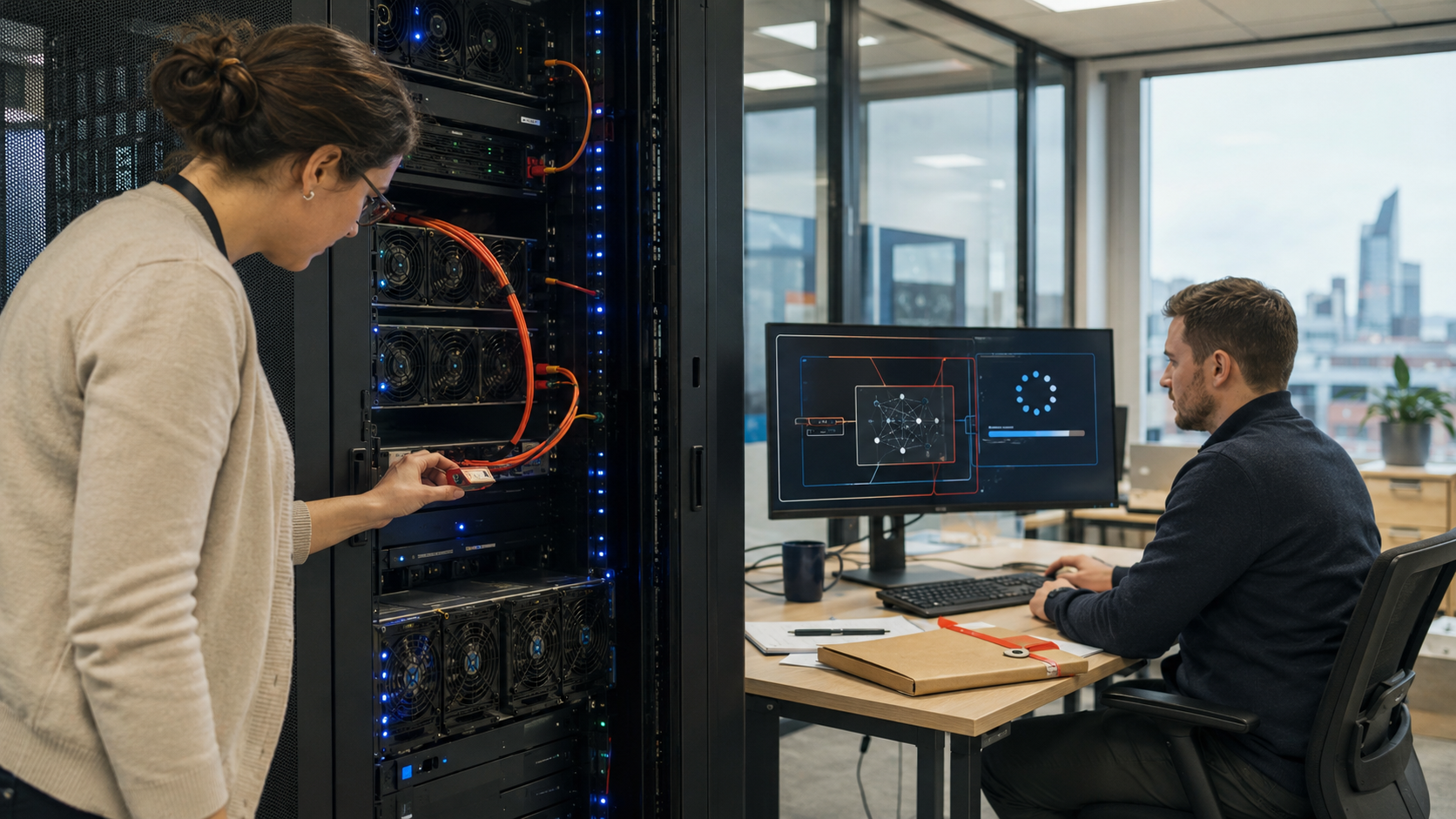
Agentless Access, launched to remove the requirement to install TeamViewer client software on every endpoint, is the stronger of the two announcements for industrial customers. The Bechtle partnership turns it into something closer to an appliance: plug the gateway into the plant network, and secure remote access to machinery flows through it without further configuration. The release also extends protocol support to older systems including Windows XP, which remains on factory floors more than a decade after Microsoft ended extended support, typically running specific control or vision-system software that was never ported forward.
The Assist AR update bolts Tia, TeamViewer's AI agent, onto live remote-expert video calls so that when a technician walks through a fault, the system surfaces prior resolutions from TeamViewer's knowledge graph. TeamViewer did not share numbers on how much this is expected to reduce mean time to repair, and those are the numbers that will decide whether industrial customers treat Tia as a real product or a demo-hall feature.
Manufacturing companies who are accelerating their AI-driven transformation and modernise operations while keeping complexity and risk in check will stay ahead of the curve and competition.
Oliver Steil, CEO of TeamViewer
Steil will take two stages at the show. On 21 April, he shares the Messe Center Stage with Toto Wolff of Mercedes-AMG Petronas F1 to discuss performance innovation, a familiar pairing since TeamViewer has been a Mercedes F1 sponsor for several years. On 22 April he joins Siemens Digital Industries Software CEO Tony Hemmelgarn at the Siemens booth for a session on AI at industrial scale.
The underlying trend TeamViewer is tracking is real. Manufacturing customers are wrestling with ageing OT estates, tightening security regimes under regulations like NIS2 in Europe, and pressure to roll AI into predictive maintenance and frontline troubleshooting. Who ultimately wins that spend, whether remote-access specialists, PLM vendors like Siemens, or hyperscaler cloud bundles, is the subplot running beneath this year's Hannover Messe.