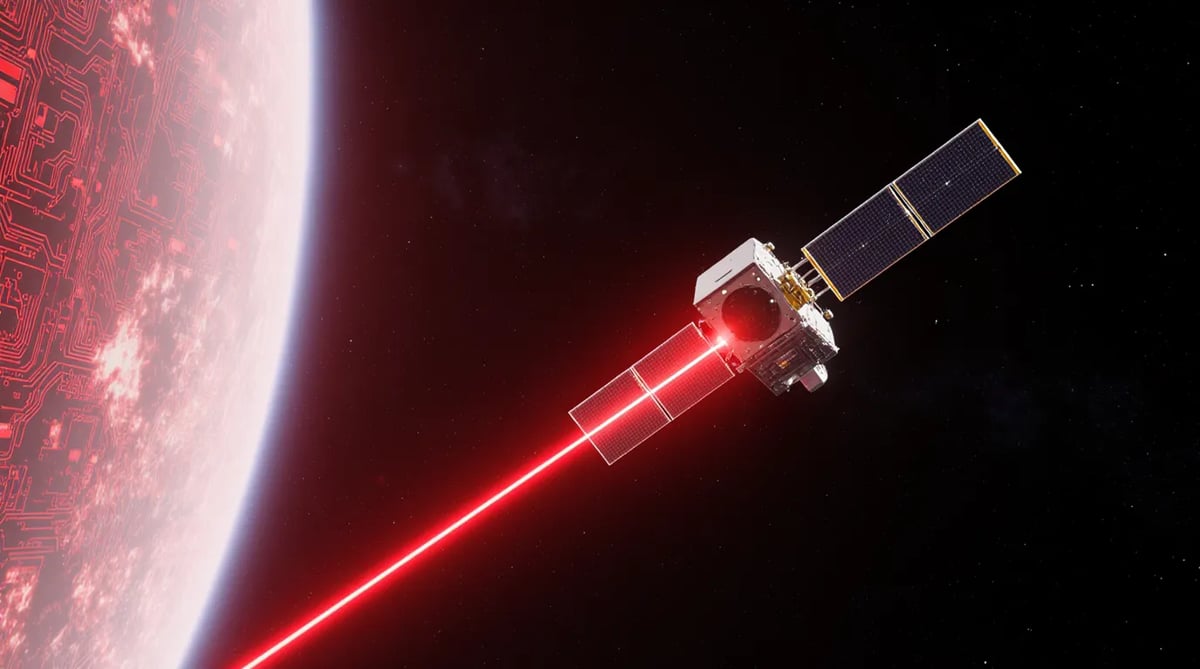
European space-tech company Astrolight will demonstrate its compact and energy-efficient ATLAS-1 laser communication terminals in space for the first time this March, paving the way for high-speed and secure space-to-ground links for small satellites.
The terminals will demonstrate high-bandwidth (up to 1 Gbps), secure space-to-ground links aboard two customer satellites, scheduled for launch with SpaceX's Transporter-16.
These in-orbit missions are a big milestone for the global small satellite industry. Smallsat operators have long faced the issue of having to sacrifice data traffic due to the limitations of radio spectrum and the need for big antennas. Because ATLAS-1 is laser-based, it provides high data rates, but with equipment that is smaller and more affordable than many other solutions on the market. Laser communication is also much more secure than traditional radio frequency.
Laurynas Mačiulis, CEO of Astrolight
As laser communication uses narrow, focused beams of infrared light, it can transmit data at up to 100 times faster rates than traditional radio frequency (RF) and is immune to electronic interference, jamming, and interception.
Two satellites carrying ATLAS-1 will be part of Greece's national small satellite initiative, backed by the European Space Agency.