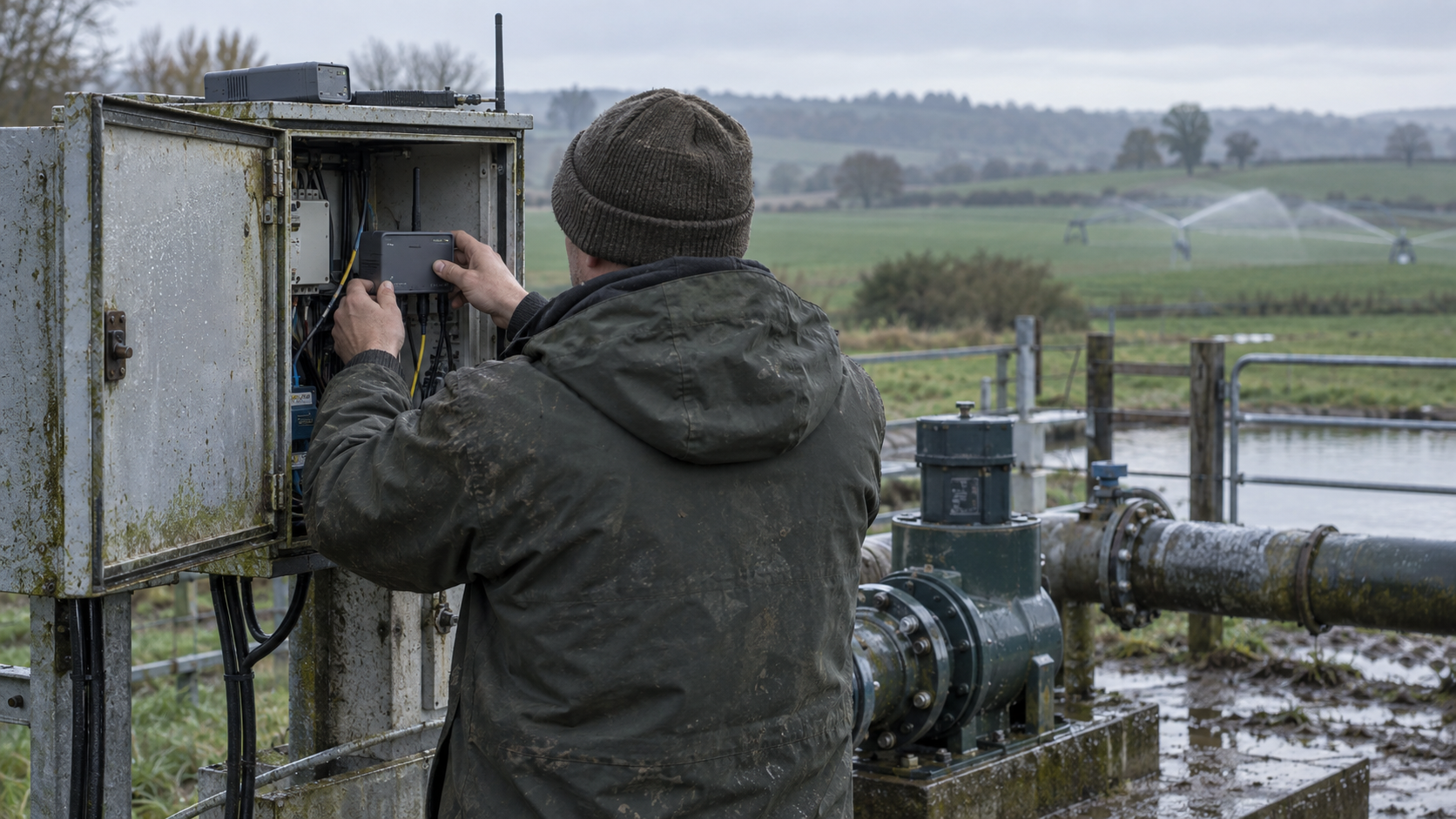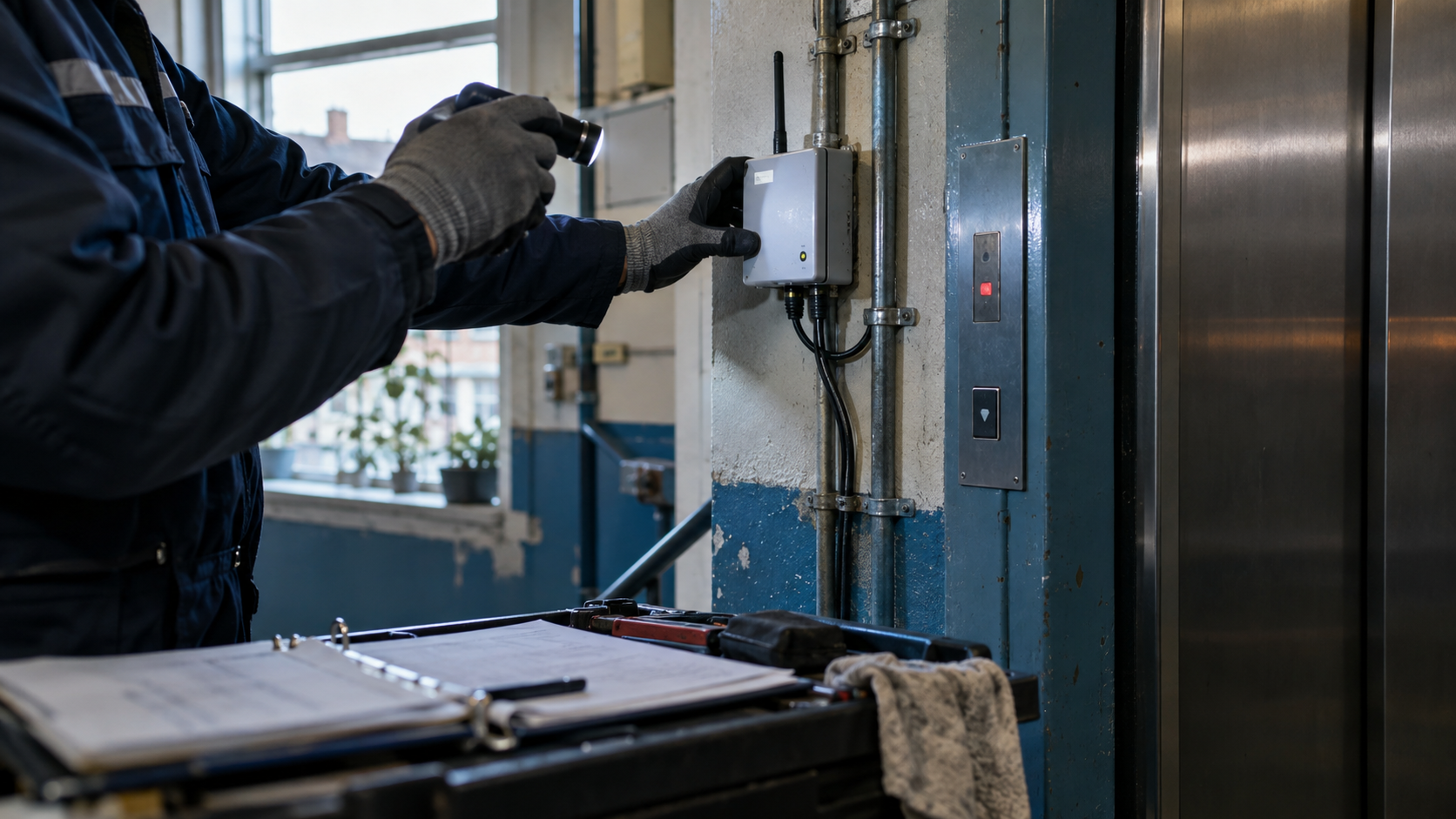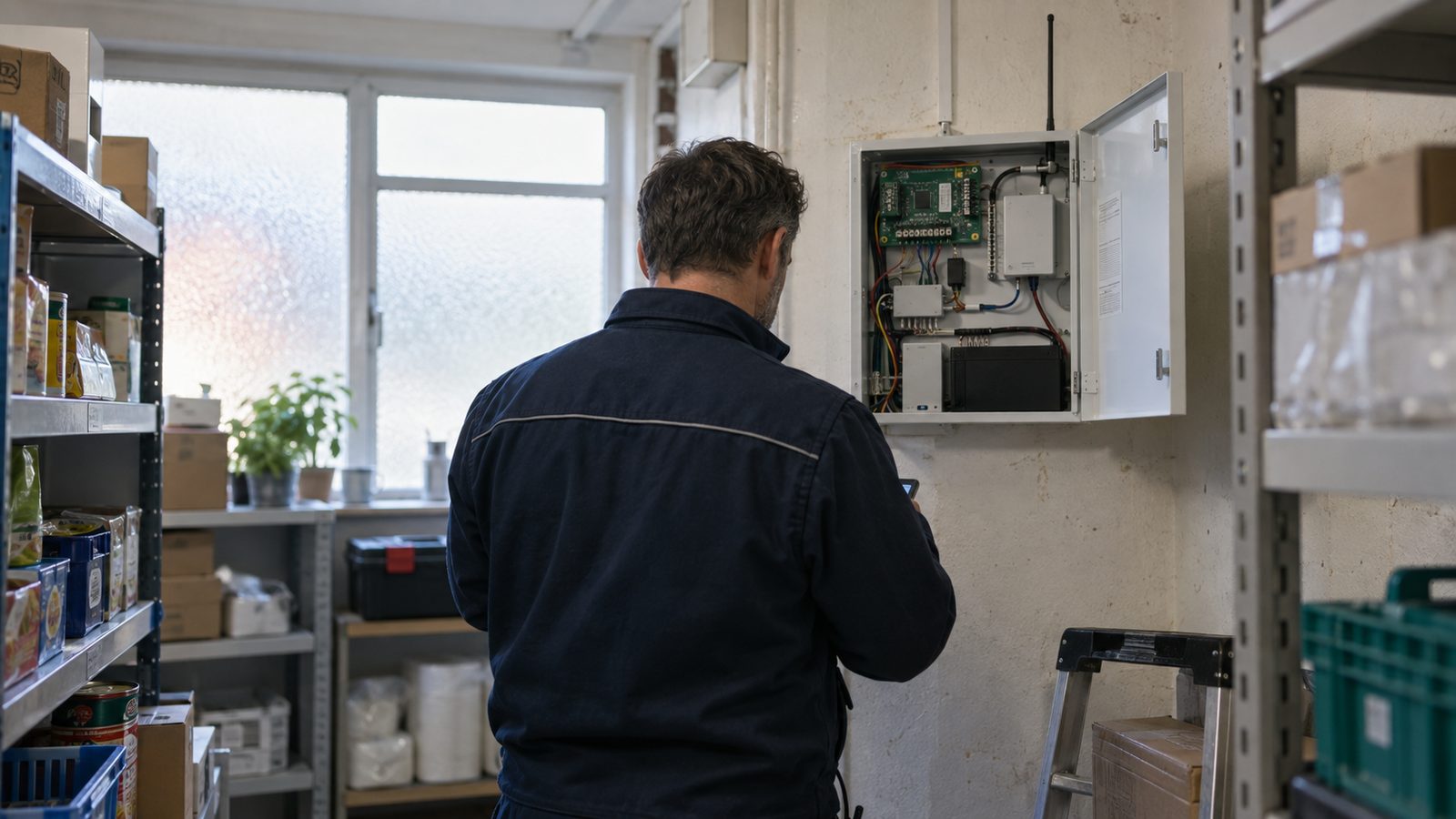

Business equipment that depends entirely on 2G will lose its mobile connection when the network it uses closes. For UK small and mid-sized businesses, the priority is to identify affected alarms, payment terminals and other connected devices, then agree an upgrade with the service supplier. Operator timetables start in 2029, but some roaming access has already disappeared. Check the equipment, its SIM and the complete service before deciding what to replace.
What actually stops working
The immediate problem is loss of the communication path. A 2G-only device cannot continue sending information over a network that has closed. Those devices need upgrading to at least 4G or an alternative solution.
What that means operationally depends on the equipment. For an alarm, establish whether losing mobile connectivity prevents a signal reaching the monitoring service. For a payment terminal, ask the provider which transactions remain possible through any supported alternative connection. Do not infer either answer from a power light or a working display.
Consider a hypothetical small retailer whose alarm panel still operates locally but whose remote signalling uses a 2G communicator. The replacement decision should start with that communicator and the monitoring service. Ask whether an approved communications upgrade can preserve the existing panel before accepting a quotation for a complete system.
The same discipline applies to newer equipment. A device supporting several network generations may have a migration route, but the supplier must confirm that the required functions work with the proposed network and configuration.

Which network date applies to your business
The relevant date belongs to the underlying network, which may differ from the company issuing your invoice. Other mobile providers use the main operators’ networks and follow the timetable of the network they use.
| Network | Announced timetable | Planning implication |
|---|---|---|
| EE | Begins May 2029 | Obtain the timetable for affected locations and any earlier trials. EE guidance |
| O2 | Begins summer 2029 | Treat this as a start date, rather than assuming every location closes together. O2 announcement |
| Vodafone | Spring 2030, with possible earlier local retirements for readiness testing | Ask whether any installation falls within an earlier closure area. Vodafone guidance |
These are the announced positions in the evidence supplied on 28 September 2026. Timings may change, so confirm them again when placing orders or renewing service contracts.
Moving an unchanged 2G device to another operator would, at best, be a temporary measure where access and coverage remain available. All remaining UK 2G networks are scheduled to close. Three has no 2G network to provide another escape route.
Why roaming equipment needs checking now
A multi-network SIM does not guarantee access to every network generation. International roaming SIMs can no longer connect to O2’s 2G network following its withdrawal of inbound roaming access.
That matters where O2 previously provided the only usable indoor 2G signal. Predicted affected postcodes are available, but the modelling cannot identify every affected location. Use that information to prioritise investigation, then test the actual installation.
Follow the connection from equipment to service
For planning purposes, trace each installation through its communications hardware, SIM provider, mobile network and receiving service. Record who can change each component and who will confirm that the business function still works.
The following is a proposed responsibility map, not a statement of any supplier’s contractual scope.
| Part of the service | Who to involve | Evidence to request |
|---|---|---|
| Equipment and communications module | Equipment supplier or maintainer | Exact model, supported technologies and approved upgrade options |
| SIM and subscription | Connectivity provider | Permitted networks, technologies, roaming restrictions and required SIM changes |
| Installation and reception | Installer, with the connectivity provider | Results from testing at the equipment’s actual location |
| Receiving platform or monitoring service | Service operator | Confirmation that messages, calls or transactions arrive and are handled correctly |
| Business acceptance | Named internal owner | Recorded test results, escalation contacts and an agreed response to failure |
A small business may buy all these elements through one alarm or payment provider. Ask that provider to coordinate the work and identify any exclusions. Vodafone itself directs businesses using 2G applications to contact their service supplier. Vodafone’s business equipment advice
The government charter also recognises that network operators may have no direct relationship with the end user. Waiting for a mobile operator to write to your business is therefore an inadequate asset-discovery method.
What an upgrade budget needs to include
There is no defensible standard replacement price for the equipment covered here. The supplied evidence does not provide comparable quotations for alarm upgrades, terminal replacements or installation work.
Request an itemised GBP quotation for the complete working service. Specify whether VAT is included, the billing commitment, minimum quantities and what happens at contract exit.
| Cost component | Question for the quotation |
|---|---|
| Hardware | Can an approved module be replaced, or is a complete device required? |
| Installation | Are site visits, access arrangements, configuration and testing included? |
| Connectivity | What are the recurring charges, allowances, overage rates and supported services? |
| Service integration | Who configures and verifies the connection to the receiving platform? |
| Support | Who handles faults, during which hours, and under what response commitment? |
| Transition and exit | Are overlapping subscriptions, cancellation, removal and disposal included? |
As one limited pricing reference, BT advertises its UK Multi-Network IoT SIM from £0.35 per SIM per month. The supplied extract does not establish the applicable allowance, minimum quantity, contract commitment or VAT treatment. That headline cannot be used as a complete migration budget.
Include internal time for finding devices, arranging access and witnessing tests. Where those inputs remain unknown, keep the budget conditional rather than describing a hardware subtotal as total cost of ownership.
Choosing between keeping, upgrading and replacing equipment
The useful comparison is between ways of maintaining the service. Operator selection comes within that decision.
| Approach | When to investigate it | What must be established |
|---|---|---|
| Retain and reconfigure | The installed equipment already supports a suitable replacement connection | Supplier confirmation and successful testing of every required function |
| Upgrade the communications component | The main equipment remains suitable and the manufacturer supports a replacement module | Compatibility, installation scope and acceptance by the receiving service |
| Replace the complete device | No supported communications upgrade is available, or replacement better fits the service requirement | Full installed cost, support term, configuration and migration arrangements |
| Change the connectivity or managed-service supplier | The present supplier cannot provide an acceptable transition | Hardware compatibility, coverage, service scope, handover and exit terms |
For EE, O2 and Vodafone, the evidence establishes different closure timetables. It does not establish that one provides the best replacement coverage at your premises. Make the network decision using the intended equipment and installation location, alongside the required voice, messaging or data functions.
Multi-network connectivity is worth investigating where continuity depends on mobile access. BT’s offering, for example, uses EE as the primary network and partner networks when EE is unavailable. That describes its connection approach; it does not prove that an existing 2G-only device becomes compatible with newer technology. BT’s multi-network service description
For safety-related equipment, agree any testing or disconnection with the responsible service provider first. Acceptance should demonstrate the intended outcome at the receiving end, rather than stop at a successful network connection.
Editorial analysis
The strongest starting point is an equipment register with a service owner beside every entry. A switch-off date becomes actionable only when someone can connect it to a specific installation, supplier and approved replacement route.
Prioritise by the consequence of losing communication. An alarm that protects people warrants a different escalation path from a device whose missing report can wait. Require the supplier to demonstrate continuity for that particular function before closing the migration task.
Sources
The supplied evidence was dated 28 September 2026. Publication and update dates are included where present in the source text.
- Ofcom — Switching off 2G and 3G networks, advice for IoT and third-party device suppliers. Updated 1 September 2026.
- Ofcom — Switching off the UK’s 2G and 3G mobile networks, what you need to know. Updated 10 August 2026.
- EE Business — Saying goodbye to 2G.
- Virgin Media O2 Business — 2G switch-off.
- Vodafone — VodafoneThree 2G switch-off, everything you need to know. Published 23 March 2026.
- UK Government — 2G Switch-off Charter. Updated 15 September 2026.
- BT Business — UK Multi-Network IoT SIM.