
The Big Decision Every Small Business Faces
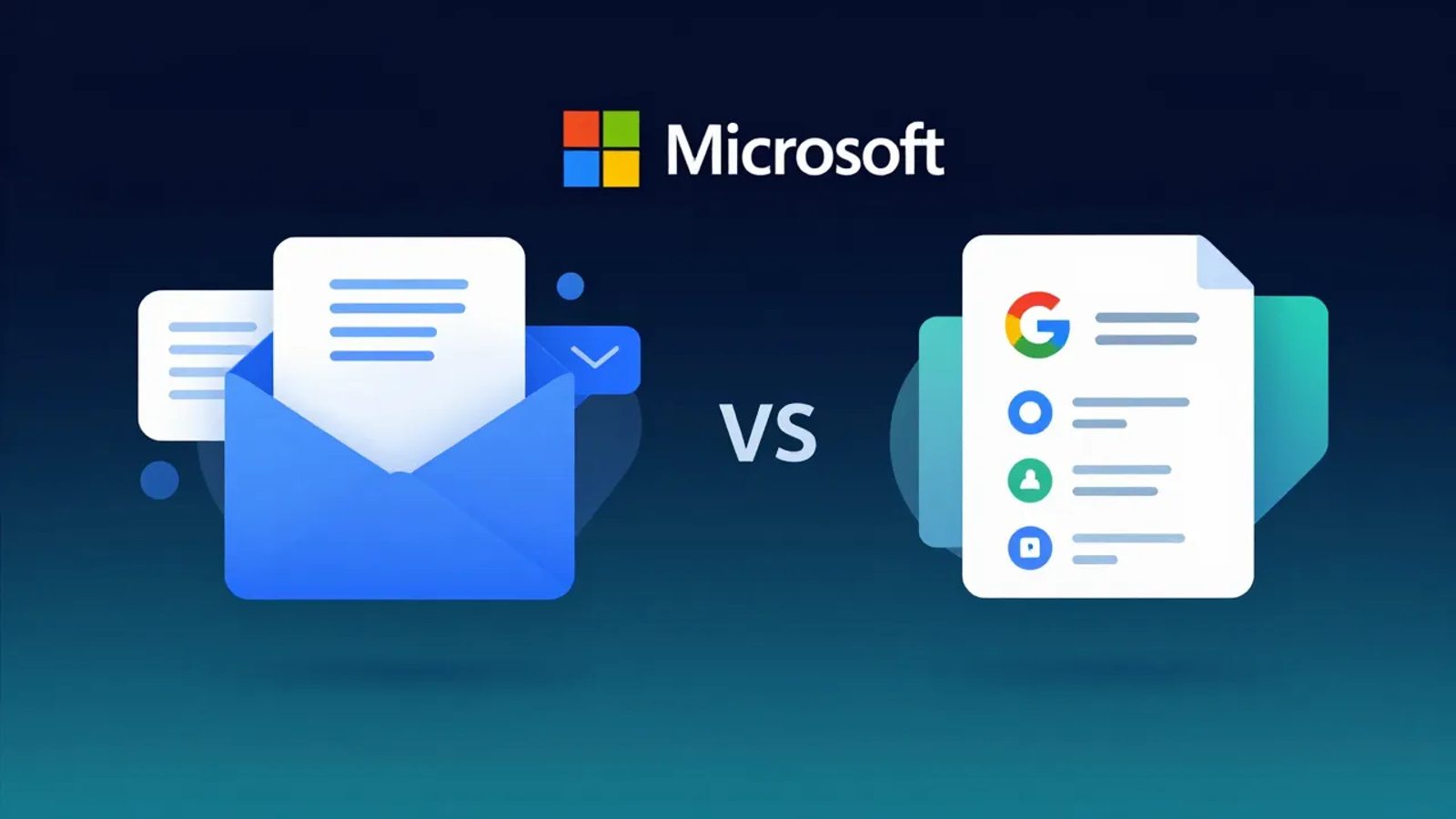
At some point, every growing small business faces the same question: should we go with Microsoft or Google for our business email and productivity tools?
Both Microsoft 365 and Google Workspace are excellent platforms. Both give you professional email, cloud storage, video calls, and the basic tools you need to run a business. The differences are real, but they're often smaller than the marketing would have you believe.
This guide helps you make a sensible decision based on your actual needs, not feature lists you'll never use.
What You Get With Each Platform
Microsoft 365 Business Basic (£4.90/user/month)
- Business email with your own domain
- Web versions of Word, Excel, PowerPoint
- Microsoft Teams for chat and video calls
- OneDrive with 1TB storage per user
- SharePoint for team sites
Microsoft 365 Business Standard (£9.40/user/month)
- Everything in Basic, plus:
- Desktop apps (Word, Excel, PowerPoint, Outlook)
- More advanced features in Teams
Google Workspace Business Starter (£5.20/user/month)
- Business email with your own domain
- Google Docs, Sheets, Slides (web-based)
- Google Meet for video calls
- Google Drive with 30GB storage per user
- Google Chat for messaging
Google Workspace Business Standard (£10.40/user/month)
- Everything in Starter, plus:
- 2TB storage per user
- Recording for video meetings
- More security features
The Honest Comparison
Both platforms provide reliable, professional email. You'll get your-name@your-business.co.uk, spam filtering, and mobile access. For basic email, there's very little practical difference.
Microsoft's advantages:
- Outlook is more feature-rich for heavy email users
- Better calendar management for complex scheduling
- More familiar to people coming from corporate backgrounds
Google's advantages:
- Gmail's interface is cleaner and faster
- Better search (it is Google, after all)
- Easier to use for people new to business email
The verdict: If you or your team have strong preferences based on past experience, go with what you know. For most small businesses, both work perfectly well.
Documents and Spreadsheets
This is where the platforms differ most. Microsoft has the traditional desktop apps everyone knows. Google has web-based alternatives that work differently.
Microsoft's advantages:
- Full-featured Word, Excel, and PowerPoint
- Excel is significantly more powerful for complex spreadsheets
- Better compatibility with files from clients and suppliers
- Desktop apps work offline by default
Google's advantages:
- Real-time collaboration is smoother
- Automatic saving means you never lose work
- Simpler interface that's easier for casual users
- No software to install or update
The verdict: If you work with complex spreadsheets, receive lots of Word documents from others, or need full offline capability, Microsoft is the safer choice. If your team does lots of collaborative writing and prefers simplicity, Google works well.
Video Calls
Microsoft Teams and Google Meet both handle video calls competently. Both support screen sharing, chat, and meeting scheduling.
Microsoft's advantages:
- Teams is more feature-rich for larger meetings
- Better integration with Outlook calendar
- More options for meeting recording and transcription
Google's advantages:
- Meet is simpler to use for quick calls
- No app required—works well in browsers
- Less cluttered interface
The verdict: For small business video calls, both are more than adequate. Teams has more features; Meet is simpler. Choose based on your preferences.
Storage
This is one area with a clear difference:
Microsoft 365 Business Basic: 1TB per user
Google Workspace Business Starter: 30GB per user
That's a significant gap. If you deal with large files (video, design, photography), Microsoft's generous storage is a real advantage. For typical office documents and emails, 30GB goes further than you might think.
Google's Business Standard plan (£10.40/user/month) includes 2TB per user, so you can pay more for more storage if needed.
Mobile Apps
Both platforms have excellent mobile apps for iOS and Android. You can access email, files, and documents from anywhere. Both sync automatically.
Microsoft's apps are more fully-featured. Google's apps are more streamlined. Neither will let you down.
Learning Curve
Microsoft: If your team already uses Microsoft products, the transition is minimal. If they don't, expect some learning time, especially for Teams.
Google: Generally easier for people who haven't used business software before. The web-based approach feels familiar to anyone who uses the internet.
What About AI Features?
Both Microsoft and Google are adding AI capabilities to their platforms:
Microsoft Copilot: AI assistant that can help with writing, summarising, and analysing data. Available as an add-on for £24.70/user/month.
Google Gemini: Similar AI features integrated into Google Workspace. Available as an add-on for approximately £22/user/month.
For most small businesses, these AI add-ons are expensive extras that aren't essential yet. The core platforms work perfectly well without them. Keep an eye on developments, but don't feel pressured to add them immediately.
Real-World Considerations
What Do Your Clients and Suppliers Use?
If you regularly exchange documents with others, compatibility matters. Most businesses still use Microsoft Office formats (.docx, .xlsx). Google handles these reasonably well, but occasional formatting issues can arise.
If your key contacts all use Google Workspace, collaboration is smoother on that platform. If they use Microsoft, the reverse applies.
What's Your Team's Background?
People work better with familiar tools. If your team comes from corporate backgrounds where Microsoft was standard, they'll adapt faster to Microsoft 365. If they're younger or come from startups, Google might feel more natural.
How Important Is Offline Access?
Microsoft 365 Business Standard includes desktop apps that work fully offline. Google Workspace can work offline through browser extensions, but it's not as seamless.
If you regularly work in places without reliable internet (trains, rural areas, travel), Microsoft's desktop apps are more reliable.
What's Your Budget?
For a five-person business:
- Microsoft 365 Business Basic: £24.50/month
- Microsoft 365 Business Standard: £47/month
- Google Workspace Business Starter: £26/month
- Google Workspace Business Standard: £52/month
The differences aren't huge. Don't choose based on a few pounds a month—choose what works better for your business.
Making the Decision
Choose Microsoft 365 If —
- You work with complex spreadsheets
- You receive lots of documents from other businesses
- Your team has Microsoft experience
- You need reliable offline access
- You want generous included storage
Choose Google Workspace If —
- Simplicity is a priority
- You do lots of collaborative document editing
- Your team prefers web-based tools
- You want the easiest possible setup
- You're already comfortable with Gmail
Either Works Well If —
- You mainly need email and basic document editing
- Your team is adaptable
- You don't have strong platform preferences
The Switching Question
What if you choose wrong? Both platforms allow you to export your data and migrate to the other. It's not trivial, but it's not impossible either.
Most businesses that switch report the process takes 2-4 weeks and costs £200-500 in professional help. Not ideal, but not catastrophic.
The best approach is to take advantage of free trials before committing. Both platforms offer trial periods—use them properly with real work before deciding.
Our Recommendations
For most UK small businesses: Microsoft 365 Business Basic is the safest choice. It's affordable, includes generous storage, and works seamlessly with the Microsoft documents your clients probably send you. You can always upgrade to Business Standard if you need desktop apps.
For businesses prioritising simplicity: Google Workspace Business Starter is excellent. It's slightly more expensive with less storage, but the interface is cleaner and the collaboration features are smoother.
For businesses with specific needs: If you know you need specific features (advanced Excel functions, particular integrations, heavy video editing), let those requirements guide your decision.
Getting Started
Microsoft 365:
1. Visit microsoft.com/microsoft-365/business
2. Choose your plan and start free trial
3. Add your domain for custom email
4. Set up users
5. Consider migration help if you have existing email
Google Workspace:
1. Visit workspace.google.com
2. Start free trial
3. Verify your domain
4. Create user accounts
5. Import existing email if needed
Both platforms have good documentation for self-setup, and local IT support companies can help if you get stuck.
The Bottom Line
Microsoft 365 and Google Workspace are both excellent platforms for small businesses. The days when one was clearly better than the other are gone.
Microsoft is the safer choice for most businesses because of better compatibility with the wider business world and more generous storage. Google is the simpler choice for businesses that value ease of use and collaboration.
Either way, you're getting professional business tools that would have cost thousands a few years ago, for less than the price of a coffee per user per week. Focus less on the choice between them and more on actually using whichever platform you choose effectively.