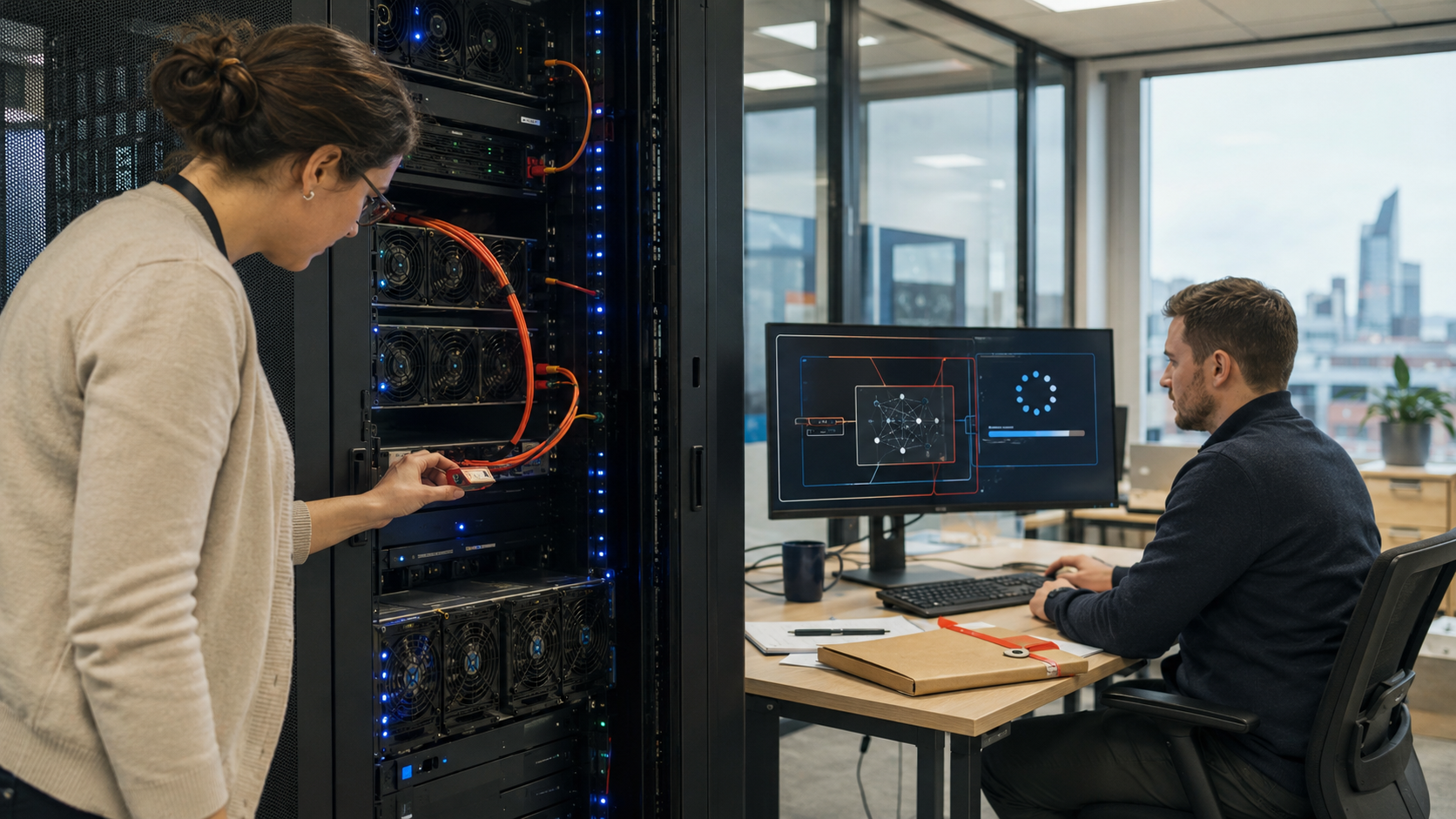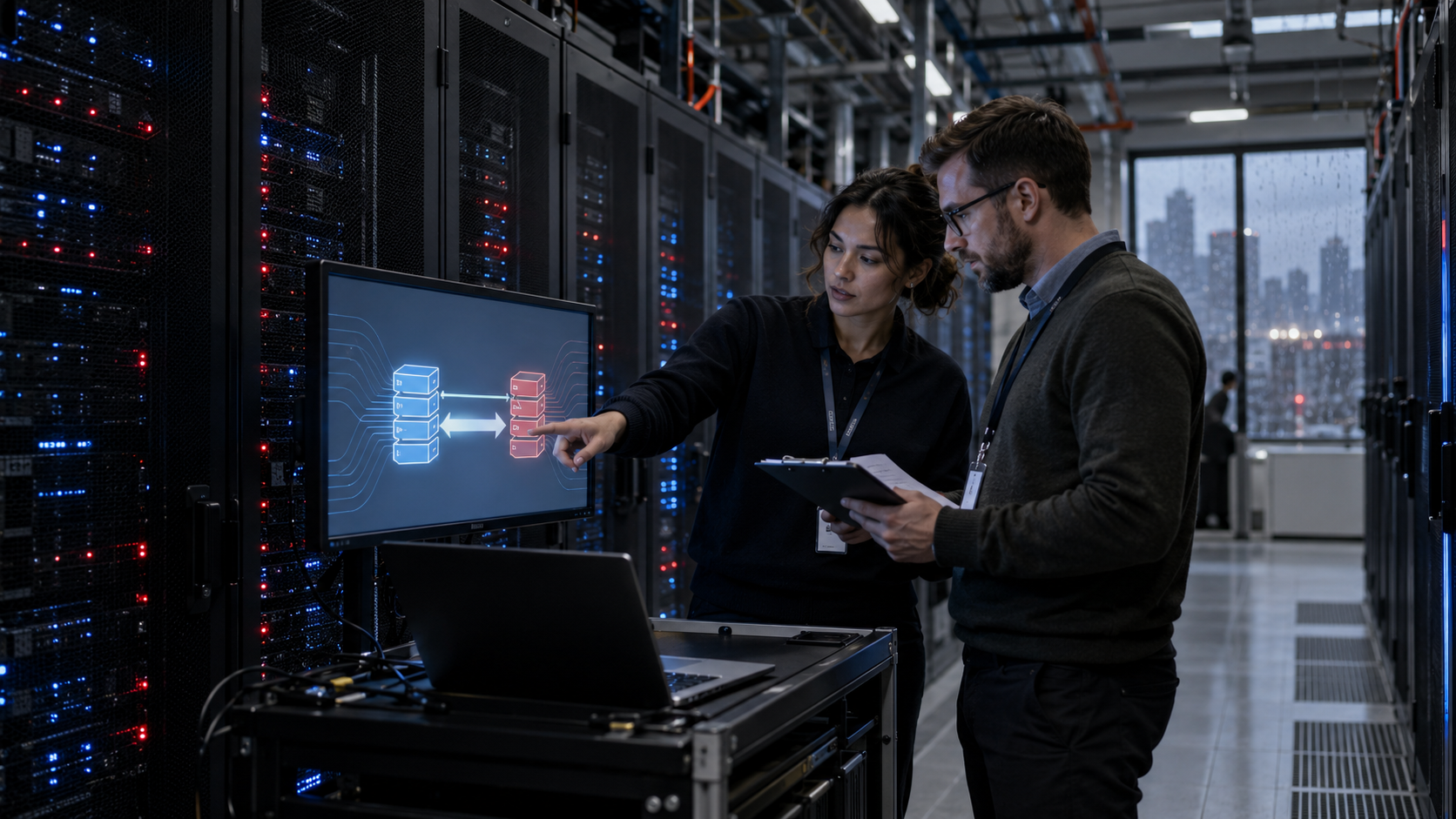
Intel and French spatial-intelligence company Outsight announced a strategic collaboration on 21 April, integrating Outsight's Shift platform into Google Distributed Cloud Edge running on Intel Xeon 6 SoC processors with AMX (Advanced Matrix Extensions) acceleration. A live demonstration of the combined stack is running at the Intel booth (#6901) at Google Cloud Next 2026, 22–24 April at the Mandalay Bay Convention Center in Las Vegas.
The technical pitch is the absence of GPUs. Outsight's software processes data from 3D LiDAR sensors, fused with camera feeds and business systems such as airport operational databases and point-of-sale, and tracks every person, vehicle or robot moving through a site. The company says it delivers sub-100-millisecond inference on Xeon 6 SoC without touching discrete GPU hardware. That matters for edge deployments where power, cooling and cost make GPU infrastructure impractical at scale.
The output is what Outsight calls a "motional digital twin": a real-time 3D replica of physical flows that operators can query to monitor, predict and optimise how people, vehicles and autonomous robots move through airports, train stations, hospitals, industrial sites and stadiums. The platform is hardware-agnostic and works with LiDAR sensors from the major manufacturers.
This strategic collaboration with Intel represents a major milestone in making physical AI accessible at scale across critical infrastructure worldwide. By integrating our Shift platform into Google Distributed Cloud Edge, powered by Intel's processors, we are enabling operators of airports, stations, factories, and smart cities to deploy a real-time 3D replica of everything moving across their premises, while providing global situation awareness to mobile robots, as a standard component of their edge infrastructure. Together, we are setting a new standard for how organizations understand and optimize the physical world.
Raul Bravo, President and Co-founder, Outsight
Intel's framing is broader.
Enterprise AI is about bringing intelligence closer to where decisions are made, at the edge. Our collaboration with Outsight demonstrates how Intel's edge computing platform, combined with best-in-class physical AI software and the Google Distributed Cloud, enables organizations to transform their physical operations with real-time, CPU-based 3D AI inference. This is exactly the kind of scalable, cost-effective solution that enterprises need to unlock the full potential of physical AI.
Bhupesh Agrawal, General Manager, Private 5G and Enterprise AI, Intel
A secondary angle is robotics. Mobile robots operating in complex environments typically suffer from visual line-of-sight limits, occlusions and the instantaneous nature of their onboard perception. By streaming motional digital twin data to robots across the site, Outsight is effectively providing an infrastructure-level sensor that every robot on the premises can read, removing blind spots that onboard sensors cannot see around.
Outsight says its spatial-intelligence platform is already deployed across five continents, monitoring the journeys of more than 280 million people per year. Privacy is handled by design: the system uses anonymous 3D point-cloud data with no facial recognition.