
Serverless Computing
Function-as-a-Service and serverless platforms
As of 20 September 2026, Compare the Cloud lists 258 serverless computing service providers, 3 of them verified.
Why choose Serverless Computing?
Find partners
Daemon
Daemon is a digital transformation consultancy and engineering firm specialising in AI-first engineering. Named 2025 EMEA AWS Innovation Partner of the Year, they deliver high-impact transformations with dedicated AI-first engineering squads.
Focus Group
Focus Group delivers telecoms, IT, and connectivity solutions for businesses of all sizes. They drive intelligent, connected customer experiences with solutions spanning small business, SME, and enterprise, including AI-powered services and digital transformation.
Forge Technologies
Forge Technologies is a trusted IT partner delivering digital transformation with a balance of innovation and technical expertise. They provide all-encompassing IT lifecycle services from purchase to deployment and management, serving some of the UK's leading organisations.
Future Facilities Ltd
For a decade, Future Facilities has provided computational fluid dynamics (CFD) software and consultancy services to the world’s largest data center owner-operators and to the industry’s leading consultancies. With global offices, our managed engineering services and modeling software are relied on to deliver unique insight into the current and future performance of our clients’ mission critical data centers. We call our approach ‘predictive simulation’.
Shadeform (YC S23)
Shadeform unifies access to compute at scale across 20+ vetted providers via a single API and deployment platform. Founded in 2023 and based in San Francisco, Shadeform enables AI/ML teams to access a wide spectrum of high-quality GPU hardware in 100+ regions – without the friction of managing multiple cloud logins, support pipelines, quotas, APIs, and relationships. Through strong industry partnerships and a commitment to quality and transparency, Shadeform makes it seamless for developers, sta
Code Wizards Group
Global experts for Online Player experience in Games. LiveOps / Backends / Data Analytics / Game Server Scaling / AWS / Heroic Labs / 24x7x365 DevOps and SysOps. Trusted by the teams behind many of your favourite games and backed by some of the world’s biggest tech partners. We help studios Build and Run games that players love. Easy to work with; hard to surprise – we apply the right people and the ideal tech to each project. We bring our Dont be a Dick mantra to everything we do Were a bunch o
LA Micro Group UK Ltd
LA Micro is an independent enterprise IT hardware provider specialising in refurbished and recertified servers, storage, networking, and components. We ensure it finds a new home, whether that be an end-user or a reseller. With extensive experience, resources, and expertise LA Micro plays a vital role in contributing to the circular economy. Over the years, holding over $10M in stock, strong supply networks and a global community of thousands of satisfied customers has been established by provid
Software Engineering
Coders delivers trustworthy, AI-assisted web, mobile, and cloud software with disciplined processes, documentation-first collaboration, and adaptable teams.
Capital Numbers
We provide project-based and dedicated teams for custom software, web, mobile, AI, and cloud solutions. Get smarter, cost-effective solutions for your business.
Leidos
Leidos is a Fortune 500 innovation company rapidly addressing the world’s most vexing challenges in national security and health. The companys global workforce of 48,000 collaborates to create smarter technology solutions for customers in heavily regulated industries. Headquartered in Reston, Virginia, Leidos reported annual revenues of approximately $15.4 billion for the fiscal year ended December 29, 2023. Leidos was cited for the meaningful work employees perform that is challenging, impactfu
Fruition Systems
Fruition Systems is a leading Microsoft cloud consultancy in Hampshire, providing managed IT services for business. Contact us today for help with your IT.
Software Development Company
Awarded as the Best Software Development and AI Company by The Netty Awards. Software Engineering, Data and AI, Cloud, Digital Transformation.
ASL Group
ASL Group is a workplace technology company that bridges the physical and digital work environments, providing tailored solutions for businesses. Their services include managed print solutions, rentals, and integrated software support.
Capita Corporate
Capita is a strategic outsourcer helping public and private sectors run complex services—powered by people, data, and AI to improve lives and drive efficiency.

Amazon
Amazon is guided by four principles: customer obsession rather than competitor focus, passion for invention, commitment to operational excellence, and long-term thinking. We are driven by the excitement of building technologies, inventing products, and providing services that change lives. We embrace new ways of doing things, make decisions quickly, and are not afraid to fail. We have the scope and capabilities of a large company, and the spirit and heart of a small one. Together, Amazonians res
Serverless
Serverless is a UK-based AWS consulting firm specializing in cloud architecture transformation and serverless migration. They help organizations transition from traditional infrastructure to serverless architectures, delivering significant cost reductions and scalability improvements.
FyfeWeb
FyfeWeb Hosting, a UK-based Website Hosting, Virtualised Cloud Hosting, Bare-Metal Dedicated Servers, Data Centre Services & Connectivity Provider
The Server Labs
The Server Labs: Your expert partner in Cloud technology consulting. Specialising in high-performance computing, cloud security and cloud migration.
Asolvi
We help over 2,000 companies simplify compliance, improve workflows, and grow with specialist FSM solutions for essential industries.
Tati Digital Software Development
Tati Digital Software Development
Servicing End-To-End Engineering Needs
We’re in the business of writing great code. We provide on-time delivery along with transparent communication. But we also make sure that our people have great work-life balance, meritocracy, and a healthy work environment
Applore Technologies
Applore Technologies provides custom app, web, and software development services, helping startups and enterprises build scalable, secure, and high-performing digital solutions.
Parkar
Parkar enables enterprises to lead with data and AI through modern platforms, intelligent automation, and outcome-driven engineering.
Gilion
Powering how capital works. The layer between founders and finance through AI.
| Provider | Headquarters | Founded | Team size |
|---|---|---|---|
| Daemon | London | 2007 | 51-200 |
| Focus Group | Shoreham-by-Sea | 2003 | 1000+ |
| Forge Technologies | London | 2020 | 11-50 |
| Future Facilities Ltd | St London | 2004 | 15 |
| Shadeform (YC S23) | Primary San Francisco | 2023 | 8 |
| Code Wizards Group | Primary Brunel Road Merlin House Theale | 2002 | 68 |
| LA Micro Group UK Ltd | Primary Astro House Brants Bridge Bracknell | 2004 | 47 |
| Software Engineering | Tirana, Tirana, Albania | — | 11-50 |
| Capital Numbers | Kolkata, West Bengal, India | — | 501-1000 |
| Leidos | St Reston | 1969 | 35 |
| Fruition Systems | Bishops Waltham | 1998 | — |
| Software Development Company | London | 2017 | — |
| ASL Group | London | 1996 | 51-200 |
| Capita Corporate | London | 1984 | 500+ |
| Amazon | Ave. Seattle | — | 760 |
| Serverless | UK | 2019 | 11-50 |
| FyfeWeb | Newcastle Upon Tyne, England, United Kingdom | — | 2-10 |
| The Server Labs | London, England, United Kingdom | — | 11-50 |
| Asolvi | Oslo, Oslo, Norway | — | 51-200 |
| Tati Digital Software Development | Johannesburg, Gauteng, South Africa | — | 2-10 |
| Servicing End-To-End Engineering Needs | York | — | 11-50 |
| Applore Technologies | Dover, Delaware, United States | — | 51-200 |
| Parkar | Atlanta, Georgia, United States | — | 201-500 |
| Gilion | Stockholm, Stockholm County, Sweden | — | 51-200 |
Showing 1–24 of 258 providers
Search all 258 providersLatest expert opinions

Why AI is the Ace in the hand of the MAG7
The US controls around 75% of the world's AI compute and the Magnificent 7 are reshaping the data centre market. Why the humble AI token could redraw cloud economics.
The hidden application bottleneck in digital transformation
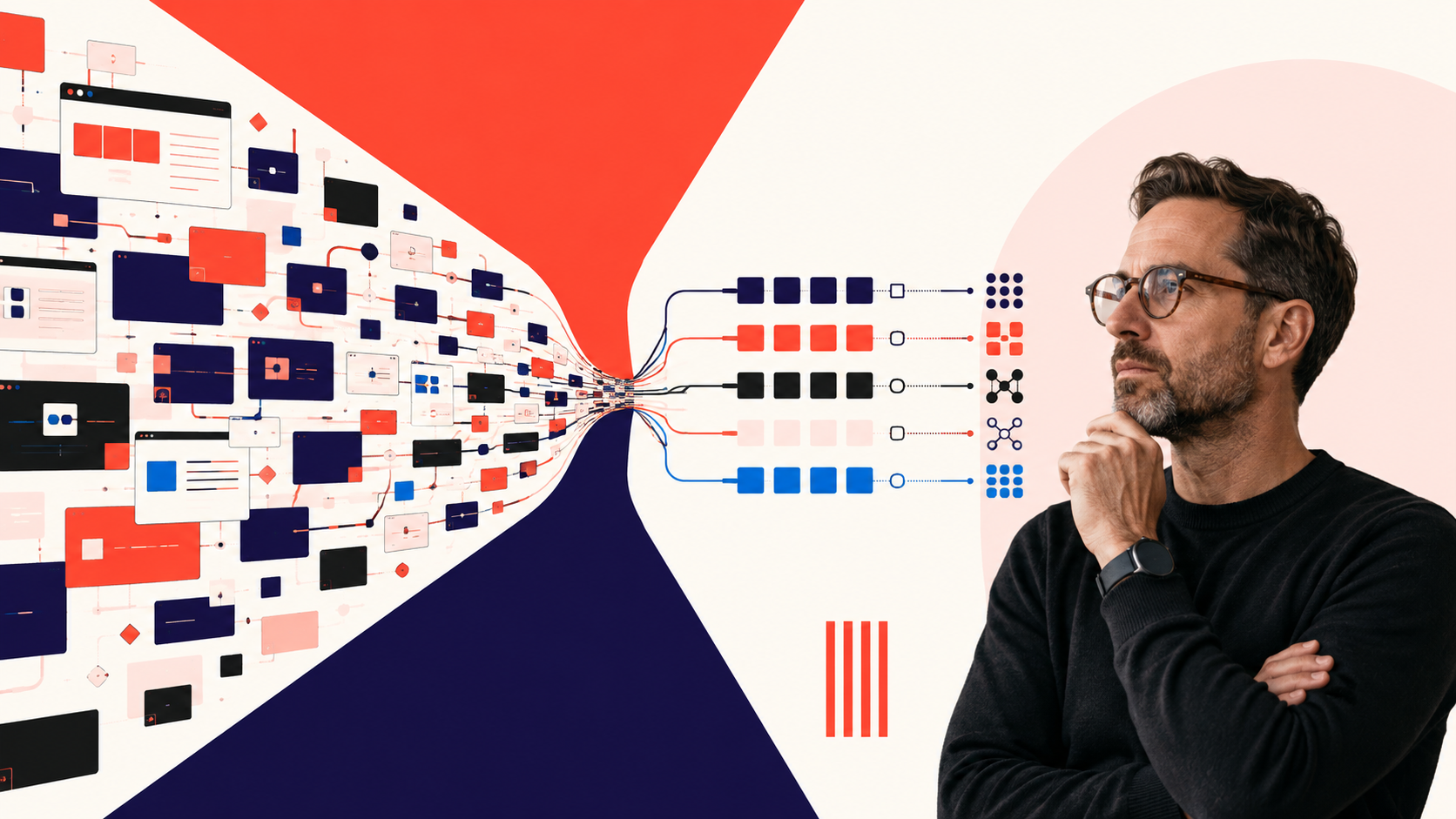
Digital transformation stalls not on infrastructure but on applications, the most complex and time-consuming part. Why application packaging must move to industrial scale, and where agentic AI fits.

When AI is cleared for take-off, but it’s not reaching cruising altitude
Enterprises are deploying AI on GPU-rich cloud infrastructure, yet models underperform because data cannot move fast enough to where the models actually run. Why data movement, not compute, is the real constraint on AI performance.
Why the Services Value Cycle is the New Margin Engine
Services now account for 51% of global IT spend — but margin pressure, capacity limits, and skills gaps make it nearly impossible to capture that opportunity alone. Stephen Ennis, VP Services Europe at TD SYNNEX, explains how the Services Value Cycle turns service delivery into a repeatable margin engine for channel partners.

The AI question is the cloud question wearing a new coat
AI in 2026 is the cloud bet of 2010 wearing a new coat. The firms that win will be the ones who spend on their people, not just the kit.

AI search has already noticed the London Bubble Fallacy
I ran fifteen prompts through Google AI Mode about UK B2B technology media. The most diagnostic answer came back with no citations at all, and quietly named the bias the industry has been too polite to call out.
Are you a Serverless Computing provider?
Get listed and reach thousands of potential customers looking for serverless computing services.