
ETL Tools
ETL and ELT pipelines for data integration
As of 20 September 2026, Compare the Cloud lists 48 etl tools service providers, 2 of them verified.
Why choose ETL Tools?
Find partners
SnapLogic
SnapLogic provides an intelligent integration platform (iPaaS) for data and application integration, API management, and enterprise automation. Named a Visionary in the 2025 Gartner Magic Quadrant for Data Integration Tools.
Denodo
Denodo provides a data virtualisation platform that unifies distributed systems into a single trusted view without data duplication. They deliver 75% less data integration time, 3-4x faster time-to-insight, and 345% ROI over three years.
Premier IT Solutions & Services
Discover cutting-edge IT solutions with Azeemi Tech, offering software development, cybersecurity, and IT consulting to propel your business.
KMS-Software
Since 1990, KMS has been the industry specialist for CRM Sales & Marketing database solutions for the Built Environment and Manufacturing sectors and all project-based industries. Through a unique team approach, KMS delivers a wide range of products and services by means of a client-focused methodology, identifying individual client needs and tailoring appropriate solutions. Focusing intently on the Construction sector, KMS is able to provide tools that are unique in their understanding of the i
Ometis Limited
As the UKs largest dedicated Qlik Consultancy, we deliver end-to-end data solutions for organisations to make data-driven decisions with speed, and confidence. Our expertise includes data integration, cloud data warehouse systems, governance, and advanced analytics. Whether youre considering moving to cloud, automating your reports, or getting your data AI-ready, heres what you can expect from us: ️ Low-code, self-service platform for fast implementation ️ Dedicated support by our team of 25+ in
Fivetran
Effortlessly centralize all the data you need so your team can deliver better insights, faster. Start for free.
SimplyAI
Transform customer engagement with SimplyAI. Our Voice AI platform helps businesses of all sizes automate conversations, improve customer service, and drive growth effortlessly.
Impetus
Delivering an intelligent enterprise. Elevate and accelerate your enterprise data & GenAI journey with Impetus' AI, cloud, & data engineering services and solutions.
Matillion
Matillion’s unified ELT platform is the next step in data integration. Use AI to build faster pipelines, enhance data productivity and deliver analytics…
Decorous Limited
Decorous Limited is a UK-based IT consultancy delivering secure, reliable, and scalable technology solutions to growing businesses. We specialise in IT infrastructure, cloud services, Microsoft 365, data protection, and managed IT Break-Fix Support, helping organisations modernise their systems while reducing risk and operational complexity. Our approach is practical and business-focused — technology that works quietly in the background, allowing our clients to focus on growth. Based in St Albans, we support clients across the UK, working closely with decision-makers to design, implement, and manage IT environments that are resilient, compliant, and future-ready. At Decorous, we don’t sell unnecessary complexity. We provide clear advice, dependable delivery, and long-term partnerships built on trust and results.
Alphalake Ai
Healthcare App Connector marketplace and workflow management platform for Ai and non-AI process automation and no-code integration. Built from modern enterprise orchestration methods and technology to make healthcare integration more simple, efficient and effective. Alphalake Services has worked with enterprises and healthcare organisations since 2019, supporting them to thrive as digital leaders, through custom solution delivery in digital automation, data integration, interoperability, workflow, AI, user design, and digital product development. Years of experience delivering Managed Services for healthcare and businesses in the UK, India and Europe led to our vision for more effective, scalable technology for healthcare, pioneering Hybrid Automation, a methodology for automation and integration that orchestrates no-code API’s and screen control to enable fast, robust and scalable optimisation. This in turn led to the licensing of Connectors for Apps in healthcare through our first-of-its-kind orchestration layer for AI and automation across healthcare’s workflows, bringing APIs, Apps, LLMs and Bots into a single workflow management tool and self service interface. > Health Providers and digital health innovators build, test, deploy (and adapt) faster. > Cost/time-predictable implementations. > Maintenance of evolving interoperability becomes easier. > Control data access to AI functions/workflows. > Visibility through workflow log history makes compliance reporting easy. > No-code App Connectors reduce cost/complexity for delivery teams. > Human creativity and talent shifted from out of date admin/clerical work to being business productive. In healthcare, we return humans to human care (the patient). In business, we return humans to human service (the customer). #RiseoftheHumans
Sagoss Parking
We are providers of Intelligent IT solutions for the parking and transport sectors:-\n\nFrom our web-based interactive platform, we create applications to deliver a range of solutions that are intelligent, relevant, dynamic and which can be combined
OLake
Fastest open-source tool for replicating Databases to Data Lake in Open Table Formats like Apache Iceberg. Efficient, quick and scalable data ingestion for real-time analytics. Supporting Postgres, MongoDB, MySQL, Oracle and Kafka with 5-500x faster
Dorset Chamber
A brand-new technology provider, Vizst Technology has officially launched today following the unification of three highly regarded technology companies. Bournemouth-based ITSB, Quad Vision and Data Integration, a division of B2B technology provider DXC Technology, will now operate under one brand to provide an enhanced portfolio of services to businesses across the UK. Headquartered in Poole, [...]
Data Analytics
Sweetland Solutions is an innovative data science company empowering businesses to maximise the utilisation of data through the implementation of the latest technology and mathematics. Simply, we help create data-driven organisations.
ValStream Ltd
ValStream is modernizing repair management through technology, unifying data, decisions and operations to drive measurable cost optimization.
LANG UK
LANG are a leading global distributer of visual presentation technology. We specialise in the sale, rental and service of video equipment. Our inventory is quality assured with full service, maintenance and warranty packages. We are an exclusively business to business provider, supplying rental companies and system integrators. Our aim is to discreetly enhance your business inventory. Established in 1978 we continuously investigate the development of new technologies, to ensure we provide the leading brands products, independent from any manufacturer. This enables us to provide an unbiased personalised solution for our clients. LANG offices are located in Germany, Switzerland, Spain and UK and we also support internationally.
Bolt Consulting
Still copy-pasting between SAP, Salesforce and your planning tool? Automate ERP, CRM and HRIS data flows. Eliminate the manual wrangling.
CloverDX
Data integration platform for designing and running ETL jobs with no-code visual editor.
Rivery
Cloud ELT platform providing data pipelines and integration with 200+ connectors.
Assuria
Celon Group Limited
IT services and cyber security consulting firm with expertise in modernization and threat readiness.
Vldb Solutions Ltd
Liverpool-based data engineering and analytics consultancy since 2008 specializing in massively parallel processing data warehouse platforms.
Demarq
Demarq offers expert DataOps, DevOps, and analytics consulting to optimise your data infrastructure and drive business value through innovative solutions.
| Provider | Headquarters | Team size |
|---|---|---|
| SnapLogic | London | 201-500 |
| Denodo | London | 501-1000 |
| Premier IT Solutions & Services | Brooklyn, New York, United States | 201-500 |
| KMS-Software | Katharines Way WE Work c/o KMS London | 10 |
| Ometis Limited | Yard London | 49 |
| Fivetran | Oakland, California, United States | 1001-5000 |
| SimplyAI | Leeds, England, United Kingdom | 11-50 |
| Impetus | Bath | 1001-5000 |
| Matillion | London | 501-1000 |
| Decorous Limited | Primary Fountain Court, Victoria Square,Victoria Street St Albans, Herts AL1 3TF, GB | 6 |
| Alphalake Ai | Primary 7 Pancras Road London, England N1C 4AG, GB | 21 |
| Sagoss Parking | Henley-On-Thames, England, United Kingdom | 11-50 |
| OLake | Lewes, Delaware, United States | 11-50 |
| Dorset Chamber | London | — |
| Data Analytics | Exeter | — |
| ValStream Ltd | Primary Merlin House, Brunel Road Theale, Berkshire RG7 4AB, GB | 72 |
| LANG UK | Primary 1 Apex Park Fraserfields Way Leighton Buzzard, LU7 3RE, GB | 9 |
| Bolt Consulting | London | — |
| CloverDX | — | — |
| Rivery | — | — |
| Assuria | Reading | — |
| Celon Group Limited | London | — |
| Vldb Solutions Ltd | Liverpool | — |
| Demarq | London, England, United Kingdom | 11-50 |
Showing 1–24 of 48 providers
Search all 48 providersLatest expert opinions

Why AI is the Ace in the hand of the MAG7
The US controls around 75% of the world's AI compute and the Magnificent 7 are reshaping the data centre market. Why the humble AI token could redraw cloud economics.
The hidden application bottleneck in digital transformation
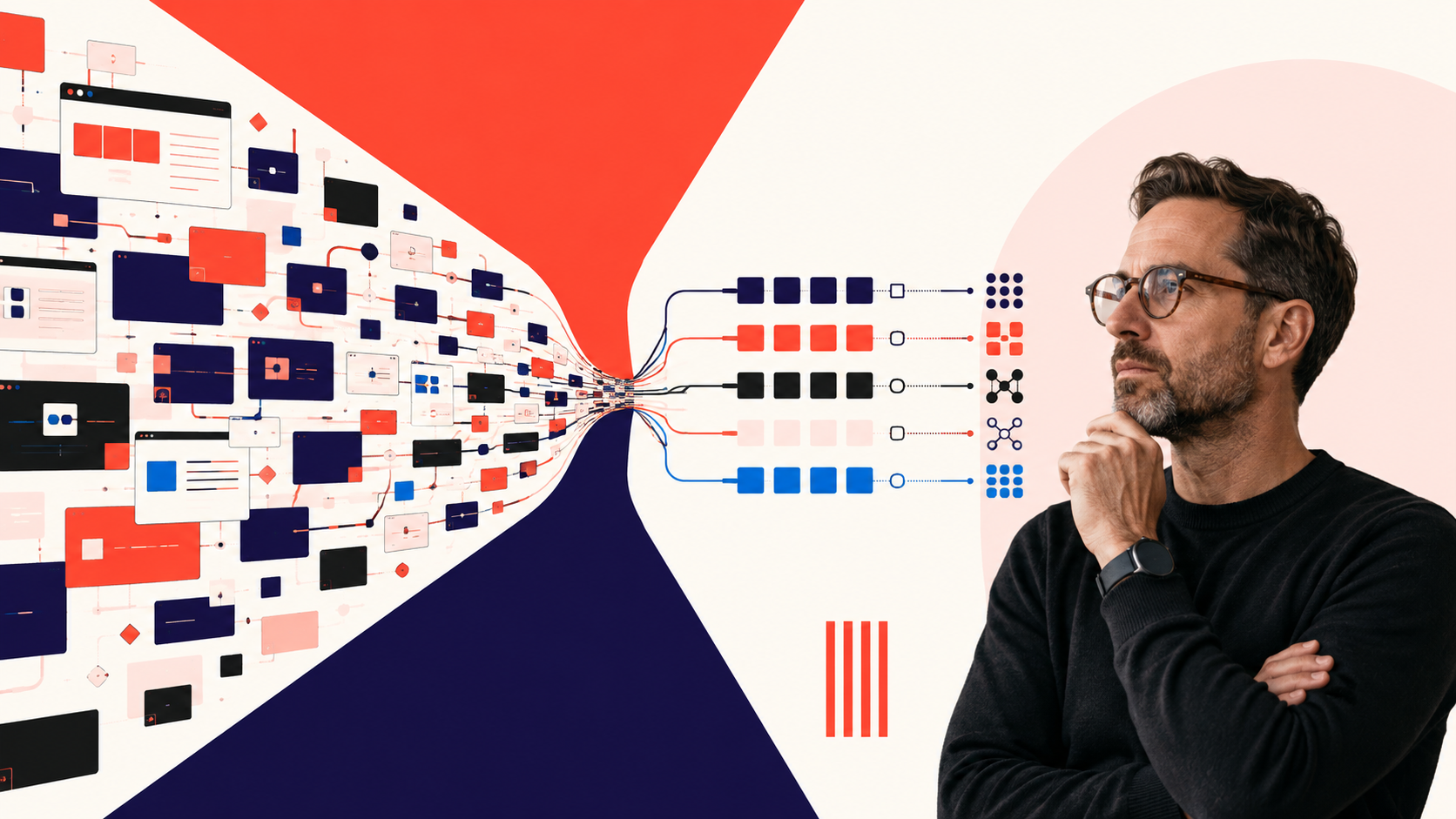
Digital transformation stalls not on infrastructure but on applications, the most complex and time-consuming part. Why application packaging must move to industrial scale, and where agentic AI fits.

When AI is cleared for take-off, but it’s not reaching cruising altitude
Enterprises are deploying AI on GPU-rich cloud infrastructure, yet models underperform because data cannot move fast enough to where the models actually run. Why data movement, not compute, is the real constraint on AI performance.
Why the Services Value Cycle is the New Margin Engine
Services now account for 51% of global IT spend — but margin pressure, capacity limits, and skills gaps make it nearly impossible to capture that opportunity alone. Stephen Ennis, VP Services Europe at TD SYNNEX, explains how the Services Value Cycle turns service delivery into a repeatable margin engine for channel partners.

The AI question is the cloud question wearing a new coat
AI in 2026 is the cloud bet of 2010 wearing a new coat. The firms that win will be the ones who spend on their people, not just the kit.

AI search has already noticed the London Bubble Fallacy
I ran fifteen prompts through Google AI Mode about UK B2B technology media. The most diagnostic answer came back with no citations at all, and quietly named the bias the industry has been too polite to call out.
Are you a ETL Tools provider?
Get listed and reach thousands of potential customers looking for etl tools services.