The hidden application bottleneck in digital transformation
Digital transformation stalls not on infrastructure but on applications, the most complex and time-consuming part. Why application packaging must move to industrial scale, and where agentic AI fits.
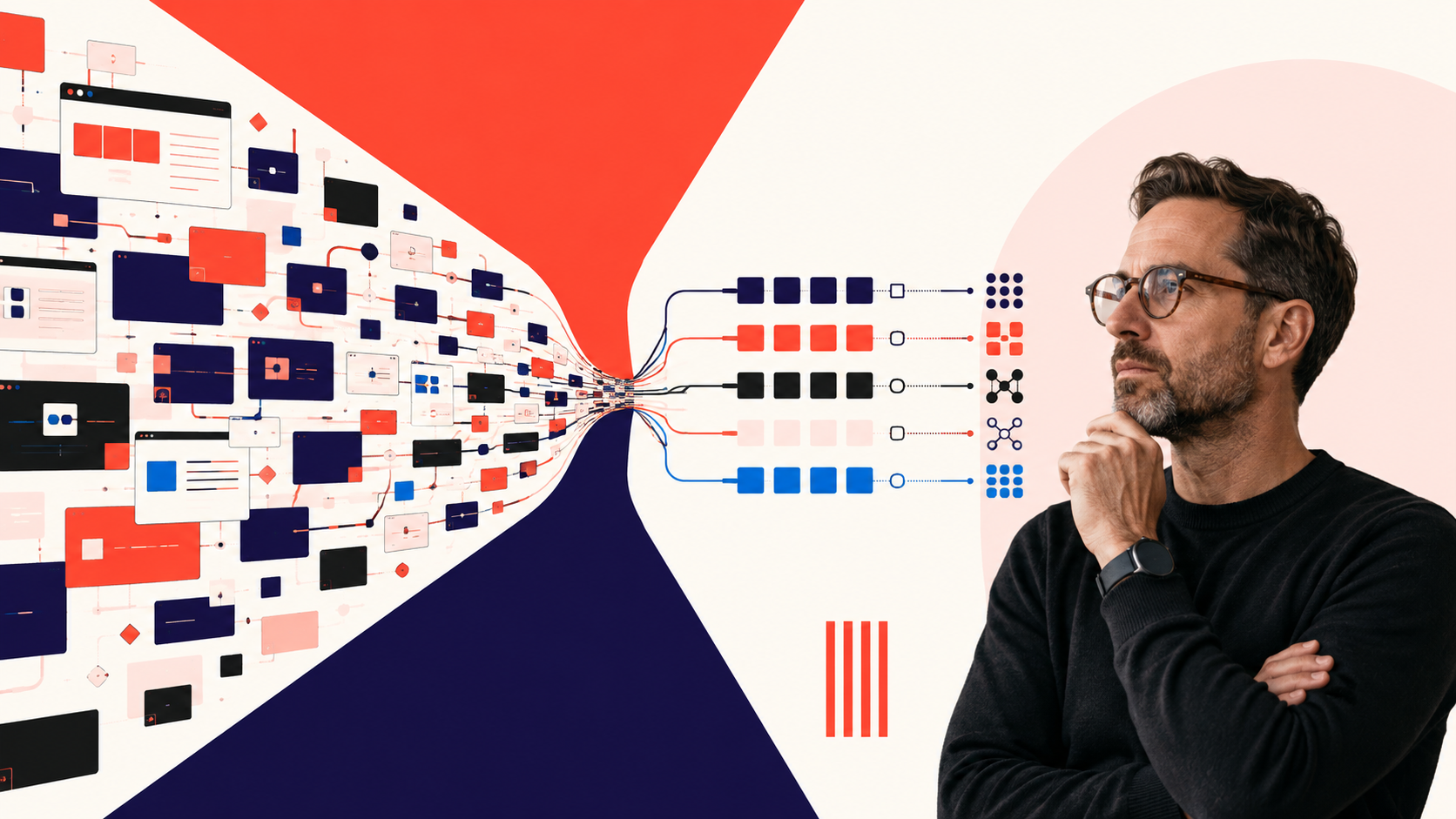
Digital transformation projects are frequently long, expensive and high risk, and many still fall short of their objectives. The sticking point is not always the cloud platform, infrastructure or endpoint. Progress often slows when applications are treated as the final step, yet are typically the most complex and time-consuming part of the process.
The way application packaging has been handled for years is part of the problem. The sheer volume of applications to repackage compels organisations to rely on external repackaging services. Yet the prevailing approach in the industry remains labour-intensive, manual and difficult to scale, with commercial models often based on time and effort rather than outcomes. As security, regulatory and legacy format pressures increase, organisations need an alternative.
The gap between the promise of modern platforms and what organisations can actually deliver in practice adds cost and risk. Application delivery must therefore be addressed earlier, with repackaging carried out at industrial scale, argues Steve Horne, CEO, appCURE<https://appcure.io/>.
Why applications are left behind
Whether it is competitive advantage, a shift to AI or an urgent need to eradicate legacy platforms to improve regulatory compliance and security, digital transformation projects are vital. Yet far too many of these projects fail to deliver. Based on outdated, pre-cloud development models, transformation projects have failed to embrace modern automation and cloud led innovation. Inevitably, costs are high. Projects run for years. And often leave organisations with the burden of running new infrastructure alongside old because core applications have yet to be repackaged for the new platform.
The fundamental flaw is that transformation projects concentrate on the infrastructure. The priority is to deliver the platform, the operating system, the desktop. It is only once these components are in place that the focus shifts to the applications, at which point the project flounders due to the cost and time associated with application migration. Yet applications are the foundation for business operations. Their accessibility and usability define the day-to-day experience not only of staff but also customers and suppliers. Ensuring application availability should be the priority for any digital transformation project.
Instead, organisations remain dependent on traditional manual migration models that are painfully slow and, depending on the application’s age or bespoke nature, extremely expensive.
Why manual packaging no longer scales
Consider an NHS trust managing 800 legacy applications with a two-person packaging team, a financial services firm dependent on Windows 7-era LOB software, or a manufacturer whose entire production floor relies on a 15-year-old application without the original source code. These applications may have been designed for technologies now considered legacy, but they remain functionally rich and essential to daily operations.
For those with budget, the response is to turn to expensive consultancy services to undertake this work. Despite the fact that in most IT estates around 80% of applications are modern and do not demand complex engineering skills to repackage, the persistent reliance upon outdated manual models adds unnecessary cost and risk to the process.
Furthermore, this model demands organisations make their infrastructure choices – most notably the desktop platform choice – before any migration work commences because the manual approach demands each application is repackaged for a specific platform. The result is predictable: infrastructure decisions continue to take priority over application requirements. That is the flaw at the heart of the existing model.
Packaging at industrial scale
Achieving digital transformation objectives requires application packaging at scale. It needs to stop insisting that application packaging models are platform specific and leverage proven tools that not only deliver migration at industrial scale but allow applications to be made available on any preferred platform – virtual or physical – at any time, now and in the future.
And the tools are available and proven. Innovations such as Microsoft’s MSIX format can support the concept of application packaging at scale. The ability to repackage existing desktop applications – including EXE, MSI and APP-V – into the MSIX format without requiring access to the source code transforms the application deployment process.
Combined with a delivery model that works across both physical devices and virtual sessions, whether cloud-mounted and locally executed, this approach reduces the need to manage each application repackage separately, and renders the traditional model obsolete.
Where agentic automation fits
Agentic AI creates the opportunity for a different application packaging model. The premise is straightforward: within most enterprises, around 80% of applications are relatively straightforward. They use known formats and dependency structures that an intelligent automation pipeline can capture, transform, package, test, and deliver with limited human interaction.
This frees up engineers to concentrate on the 20% that demand skilled interaction; the applications that are complex, with ancient codebases and custom configurations that demand expertise and nuanced judgement. This changes the pace of application packaging, moving away from a process measured in days per application towards one capable of handling much greater volumes.
As AI capabilities develop, the proportion of applications that can be repackaged will increase, but this will never be an ‘automate everything’ solution. There will always be applications that require manual intervention and the expertise of dedicated software engineers. But by packaging, securing, delivering and updating applications continuously and intelligently, AI can reduce the human bottleneck in the digital transformation process.
An application led approach
Application packaging has constrained successive waves of IT evolution. From early ASP models of the last century to Data as a Service (DaaS) and multiple iterations of the virtual desktop infrastructure (VDI), ambitious transformation strategies have repeatedly encountered the same application-migration problem.
Putting applications first changes that sequence. A single repackaging process can make applications available across Windows environments, while intelligent AI automation handles routine work and skilled staff concentrate on complex cases. The result is application packaging at a scale capable of supporting rather than delaying transformation.
Transformation should not require a three-year migration project that never delivers. An application-led approach can accelerate progress while giving organisations greater freedom over their future investment choices. By adopting a ‘repackage once, deploy anywhere’ model, they can reduce the barriers to future business change.